






Humble Beginnings and Early Experiments
The roots of Indian science fiction on screen are deeper than many assume, dating back to the 1950s. The first foray was the 1952 Tamil-American co-production 'Kaadu' ('The Jungle'), which featured a wild plot about discovering prehistoric woolly mammoths
alive in the Indian jungle. While rudimentary, it planted a seed. Through the 1960s, the genre saw sporadic and quirky entries. The Tamil film 'Kalai Arasi' (1963) involved aliens visiting Earth to find inspiration for their planet's art scene, ultimately getting captivated by Indian classical dance. A few years later, the Hindi film 'Wahan Ke Log' (1967) told the story of a Martian threat against India, created on a shoestring budget. These early films were less about hard science and more about using sci-fi tropes—aliens, strange creatures—as a novel canvas for familiar stories of adventure and melodrama.
Finding a Foothold in the Masala Mix
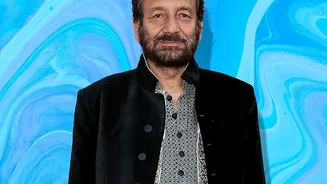
The 1980s marked a turning point. As digital effects began to seep into filmmaking globally, Indian cinema started to incorporate them, albeit modestly. The most significant film of this era was 'Mr. India' (1987). Directed by Shekhar Kapur, it cleverly blended science fiction with the quintessential Bollywood masala formula. The story of a common man using his scientist father's invisibility device to fight a larger-than-life villain, Mogambo, captured the nation's imagination. Its special effects, achieved through painstaking practical and in-camera tricks, were groundbreaking for their time and brought sci-fi concepts to a mainstream Indian audience like never before. The film proved that science fiction didn't have to be niche; it could be spectacular, emotional, and wildly entertaining.
The Dawn of the Blockbuster Era
The new millennium saw the ambitions of Indian sci-fi skyrocket, directly tied to the growing capabilities of computer-generated imagery (CGI). Rakesh Roshan's 'Koi... Mil Gaya' (2003) was a watershed moment. Inspired by Hollywood hits, it told a heartwarming story of a developmentally disabled man who befriends an alien. Made on a significant budget for its time, its success paved the way for India's first modern superhero franchise with 'Krrish' (2006) and 'Krrish 3' (2013). These films demonstrated a new commitment to visual effects, with each sequel upping the scale of action and spectacle. This was the era where sci-fi officially became a reliable vehicle for blockbuster success in Bollywood.
The Southern Revolution and VFX Dominance
While Bollywood was building its superhero sagas, the Tamil film industry, or Kollywood, was preparing a technological revolution. Director S. Shankar's 'Enthiran' (2010), released in Hindi as 'Robot', was a game-changer. Starring the legendary Rajinikanth as both a scientist and his sentient android creation, the film's budget and visual effects were on a scale previously unseen in Indian cinema. Its sequel, '2.0' (2018), smashed records again, becoming one of the most expensive Indian films ever made, utilizing top-tier international VFX studios to bring its bombastic vision to life. These films not only showcased the technical prowess of the industry but also cemented the pan-Indian appeal of high-concept, VFX-driven storytelling, proving that epic sci-fi could originate from any of India's film hubs.
The Age of the World-Class Spectacle
Today, Indian science fiction is in its most ambitious phase yet. Films like 'Brahmāstra: Part One – Shiva' (2022) and the epic 'Kalki 2898 AD' (2024) are conceived as global cinematic events. With budgets reaching astronomical figures—'Kalki 2898 AD' is reported to be the most expensive Indian film ever made at ₹600 crore ($75 million)—these projects are built around world-class CGI and mythological-futuristic concepts. Drawing inspiration from Indian scriptures and epics while deploying cutting-edge visual effects, these films aim to create a unique cinematic language that is both distinctly Indian and universally appealing. This new wave represents the culmination of a 70-year journey, moving from borrowed tropes and practical effects to crafting original, high-budget spectacles that can stand on the world stage.