



The AI Co-Pilot Is Already Here
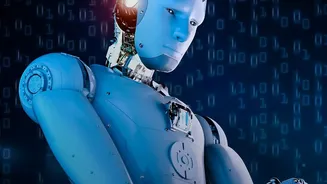
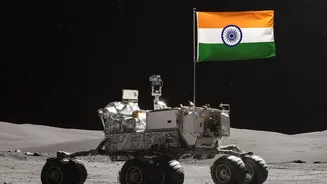
Artificial intelligence is no longer science fiction in the space sector; it's a mission-critical tool that is already deployed across various functions. For instance, AI algorithms are responsible for the autonomous navigation of rovers on Mars. NASA's
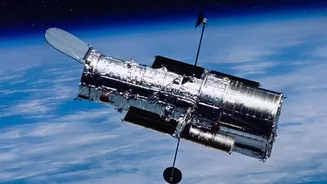
Perseverance rover uses AI to analyse terrain, identify hazards, and plot its own course, enabling it to explore areas no human has ever laid eyes on. This eliminates the long communication delays between Earth and Mars, making missions more efficient. Beyond navigation, AI is crucial for analysing the colossal datasets sent back from satellites and deep space telescopes. AI models can sift through images to identify patterns, detect anomalies, or even discover new exoplanets that human analysts might miss. On the International Space Station, AI is used for predictive maintenance, monitoring the health of vital systems to prevent failures before they happen. This shift means the demand for professionals who can build, train, and manage these AI systems is soaring.
The Quantum Leap on the Horizon
While AI is the present, quantum technology is the next giant leap. Though still in its early stages, its potential applications in space are transformative. One of the most promising areas is secure communication. Quantum cryptography could create unbreakable encryption keys, essential for protecting sensitive satellite data and mission intelligence from interception. Another key area is sensing. Quantum sensors can detect incredibly small variations in gravitational fields. From orbit, these sensors could map underground water reserves on Earth, monitor the health of ice sheets with unparalleled precision, or even help search for gravitational waves. Furthermore, quantum computers promise to solve complex optimisation problems that are currently impossible for classical computers. This could revolutionise spacecraft trajectory planning, material science for building lighter and stronger components, and simulating complex cosmic phenomena. Space agencies like NASA and ISRO are already investing in this future, seeking talent with a foundation in quantum mechanics.
Meet the New Breed of Space Professionals
The integration of AI and quantum tech is creating entirely new job roles that didn't exist a decade ago. Traditional aerospace engineers are still vital, but now they work alongside AI/ML Engineers, Quantum Algorithm Researchers, and Space Data Scientists. An AI/ML engineer might develop the autonomous systems for a fleet of satellites, while a space data scientist uses machine learning to analyse climate data gathered from orbit. A Quantum Cryptography Engineer could be tasked with designing the next generation of secure communication networks for deep-space missions. Even roles like Systems Engineer are evolving, now requiring an understanding of how to integrate classical hardware with quantum processors. In India, the growing private space sector, alongside organisations like ISRO, is creating a demand for these specialised skills. Companies like QNu Labs, BosonQ Psi, and the quantum labs at TCS and Infosys are actively hiring for roles at this new intersection of tech and space.
Charting Your Course for a Future in Space
For those aspiring to join this new era of space exploration, the required skill set has expanded. A strong foundation in programming languages like Python and C++ is now non-negotiable. Expertise in AI and machine learning frameworks such as TensorFlow and PyTorch is in high demand for data analysis and autonomous systems roles. For those aiming for the quantum frontier, a deep understanding of linear algebra, quantum mechanics, and familiarity with quantum programming languages like Qiskit or Cirq is essential. Higher education is also adapting, with Indian institutes like IITs offering specialised programs and certifications in AI, data science, and even quantum computing. Beyond technical skills, employers value a problem-solving mindset and the ability to work in interdisciplinary teams. The future of space exploration will be built by those who can bridge the gap between physics, computer science, and engineering.