




The Sound of Silence: What Prompted the Crackdown?
If you have ever tried to sleep on a train while the passenger next to you watches a movie at full volume, this news is for you. Southern Railway has issued a fresh directive aimed squarely at curbing noise pollution on its trains and at stations. The
move comes in response to a growing number of complaints from travellers about disturbances that ruin the journey for others. The advisory notes that the wide availability of high-speed internet on phones has led to a surge in passengers playing videos, music, and talking loudly on calls without using earphones. While these behaviours have long been a source of annoyance, the railway is now taking formal steps to address them, shifting from polite requests to enforceable rules.
The New Rules: Use Earphones or Pay the Price
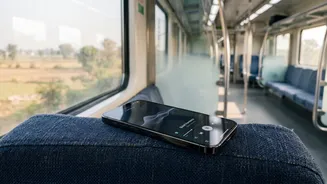
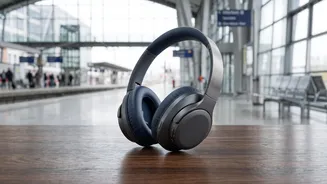
The core of the advisory is simple: be considerate. Passengers are now strongly discouraged from playing any audio on their phone’s speaker. This includes music, movies, and video calls. The directive explicitly states that travellers should use earphones for personal entertainment. Similarly, loud and long phone conversations are also targeted, as they are a common complaint, especially within the enclosed space of air-conditioned coaches. This isn’t just a suggestion. The advisory is backed by Section 145 of the Railways Act, which deals with creating a nuisance or disturbance. Under this rule, causing a disruption can now lead to significant penalties.
The Cost of Noise: Fines and Further Action
To ensure compliance, Southern Railway has empowered its staff to take action. First-time offenders caught violating these etiquette rules face a fine of ₹1,000. For those who don't get the message, the consequences become more severe. Repeat offenders or passengers who continue to cause a disturbance after being warned could face imprisonment for up to six months, a higher fine of up to ₹5,000, or both. Authorised commercial staff, including the Travelling Ticket Examiner (TTE), have the authority to impose these fines. They can also cancel the offender's ticket or, in persistent cases, remove them from the train. To spread awareness, railway divisions will use public announcements and display notices on platforms and inside coaches.
Beyond Noise: A Refresher on General Etiquette
This new focus on noise complements a set of long-standing rules designed to make overnight travel more comfortable for everyone. Indian Railways officially designates the hours between 10 PM and 6 AM as sleeping hours. During this time, a code of conduct is expected to be followed. All coach lights, except for dim night lights, must be switched off. Passengers are expected to avoid loud conversations. This period is also when the 'middle berth rule' comes into full effect. A passenger with a middle berth is entitled to use it for sleeping, and those on the lower berth are expected to cooperate. After 6 AM, the middle berth should be folded down to allow all passengers to sit comfortably on the lower berth.
Shared Space, Shared Responsibility
While the threat of a fine is a powerful motivator, the spirit of the advisory is about fostering mutual respect. A train coach is a shared public space, and these rules are designed to ensure that one person's entertainment doesn't become another person's headache. The success of this initiative will depend not just on enforcement by TTEs, but on passengers embracing a more considerate travel culture. Ultimately, the goal is to make the journey more pleasant. A little courtesy—like using earphones, keeping calls brief and quiet, and respecting sleeping hours—goes a long way in ensuring that everyone arrives at their destination feeling rested and respected.