

The Sun's Destructive Potential
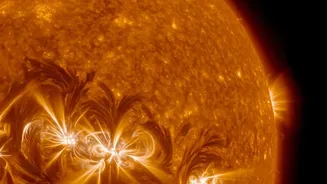
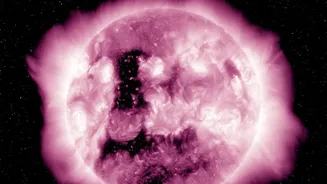
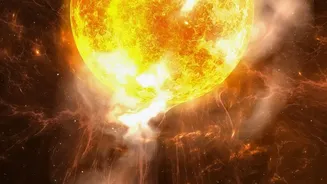
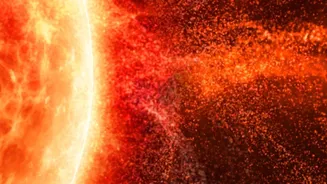
The Sun isn't always the calm, life-giving star we perceive it to be. It has a volatile side, frequently producing enormous explosions. The two most significant are solar flares and coronal mass ejections (CMEs). A solar flare is an intense burst of radiation.
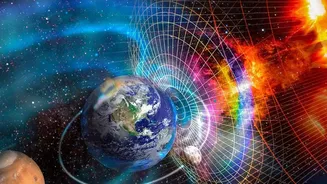
If directed at Earth, its energy arrives in about eight minutes, capable of causing radio blackouts. More concerning are CMEs, which are giant clouds of solar plasma and magnetic fields flung into space at immense speeds. While often associated with flares, CMEs are distinct events and are the primary cause of the most severe space weather. An Earth-directed CME can take anywhere from 15 hours to several days to arrive, carrying billions of tons of material that can wreak havoc on our planet's magnetic field and the technology within it.
The Threat to Our High-Tech World
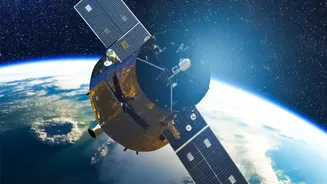
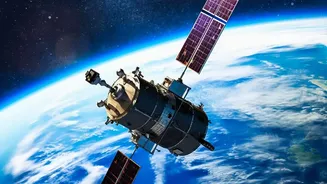
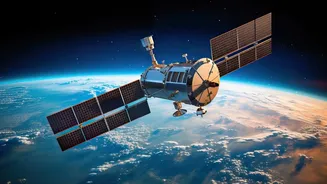
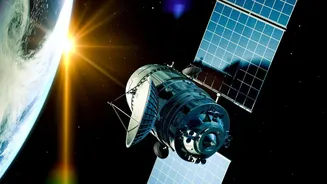
Our increasing reliance on sophisticated technology makes us more vulnerable to space weather than ever before. When a powerful CME interacts with Earth's magnetosphere, it can induce geomagnetically induced currents (GICs) in the ground. These currents can flow into long-distance power lines, overwhelming and damaging high-voltage transformers, potentially leading to widespread and long-lasting blackouts. Satellites are also at extreme risk. Beyond the protection of our atmosphere, they are exposed to damaging solar radiation and charged particles. This can degrade solar panels, damage sensitive electronics, and even alter a satellite's orbit by increasing atmospheric drag, threatening critical communication, navigation, and weather forecasting services.
Seeing the Unseen: What is a Coronagraph?
The Sun's surface, or photosphere, is so bright that it completely obscures its faint outer atmosphere, the corona. This makes detecting CMEs as they erupt nearly impossible with a standard telescope. A coronagraph is a special instrument designed to solve this problem by creating an artificial solar eclipse. It uses an occulting disk to block the overwhelming light from the Sun's main body, allowing scientists to observe the much fainter corona. Space-based coronagraphs, free from the distortion of Earth's atmosphere, provide the clearest views. By capturing images of the corona, these instruments can spot a CME as it bursts from the Sun, revealing its size, speed, and direction.
From Detection to Actionable Warning
The headline's use of "predict" needs a slight clarification. Coronagraphs don't predict that a flare or CME will happen in the future; rather, they detect these events as they occur. This detection, however, is the key to providing a crucial early warning. Because a CME travels much slower than light, seeing it leave the Sun gives us a heads-up of hours to days before it reaches Earth. This warning time is invaluable. Forecasters at agencies like NOAA's Space Weather Prediction Center analyze coronagraph imagery from satellites like the Solar and Heliospheric Observatory (SOHO) to determine if a CME is Earth-bound and to estimate its potential impact.
India’s Eye on the Sun: Aditya-L1
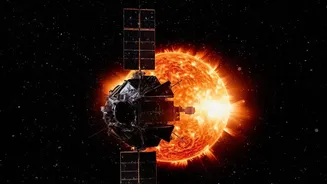
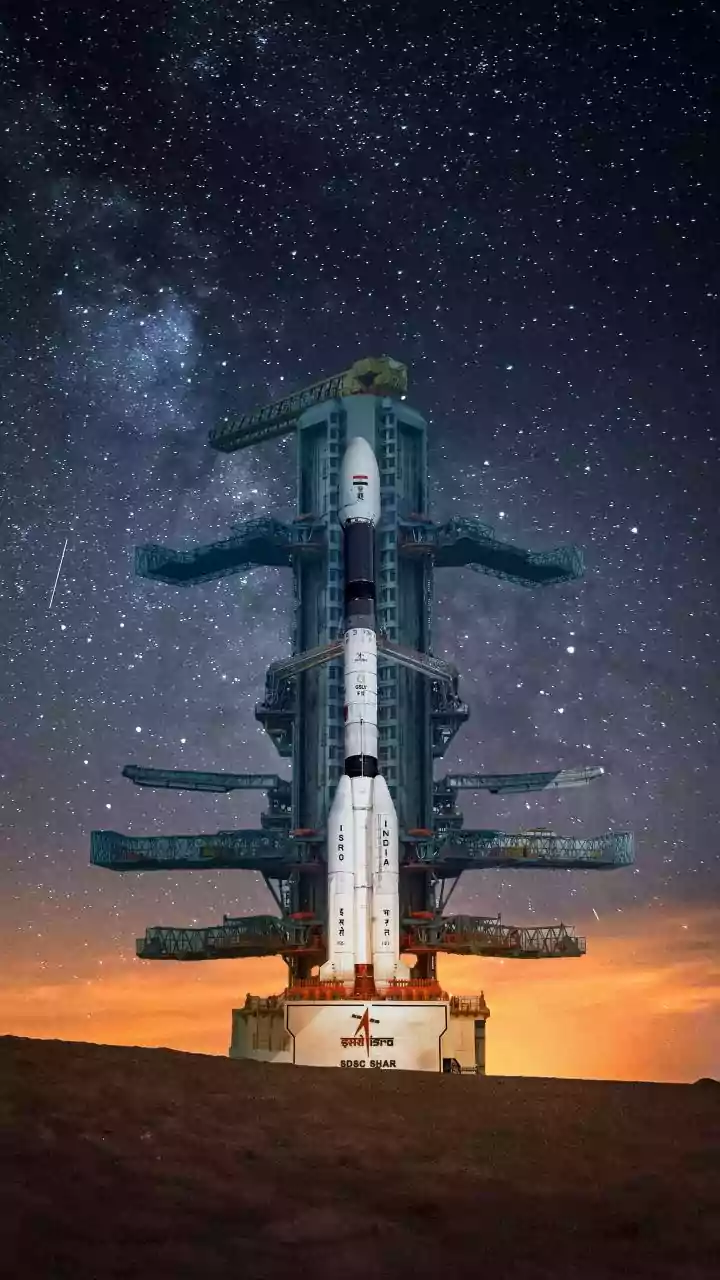
India has firmly established its presence in space weather monitoring with its first solar observatory, Aditya-L1, launched by ISRO. Positioned at the Lagrange 1 (L1) point, about 1.5 million kilometres from Earth, it has an uninterrupted view of the Sun. A key instrument on board is the Visible Emission Line Coronagraph (VELC), an advanced coronagraph designed to study the solar corona in great detail. VELC provides crucial data on the initiation and dynamics of CMEs, helping to improve our understanding and forecasting of space weather. By contributing to the global network of solar observatories, Aditya-L1 enhances India's and the world's ability to monitor solar activity and protect vital infrastructure.
Using the Warning to Protect Our Grids
So, what happens when a warning is issued? It's not about public panic, but about quiet, preventative action. Power grid operators can take steps to protect their systems from GICs. This might involve reducing load on certain lines, redirecting power flows, or temporarily taking vulnerable transformers offline to prevent catastrophic damage. Satellite operators can put their spacecraft into a 'safe mode,' shutting down non-essential and sensitive electronic systems to weather the storm of charged particles. Airlines can reroute flights that would normally travel over the polar regions, where the effects of solar radiation storms are most intense. This proactive approach, all made possible by the early warning from coronagraphs, helps mitigate the worst potential impacts of a solar storm.