



Why Water Is Your Secret Weapon
Imagine a workout that strengthens your muscles and protects your joints at the same time. That’s the magic of exercising in water. The science is simple but powerful. First, there's buoyancy. In waist-deep water, your body bears only about 50% of its
weight. In chest-deep water, that drops to about 25-35%. This dramatic reduction in load means you can move, jump, and exercise with minimal stress on your knees, hips, and spine. It’s a game-changer for anyone dealing with joint pain, recovering from an injury, or simply looking for a low-impact way to get strong. The water essentially cradles your body, allowing for a freedom of movement that might be painful or impossible on land.
Resistance and Support Combined
Water doesn’t just lift you up; it also pushes back. Water is about 800 times denser than air, creating a form of dynamic resistance. Every movement you make—a kick, a punch, or even just walking—is met with gentle, consistent opposition. Unlike lifting weights, where resistance is often in one direction, water provides 360-degree resistance. This forces your muscles to work harder in a balanced way, building functional strength without the jarring impact of gravity. This combination of buoyancy and resistance is what helps build surprising strength and stability around your joints, providing the 'power' the headline promises, but in a safe, controlled manner.
Your Foundational Water Calisthenics Routine
Ready to dive in? Start in waist-to-chest-deep water. The deeper the water, the more resistance you’ll face (and the more support you'll get). Focus on slow, controlled movements to maximise muscle engagement. Listen to your body—if something hurts, stop. Aim for 30-60 seconds per exercise, resting as needed between them. Here are four foundational moves to build your routine.
1. Water Walking & Jogging
This is the perfect warm-up and a fantastic exercise in its own right. Simply walk from one end of the pool to the other. Focus on maintaining good posture, keeping your core engaged and your back straight. Once you’re comfortable, increase the intensity. Try walking backwards to challenge your balance and work your hamstrings and glutes. Pick up the pace to a jog, lifting your knees high towards your chest (high-knee jogging) to fire up your core and hip flexors. This simple movement improves cardiovascular fitness and strengthens your entire lower body with virtually no impact.
2. Leg Lifts and Kicks
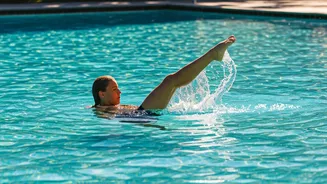
Stand near the side of the pool for support if needed. Slowly lift one leg straight out in front of you, hold for a moment, and then slowly lower it back down. The water’s resistance will make this surprisingly challenging. Repeat 10-15 times, then switch legs. Next, perform the same movement lifting your leg to the side (lateral lifts) to target the outer thigh and hip abductors. Finally, kick your leg gently behind you (glute kickbacks) to work your hamstrings and glutes. These controlled movements are exceptional for building stability and strength in the hips and knees.
3. Supported Squats
Squats are a fundamental strength-building exercise, but they can be tough on the knees. In water, they become much more accessible. Stand with your feet shoulder-width apart in waist-deep water. Slowly lower your hips as if sitting in a chair, keeping your back straight and chest up. The water will support you, allowing for a deeper and more stable range of motion. Go only as low as feels comfortable. Hold for a second at the bottom, then push through your heels to return to the starting position. This builds powerful glutes, quads, and hamstrings, all of which are crucial for supporting and protecting the knee joint.
4. Arm and Shoulder Sculling
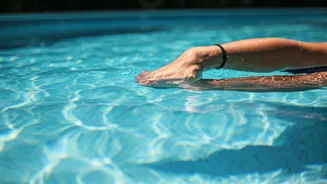
Don't forget the upper body. Stand in chest-deep water with your arms extended at your sides, just below the surface, with palms facing down. Move your arms in small, figure-eight or circular motions (sculling). This creates constant tension, working the muscles in your shoulders, back, and arms. For more resistance, you can cup your hands or use webbed aqua gloves. You can also perform bicep curls and tricep presses, using the water as your weight machine. The consistent resistance helps build lean muscle and improves shoulder mobility and stability.