




The ‘Sea of Stars’ on India’s Coast
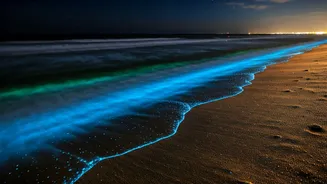
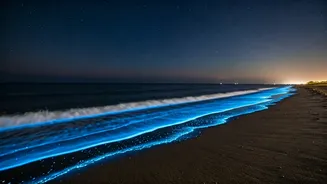
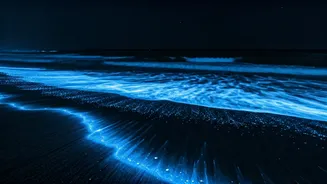
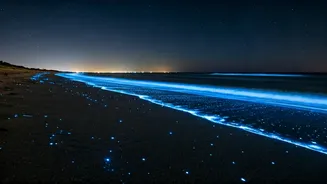
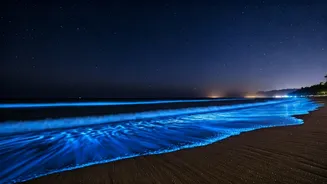
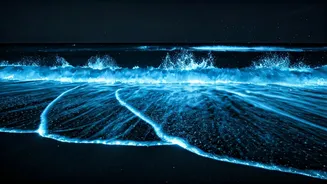
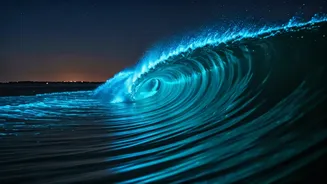
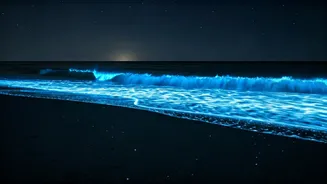
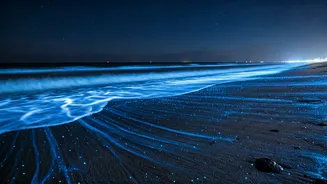
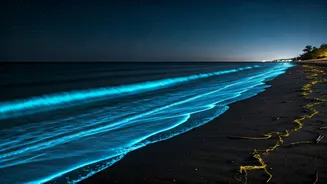
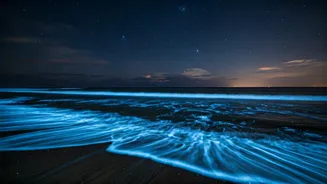
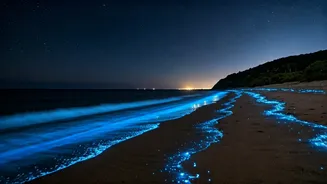
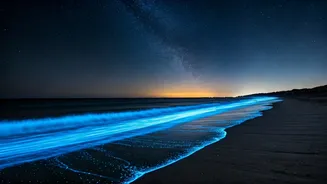
If your Instagram or TikTok feed has a connection to “Desi” (South Asian) culture, you’ve likely seen it: mesmerizing videos of waves glowing an ethereal, neon blue. Shot on the beaches of Karnataka, a coastal state in southwestern India, these clips
show the shoreline transforming into a natural light show. Every time a wave breaks or a footstep disturbs the wet sand, the water erupts in a fleeting, brilliant flash. For locals and travelers lucky enough to witness it, it’s a surreal experience often dubbed the “sea of stars.” The posts, frequently shared with captions expressing awe and wonder, have triggered a wave of digital wanderlust, with countless viewers dreaming of seeing the spectacle for themselves.
What’s Causing the Magical Glow?
The enchanting blue light isn’t magic, but it is one of nature’s coolest tricks: bioluminescence. The glow comes from a type of microscopic plankton called dinoflagellates, specifically a species known as *Noctiluca scintillans*, which translates to “sparkling night light.” These single-celled organisms float near the water's surface and produce light through a chemical reaction, much like fireflies. But why do they do it? It’s a defense mechanism. When the water is disturbed—by a crashing wave, a swimming fish, or a person’s hand—the plankton feel threatened and flash their bright blue light. The theory is that this sudden burst of light, known as the “burglar alarm” effect, startles potential predators and can also attract *bigger* predators to eat the things that are trying to eat them. So, what looks like a serene, magical display is actually millions of tiny organisms screaming for help in the most beautiful way possible.
Why Karnataka, and Why Now?
While bioluminescence can occur in oceans all over the world, the recent viral sightings have been concentrated along the coast of Karnataka, particularly near the city of Udupi at beaches like Mattu and Padukere. These displays are not a year-round phenomenon. They typically appear in the autumn months, from September to November, following the heavy monsoon season. The monsoons wash a huge volume of nutrients from the land into the Arabian Sea. This nutrient-rich cocktail, combined with favorable water temperatures and currents, creates the perfect conditions for a massive *Noctiluca scintillans* bloom. The plankton population explodes, concentrating them near the shore and turning the coastline into a canvas for their nightly light show.
More Than Just a Pretty Light
As breathtaking as these blooms are, marine biologists look at them with a mix of awe and caution. A massive *Noctiluca* bloom can be an indicator of environmental change, sometimes linked to increased nutrient runoff from agriculture and sewage. While *Noctiluca* itself is not always toxic, it is a voracious eater of other plankton. When a bloom is extremely dense and then dies off, the decomposition process can consume large amounts of oxygen in the water, creating hypoxic “dead zones” where fish and other marine life cannot survive. So, while the glowing waves are a stunning visual, they also serve as a complex ecological signal that scientists are studying to better understand the health of our oceans.
Chasing the Glow: A Traveler’s Dream
The viral videos have understandably sparked a surge of interest from travelers. However, chasing bioluminescence isn't like booking a ticket to see the Eiffel Tower. It's a natural event subject to the whims of tides, temperature, and plankton life cycles. There’s no guarantee it will appear on any given night. For those hoping to try their luck, the best bet is to visit the Karnataka coast between September and November. To maximize your chances, go to a dark beach far from city lights on a moonless or new-moon night—the darker the surroundings, the more brilliant the glow will appear. Even if you don't see the famous blue sparkle, a quiet walk on a southern Indian beach is hardly a bad consolation prize.