


The Sun's Turbulent Outbursts
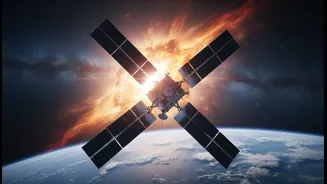
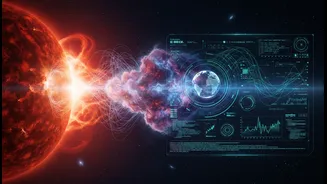
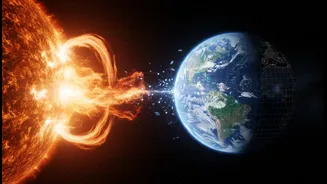
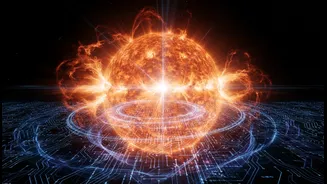
Our Sun is a dynamic star, constantly churning and twisting its powerful magnetic fields. Sometimes, these fields snap and reconnect, unleashing tremendous explosions of energy. These events come in a few forms. A solar flare is an intense burst of radiation,
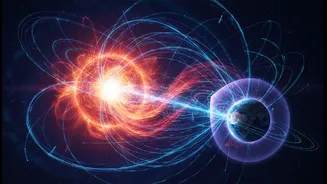
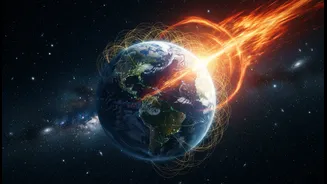
the most powerful explosion in the solar system. A Coronal Mass Ejection (CME) is a colossal cloud of magnetised plasma and particles hurled into space at millions of kilometres per hour. When these eruptions are aimed at Earth, they can cause a geomagnetic storm—a major disturbance of our planet's magnetic field.
Earth's Technological Achilles' Heel
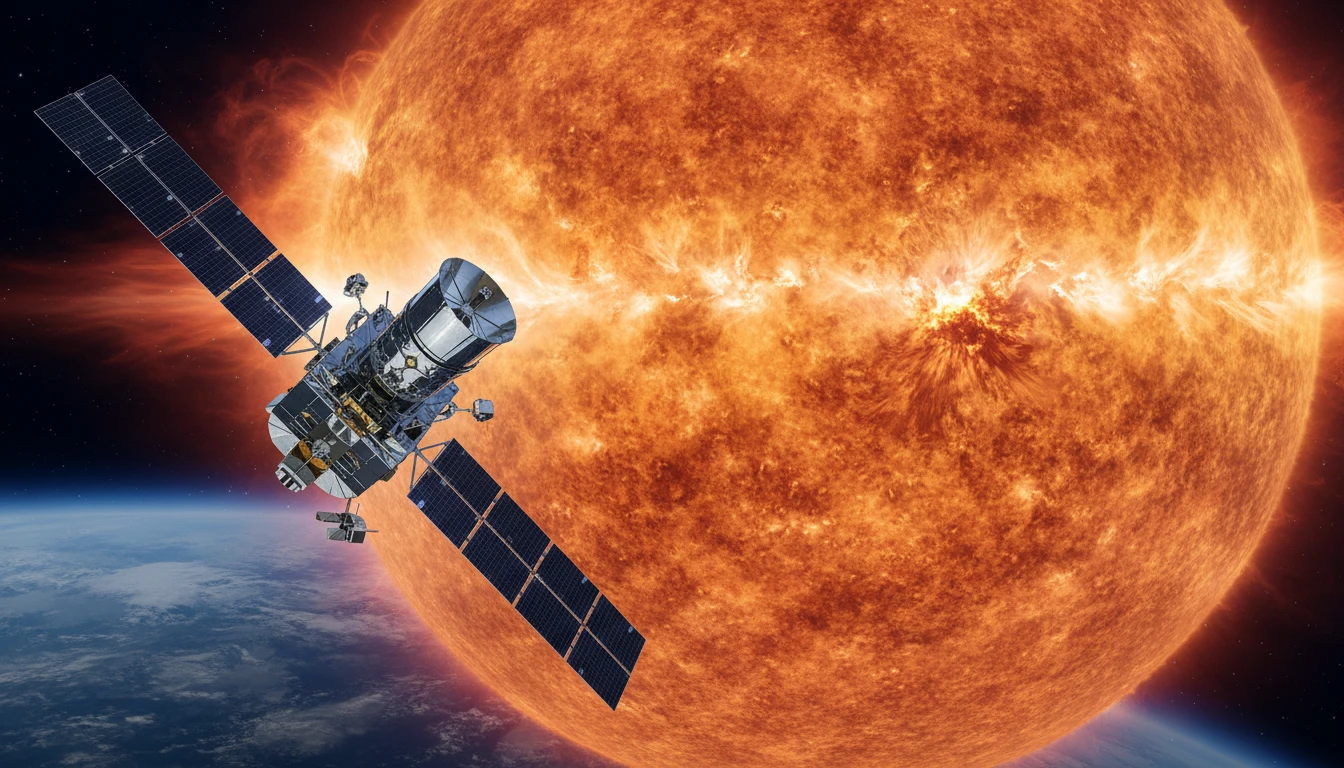
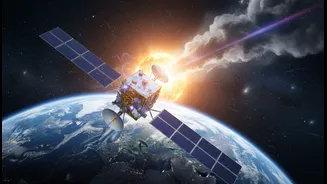
While Earth's atmosphere and magnetic field protect life on the surface, our modern, tech-driven society is highly vulnerable. A severe solar storm can induce currents in power grids, potentially causing widespread blackouts like the one that hit Quebec, Canada, in 1989. They can disrupt the high-frequency radio signals used by aviation and military, and degrade GPS accuracy, affecting everything from shipping to precision farming. Satellites, which form the backbone of our global communications and navigation systems, are especially exposed. Solar radiation can damage their electronics, degrade their solar panels, and increased atmospheric drag from a storm can even cause them to fall out of orbit.
A Clear Danger in Deep Space
For astronauts, especially those who venture beyond the protection of Earth's magnetic field, solar storms are a serious health risk. The intense bursts of radiation from a Solar Particle Event can pass through a spacecraft's hull, exposing astronauts to doses that could cause acute radiation sickness. The long-term risks of this exposure include a higher chance of developing cancer and other degenerative diseases. This radiation danger is a fundamental challenge that must be solved for future long-duration missions to the Moon or Mars, requiring specially shielded habitats and advanced warning systems to give astronauts time to take cover.
A Warning from History
To understand the potential worst-case scenario, we look to the Carrington Event of 1859. This was the most intense geomagnetic storm in recorded history, triggered by a massive solar flare observed by astronomer Richard Carrington. The storm was so powerful that it caused telegraph systems—the cutting-edge technology of the day—to fail, with some pylons throwing sparks and even giving operators electric shocks. Auroras, normally confined to the polar regions, were seen as far south as the Caribbean. If a storm of that magnitude were to strike our satellite-dependent world today, the impact on our electrical and communication infrastructure could be catastrophic.
India's Eye on the Sun
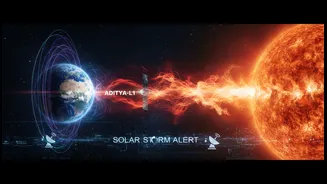
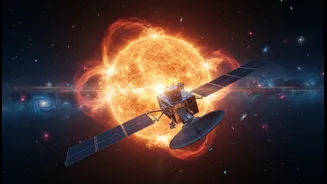
Understanding and predicting this 'space weather' is a global priority, and India is playing a key role. The Indian Space Research Organisation (ISRO) launched the Aditya-L1 mission, the nation's first dedicated solar observatory. Positioned at a special point 1.5 million kilometres from Earth, Aditya-L1 has an uninterrupted view of the Sun. Its instruments study the Sun's atmosphere and magnetic field, tracking the origins of CMEs and solar flares. This provides crucial data for improving space weather forecasts, giving us advance warning to protect our satellites, power grids, and astronauts.
The New Frontier for Space Careers
For students passionate about space, this presents a universe of opportunity. The growing reliance on space-based technology and humanity's push to become a multi-planetary species means the demand for space weather experts is booming. This interdisciplinary field needs heliophysicists to study the Sun's fundamental processes, space weather forecasters to interpret data and issue warnings, and engineers to design more resilient spacecraft and power grids. Careers in this area are available at space agencies like ISRO and NASA, research universities, and private companies that build and operate satellites, offering a chance to work at the forefront of protecting our future in space.