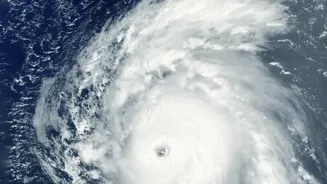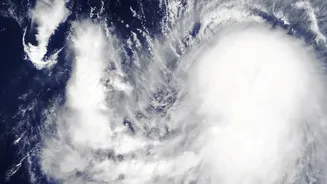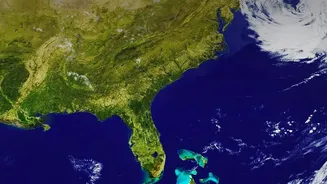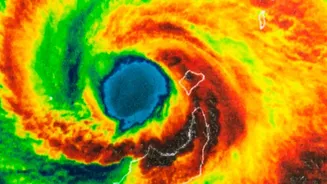





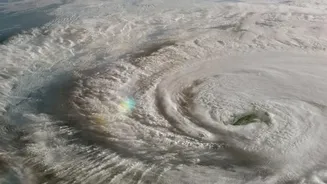


Every cyclone season, India’s vast coastline braces for impact. But are these storms getting worse? As researchers dig into the data, a worrying picture is emerging about the intensity and frequency of cyclones in the Indian Ocean.
A Tale of Two Seas
Historically, India's
eastern coast has borne the brunt of cyclonic fury. The Bay of Bengal has always been a more active basin, accounting for roughly four times as many cyclones as the Arabian Sea. The Bay's warmer waters and unique geographical enclosure create a natural hotbed for storm formation. The Arabian Sea, by contrast, was traditionally cooler and less prone to intense systems. However, recent studies indicate this long-standing balance is beginning to shift. While the Bay of Bengal remains a significant threat, seeing an increase in severe storms even if overall frequency has slightly dropped, the Arabian Sea is witnessing a dramatic and concerning transformation.
The Arabian Sea's Alarming Trend
The most startling findings from recent cyclone research centre on the Arabian Sea. Studies analysing decades of data have found a significant increase in the frequency, intensity, and duration of cyclones in this basin. One study noted a 52% rise in the frequency of cyclonic storms in the Arabian Sea between 2001 and 2019 compared to the previous two decades. Even more worryingly, the frequency of 'very severe cyclonic storms' has surged by 150%. These storms are also lasting longer, with their total duration increasing by 80%. The accumulated energy of these cyclones, a measure of their total wind power over their lifetime, has nearly tripled. This points to a fundamental change in the basin's character, creating a new and heightened threat for India's western coast.
The Engine of Intensification: Warming Waters
The primary driver behind this trend is unequivocally rising ocean temperatures. Tropical cyclones are heat engines that draw their power from warm ocean waters, specifically when sea surface temperatures (SSTs) exceed 26.5°C. The Indian Ocean is warming at a faster rate than the global average, and the Arabian Sea has seen temperatures rise by as much as 1.2 to 1.4°C in recent decades. This excess heat provides more fuel for storms, allowing them to strengthen. But it’s not just the surface; deeper layers of warm water, measured as 'ocean heat content', also provide sustained energy, preventing the storm from weakening as it churns up cooler water from below. This combination of a hot surface and deep warmth creates a perfect recipe for stronger, more menacing cyclones.
Rapid Intensification: A Growing Danger
One of the most dangerous consequences of warming seas is the phenomenon of 'rapid intensification' (RI). This is when a cyclone's wind speed increases dramatically in a short period, often in less than 24 hours. Cyclone Amphan in 2020, for instance, exploded from a Category 1 to a Category 5 storm in less than a day over the superheated Bay of Bengal. Studies show that cases of RI are becoming more common across the North Indian Ocean. This trend poses a major challenge for forecasters and disaster management authorities, as it shrinks the precious window of time available to evacuate coastal populations and prepare for a storm's impact, making an already dangerous situation even more unpredictable.
What This Means for India
The science is clear: the cyclonic threat to India is evolving and intensifying. While the eastern coast remains highly vulnerable, the western coast, home to major cities like Mumbai and Surat, can no longer be considered a low-risk zone. Research projects a future with not necessarily more cyclones overall, but with a higher proportion of them being severe or very severe. The increase in storm intensity, duration, and the potential for rapid intensification means that when storms do form, they are more likely to be destructive, bringing stronger winds, heavier rainfall, and more devastating storm surges. This shifting risk profile underscores the urgent need for India to bolster its coastal resilience, enhance early warning systems, and adapt its disaster management strategies to this new and more dangerous reality.