






A Lunar Cake with Three Layers
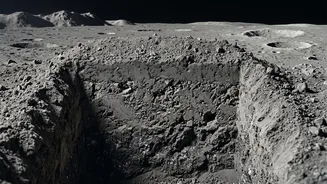
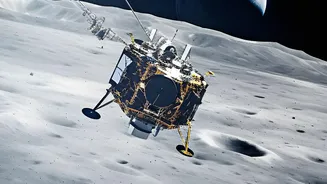
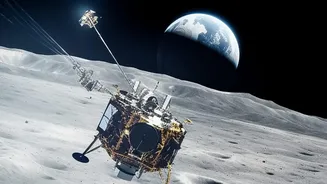
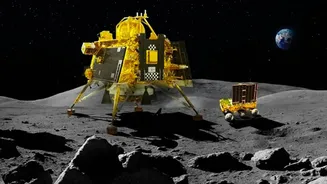
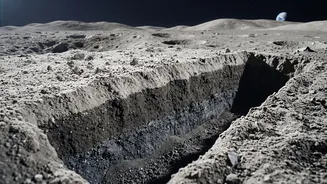
Scientists analysing data from the Vikram lander have discovered that the top 10 centimetres of lunar soil, or regolith, at the Shiv Shakti Point landing site is not a single, uniform material. Instead, it’s a stratified structure with three distinct
layers, each with different properties. A new analysis published on November 17, 2026, details these findings, which build on earlier results from 2026 that first suggested a two-layer structure. The uppermost layer, extending down about 3 cm, is described as highly porous and fluffy, with a bulk density of around 600 kg per cubic metre. Below this is a middle layer (3-6 cm) that conducts heat better, followed by a denser bottom layer (6-10 cm) where the density reaches about 1,500 kg per cubic metre. This fine-scale layering was neither observed nor expected before, offering a completely new picture of the lunar near-surface environment.
The Tool Behind the Discovery
This groundbreaking insight comes from an ingenious instrument aboard the Vikram lander called ChaSTE, or Chandra’s Surface Thermophysical Experiment. Developed by the Space Physics Laboratory and the Physical Research Laboratory, Ahmedabad, ChaSTE is a probe designed to penetrate the lunar regolith and measure its thermal properties. Equipped with 10 individual temperature sensors along its length, the probe can reach a depth of 10 cm. By measuring temperature changes at different depths, scientists can build a thermal profile and understand how heat travels through the soil. The probe also measures the force required to penetrate the soil, which gave clues about its increasing density and cohesiveness with depth. This dual capability provided the comprehensive data needed to identify the layered structure.
Why These Layers Matter
Discovering these layers is more than just a geological curiosity; it has profound implications for future lunar exploration and science. The thermal properties of the regolith are critical for understanding how the Moon handles the extreme temperature swings between day and night. The top, fluffy layer acts as a powerful insulator, trapping heat below while the surface temperature fluctuates dramatically. For instance, ChaSTE recorded a massive temperature gradient of about 73 Kelvin across just the top 10 cm at local noon. This knowledge is vital for designing future lunar habitats, rovers, and equipment. Engineers will need to account for soil that might feel like walking on dry flour on top but becomes as dense as damp clay just a few centimetres deeper.
Clues to the Moon's Past and Future
The layered structure also provides clues about the Moon’s history. Scientists propose that these layers were formed by successive impact events from nearby craters over millions of years, which deposited material with different properties at the landing site. Furthermore, the thermal conductivity and porosity of the shallow soil can influence whether volatile substances like water ice are retained in the subsurface or lost to space. Understanding this structure could help pinpoint locations where water ice might be stored, a crucial resource for any long-term human presence on the Moon. This discovery by Chandrayaan-3 is the first direct, in-situ observation of such local diversity in the lunar soil, providing essential 'ground truth' that orbital sensors couldn't see.