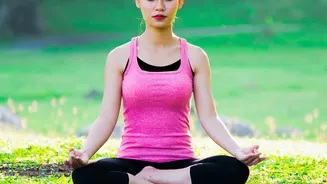








Why Your Breath is a Superpower
Before turning anything into a habit, it helps to know the 'why'. Consciously controlling your breath is more than just a relaxation trick; it has proven physiological benefits. When you intentionally slow your breathing, you activate the parasympathetic
nervous system, often called the 'rest and digest' system. This simple act can help lower your heart rate, reduce blood pressure, and decrease the levels of stress hormones like cortisol circulating in your body. The practice has ancient roots in yogic traditions like pranayama, but its modern applications are intensely practical. Regular breathwork can lead to improved mental clarity, better focus, more restorative sleep, and a greater sense of emotional balance, empowering you to better manage the demands of daily life.
Two Simple Exercises to Start Today
You don't need special equipment or a silent retreat to begin. You can do these exercises at your desk, in your car, or before you go to sleep. 'Box Breathing' (Sama Vritti Pranayama): This technique is valued for its simplicity and ability to restore calm and focus. Imagine a box with four equal sides. First, sit comfortably with a straight back. Exhale all the air from your lungs. Then, inhale quietly through your nose for a slow count of four. Hold your breath for a count of four. Gently exhale through your mouth for a count of four. Finally, hold your breath again on empty for a count of four. That completes one 'box'. Repeat the cycle for three to five minutes. '4-7-8 Breathing' (The Relaxing Breath): Popularised by Dr. Andrew Weil, this technique is especially helpful for reducing anxiety and aiding sleep. Sit or lie down comfortably. Place the tip of your tongue against the ridge of tissue just behind your upper front teeth and keep it there. Exhale completely through your mouth, making a 'whoosh' sound. Close your mouth and inhale quietly through your nose to a mental count of four. Hold your breath for a count of seven. Exhale completely through your mouth with a 'whoosh' sound for a count of eight. This is one cycle. Repeat it three more times for a total of four breaths.
From Exercise to Effortless Habit
The secret to building any new habit is consistency, not intensity. Starting small is crucial. Don't aim for a 30-minute session on day one. Instead, commit to just five minutes a day. The key is to make it a non-negotiable part of your routine. A powerful way to do this is through 'habit stacking'. Link your new breathing habit to something you already do without fail. For example: 'After I have my morning cup of tea, I will do five minutes of box breathing'. Or, 'As soon as I sit in my car to commute home, I will do four rounds of 4-7-8 breathing'. This removes the need to find extra time or motivation. By attaching the new habit to an existing one, you create a powerful trigger that makes it easier to remember and execute.
Navigating Common Roadblocks
It’s normal to face challenges when starting. Here are a few common ones and how to handle them. 'I have too many thoughts': This is the most common experience. The goal isn't to have an empty mind, but to notice when your mind has wandered and gently guide it back to your breath. Every time you notice you're distracted and return your focus, you are successfully practicing. 'I feel restless or can't sit still': Physical discomfort can derail your practice. Don't feel forced to sit cross-legged on the floor. A comfortable chair that supports your back is perfectly fine. If you feel antsy, try starting with just two or three minutes and gradually increase the time as it becomes more comfortable. 'I don't feel any different': The effects of breathwork are cumulative. While a single session can provide immediate calm, the most profound benefits come from regular practice over time. Think of it like physical exercise; you wouldn't expect to be fit after one trip to the gym. Be patient and trust the process.