


Why One Method Fails Every Grain
We often treat rice as a uniform commodity, but nothing could be further from the truth. The primary reason a single cooking method, especially high-pressure cooking, fails is because of starch. Rice contains two main starches: amylose and amylopectin.
The ratio of these two dictates the final texture of the cooked grain. Rice with high amylose content, like many long-grain varieties, cooks up fluffy and separate. Rice high in amylopectin, common in short-grain varieties, becomes soft, sticky, and sometimes clumpy when cooked. A pressure cooker is built for speed, not precision. Its intense, sealed environment is too harsh for delicate grains, breaking down their structure, stripping away subtle aromas, and often turning them into a homogenous, starchy mass. This is especially true for aromatic varieties whose volatile compounds are lost under high heat.
The Gentle Art of Cooking Short-Grain Aromatics
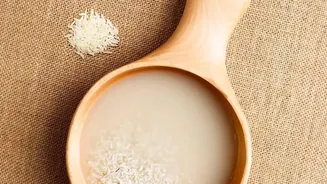
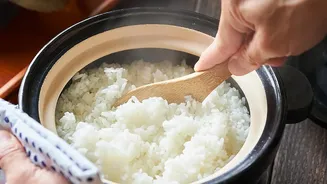
Consider fragrant, short-grained rice like Bengal’s Gobindobhog or Maharashtra's Ambemohar. These varieties are prized for their floral, buttery aromas and soft, slightly sticky texture. Subjecting them to a pressure cooker is a culinary crime. The high amylopectin content means they require gentle handling. The goal is to steam them slowly, allowing the grains to absorb water evenly and release their fragrance. The best approach is the open-pot or absorption method. After a gentle rinse and a brief soak of 15-30 minutes, the rice should be cooked in a measured amount of water (often a 1:1.5 or 1:2 rice-to-water ratio) on a low simmer with a tight-fitting lid. This traps the aromatic steam, ensuring the delicate structure remains intact, resulting in rice that is comforting and flavourful, perfect for dishes like kheer or simply served with ghee.
Perfecting Everyday Medium Grains
Now think about a workhorse like Sona Masoori, a medium-grain rice popular across South India. It’s lighter and less starchy than Basmati, and the desired outcome is typically soft, separate grains perfect for mixing with sambar or rasam. While many households use a pressure cooker for Sona Masoori, the traditional open-pot draining method often yields superior results. This age-old technique involves cooking the rice in an ample amount of boiling water, much like pasta. Once the grains are cooked to the desired tenderness, the excess, starch-filled water is drained off. This process, known as ‘vadicha sadam’ in the South, effectively removes surface starch, preventing stickiness and ensuring each grain is distinct. It gives the cook complete control over the final texture, a feat impossible to achieve in a sealed pressure cooker.
The Case for Assam’s Joha Rice
Joha rice from Assam is another indigenous gem known for its delicate texture and powerful aroma. It is a short-grain rice that is naturally soft and quick-cooking. Its unique starch composition makes it easily digestible. For Joha, the key is to preserve its signature scent. Minimal spices are recommended to let its natural fragrance shine. The best cooking practice involves a gentle rinse, a slow simmer with a 1:1.5 or 1:2 water ratio, and a crucial resting period of 5-10 minutes after the heat is turned off. This allows the steam to distribute evenly, finishing the cooking process and enhancing the fluffy texture. It’s ideal for dishes like pulao or the festive Assamese kheer known as payokh.
A New Rulebook for Rice
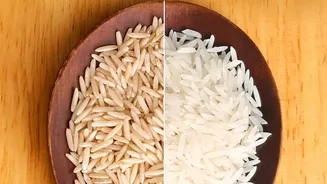
Instead of relying on a single gadget, adopt a more thoughtful approach. First, observe the grain: is it long and translucent (likely high in amylose) or short and opaque (likely high in amylopectin)? Rinse gently until the water is relatively clear to remove excess surface starch, but don’t overdo it with aromatic varieties. For most indigenous, non-Basmati rice, the open-pot method is your most reliable friend. It allows you to monitor doneness and drain excess starch. Start with a baseline water ratio, but be prepared to adjust. Treat each new variety of rice as an experiment. By respecting its unique structure and properties, you unlock its true flavour and texture, turning an everyday staple into a small celebration of India’s incredible agricultural diversity.