






A Groundbreaking Discovery in Deep Space
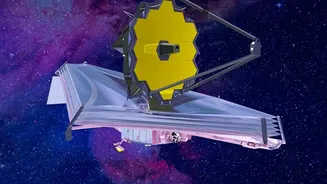
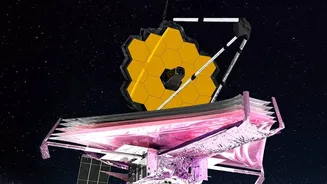
In a major development for astronomy, scientists have confirmed the presence of complex, carbon-based molecules in the atmosphere of a rocky exoplanet within the TRAPPIST-1 system. This finding, made possible by the unparalleled power of the James Webb
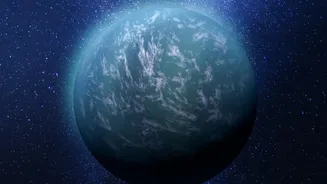
Space Telescope (JWST), marks a significant step forward in our quest to understand the chemical makeup of worlds beyond our own. While the specific planet and the exact composition of the molecules are part of an ongoing analysis, the confirmation of any heavy carbon molecules—a category that can include methane, ethane, and other hydrocarbons—on a terrestrial, or rocky, planet is a first of its kind and opens up a new chapter in the study of exoplanet atmospheres.
The Target: The Intriguing TRAPPIST-1 System
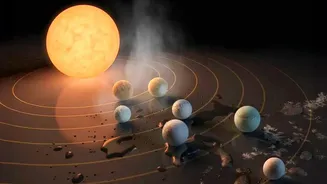
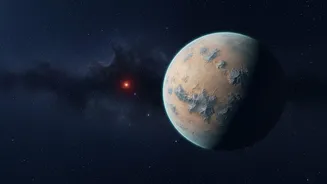
The TRAPPIST-1 system has long been a subject of fascination for scientists. Located just 40 light-years from Earth, it features seven Earth-sized planets orbiting an ultracool dwarf star. This compact arrangement means the planets transit, or pass in front of, their star frequently, offering numerous opportunities for observation. Several of these planets reside within the star's 'habitable zone,' a region where conditions might be right for liquid water to exist on the surface—a key ingredient for life as we know it. Previous studies with both the Hubble and Webb telescopes have scrutinized these worlds, ruling out thick, hydrogen-dominated atmospheres on some and finding others, like TRAPPIST-1 b and c, to be likely bare rock with little to no atmosphere. This new detection of a more substantial atmosphere rich in complex chemistry on one of its siblings is therefore a compelling twist in the story.
The Technique: How Webb Uncovers Cosmic Secrets
Detecting what a distant planet's air is made of is a monumental task, but the JWST is built for it. The telescope uses a method called transmission spectroscopy. When an exoplanet passes in front of its star from our point of view, a tiny fraction of the starlight filters through the planet's atmosphere. Different molecules in the atmosphere absorb specific wavelengths, or colours, of this light, leaving a unique chemical 'fingerprint' in the star's spectrum. Webb's incredibly sensitive instruments, NIRSpec and MIRI, can read these fingerprints. By analysing which colours are missing from the light that reaches the telescope, astronomers can deduce the chemical composition, temperature, and density of the exoplanet's atmosphere with unprecedented detail.
Why Heavy Carbon Molecules Matter
The discovery of heavy carbon molecules is exciting for several reasons, and it's not just about the search for aliens. Carbon is the backbone of life on Earth, forming the basis of all known organic chemistry. Finding complex carbon molecules like methane and ethane on a rocky exoplanet suggests the presence of active and complex chemical processes. While these molecules can be produced by geological activity, such as outgassing from volcanoes, they can also be biosignatures—gases produced by living organisms. Methane, for instance, is a potent biosignature because it is quickly broken down by starlight and needs to be constantly replenished to be detectable. On Earth, much of our atmospheric methane comes from biological processes. This discovery doesn't confirm life, but it confirms that the building blocks for complex chemistry exist on a rocky world in another solar system, making it a prime target for further investigation.
What's Next in the Search for Other Worlds?
This confirmation is a beginning, not an end. The scientific community will now focus intense efforts on this particular TRAPPIST planet. Future observations with the JWST will aim to refine the data, identifying the exact types and quantities of the molecules present. Scientists will search for other related gases, such as carbon dioxide and water, to build a complete picture of the planet's atmospheric environment. The presence or absence of certain gas combinations can help distinguish between geological and biological origins. For example, an atmosphere with methane and carbon dioxide but very little carbon monoxide could be a strong indicator of biological activity, as many non-biological processes that produce methane also produce carbon monoxide. This discovery proves that we have the technology to detect potentially habitable environments and has supercharged the mission to find our place among the stars.