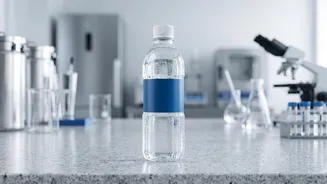







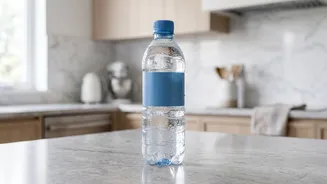
Bottled water is everywhere, a symbol of safe hydration on the go. But what's actually inside that sealed bottle, and who guarantees it's safe? The Food Safety and Standards Authority of India (FSSAI) sets the rules that all brands must follow.
Two Waters, Two Standards
First,
it's important to know that in the eyes of the law, not all bottled water is the same. FSSAI has two distinct categories: 'Packaged Drinking Water' and 'Natural Mineral Water'. Packaged Drinking Water can come from any safe source—like municipal supplies or borewells—and is treated through processes like reverse osmosis (RO), filtration, and UV disinfection to ensure purity. In contrast, Natural Mineral Water must come from a protected, natural underground source. It's bottled at the source and is valued for its original, naturally occurring mineral content, with only minimal treatment allowed. Both are safe when compliant, but they are governed by different specific standards.
What is TDS and pH Balance?
You might see 'TDS' and 'pH' on labels. Total Dissolved Solids (TDS) refers to the concentration of all minerals, salts, and metals dissolved in water. For packaged drinking water, FSSAI has set the permissible TDS limit between 75 and 500 milligrams per litre (mg/L). Water with TDS below this range can taste flat, while very high levels can make it unpalatable. The pH level, meanwhile, measures acidity or alkalinity on a scale of 0 to 14. FSSAI mandates a pH range of 6.5 to 8.5 for packaged water, ensuring it's not too acidic or alkaline for consumption.
Setting Limits on Essential Minerals
While some minerals are good for you, the FSSAI specifies a 'goldilocks' zone—not too little, not too much. For packaged drinking water, which is often remineralised after RO treatment, specific limits are in place. As per recent FSSAI directives, the permissible range for calcium is between 10 and 75 mg/L, and for magnesium, it is between 5 and 30 mg/L. These minerals are essential for bodily functions like bone health and muscle function, but regulations ensure they are present in balanced, safe quantities.
Guarding Against Harmful Contaminants
A crucial role of FSSAI's regulations is to protect consumers from invisible threats. The norms set stringent maximum limits for harmful heavy metals and chemical contaminants. For instance, the limit for arsenic and lead, both of which can cause severe health issues like neurological damage, is set at a maximum of 0.01 mg/L in packaged water. Similarly, strict limits are placed on other dangerous substances like mercury, pesticides, and residual bromate, a byproduct of certain disinfection processes. These rules are non-negotiable and are designed to prevent long-term toxic exposure and ensure public health.
How Are These Norms Enforced?
Holding an FSSAI license is mandatory for any brand selling bottled water in India. As of early 2026, FSSAI has strengthened its own oversight, classifying bottled water as a 'high-risk' food category and instituting a compulsory testing scheme that began on January 1, 2026. This requires manufacturers to conduct regular tests for all chemical, physical, and microbiological parameters from FSSAI-notified labs. This ensures that from the water source to the sealed bottle, every stage is monitored for compliance, making the brand accountable for the safety of its product.