



Your Gut's Unique Signature
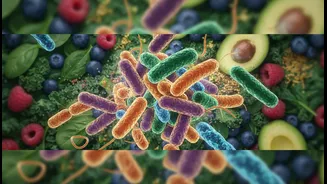
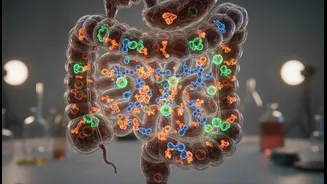
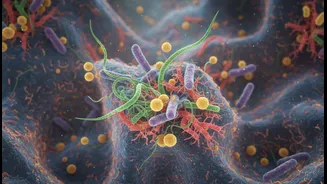
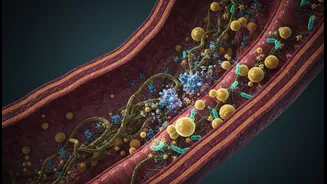
Imagine your gut as a bustling city populated by trillions of microorganisms, including bacteria, viruses, and fungi. This complex community is known as the gut microbiome. For a long time, we've known that this internal ecosystem is crucial for digestion,
immunity, and even mood. But recent research is uncovering something even more profound: each person's microbiome is uniquely personal, like a fingerprint. While your own gut bacteria population remains relatively stable, it is vastly different from the person sitting next to you. This difference is at the heart of why universal dietary advice—the kind that labels certain foods as definitively 'good' or 'bad'—is beginning to fall apart.
Same Food, Different Reaction
Studies have shown that when different people eat the exact same meal, their bodies can have wildly different reactions. One of the most-studied effects is the post-meal blood sugar spike. A study led by researchers from the Weizmann Institute of Science famously demonstrated that the glycemic response to foods like bread or bananas could be predicted more accurately by looking at an individual's microbiome than by looking at the food's carbohydrate content. One person might experience a sharp spike in blood sugar after eating white bread, while another person, eating the same bread, has a minimal response. This variability isn't random; it's a consistent and repeatable pattern for each individual, dictated by the specific microbes residing in their gut. These microbes help break down food, and different bacterial species are better at processing different nutrients like fats, proteins, and fibres.
Why Are We All So Different?
So, what shapes this unique microbial identity? It's a combination of factors. Genetics plays a role, influencing which types of bacteria find your gut a welcoming home. However, environmental factors are even more significant. Your diet throughout life, exposure to different environments, medications you've taken (especially antibiotics), and even how you were born all contribute to sculpting your personal microbiome. Studies have found that long-term dietary patterns have a major influence. For instance, someone who has consistently eaten a plant-rich diet may have a more diverse microbiome that responds differently to a high-fat meal than someone accustomed to a typical Western diet. This history means your gut is primed to handle food in its own particular way.
The Challenge to One-Size-Fits-All Diets
This research poses a significant challenge to traditional nutrition guidelines. For decades, we have relied on food pyramids and standardised dietary advice that assumes everyone's body works the same way. But if my microbiome processes fibre differently than yours, then a high-fibre diet that benefits me might not have the same positive effect on you. This helps explain why some people thrive on a high-protein diet while others feel better with more carbohydrates, or why some can digest dairy with ease while others cannot. The concept of a single “perfect diet” for everyone is becoming obsolete. Instead, the science points toward a future where nutrition is not about following generic rules, but about understanding your own body's needs.
The Future is Personalised Nutrition
The ultimate goal of this research is to usher in an era of personalised nutrition. Imagine a future where, based on an analysis of your gut microbiome, you could receive dietary recommendations tailored specifically to you. This could help manage health conditions like diabetes by predicting which foods will cause a blood sugar spike for you, or optimise athletic performance by suggesting foods that your body can convert into energy most efficiently. While commercial microbiome testing kits are already available, the science is still evolving, and experts caution that we have more to learn before these can provide perfectly accurate and actionable advice. However, the foundational discovery remains powerful: your gut's response to food is unique.