




The Coordination Conundrum
The core claim in the headline is not just an opinion; it's rooted in biomechanics. Walking is a largely automated process for most healthy adults. It's a symmetrical gait where your brain puts your legs on autopilot. Skipping, however, is an asymmetrical
movement that demands conscious effort and rhythm. It combines a step and a hop on one foot before switching to the other, requiring a constant conversation between your brain and body to manage timing, balance, and alternating movements. This plyometric, cyclic, and rhythmic demand results in significant neuromuscular adaptations. In essence, walking is like humming a simple tune, while skipping is like playing a syncopated beat on a drum kit—both are movements, but one requires far more intricate coordination to perform smoothly and efficiently.
The Calorie Burn Battle
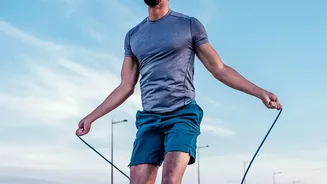
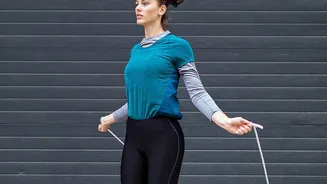
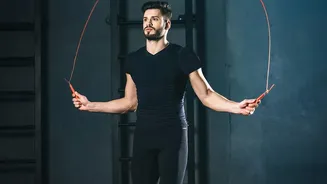
When it comes to energy expenditure, there is no contest: skipping leaves walking in the dust. As a high-intensity activity, skipping elevates your heart rate rapidly, burning a significant number of calories in a much shorter time. Some estimates suggest that just ten minutes of continuous skipping can provide the same cardiovascular benefits as a 30-minute run. While specific numbers vary by individual weight and intensity, the metabolic equivalent of task (MET) for vigorous rope skipping can be over 11, whereas walking sits around 3.5. This means skipping can be three to four times more metabolically demanding. This intensity also leads to greater post-exercise oxygen consumption (EPOC), meaning your body continues to burn calories at an elevated rate even after you've stopped.
Impact, Joints, and Bone Health
Here, the comparison becomes more nuanced. Walking is famously a low-impact exercise, making it an excellent and accessible option for almost everyone, including those with joint issues. Skipping, on the other hand, is a high-impact activity. Every jump and landing sends force through your joints. However, this isn't necessarily a bad thing. For one, some research suggests that running produces higher peak forces on the kneecap than skipping. More importantly, this impact is precisely what makes skipping an exceptional exercise for building bone density. The stress from landing signals your bones to become stronger and denser, which is crucial for staving off age-related bone loss and conditions like osteoporosis. For healthy individuals, the impact of skipping builds resilience; for others, the gentle nature of walking is safer.
Muscle Engagement and Posture
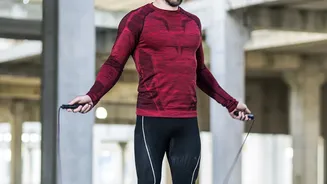
Walking primarily engages the lower body. While beneficial, it doesn't offer a full-body workout. Skipping is a different story entirely. Properly performed, skipping engages nearly every muscle from your feet to your shoulders. The propulsive hops activate your calves, hamstrings, and glutes, while maintaining an upright posture requires constant core stabilization. If you're using a jump rope, your shoulders, forearms, and wrists get a workout, too. This total-body engagement, particularly the activation of the posterior chain (glutes and hamstrings), can help counteract the negative effects of prolonged sitting, such as a rounded posture and 'gluteal amnesia', where your glute muscles forget how to fire effectively.
Accessibility and The 'Fun Factor'
In terms of pure accessibility, walking is the undisputed champion. It's free, requires no special equipment, and can be done almost anywhere by people of all fitness levels. It's the foundation of a healthy, active lifestyle. Skipping has a slightly higher barrier to entry. It requires a baseline level of coordination that some adults may find challenging to relearn, and it's not suitable for individuals with significant joint problems or certain heart conditions without a doctor's approval. However, skipping has a unique advantage: the 'fun factor'. Many people who take up skipping report feeling joyful and childlike, a stark contrast to the sometimes monotonous feeling of other cardio workouts. This enjoyment can be a powerful motivator for consistency.