


What Is the ISS and Why Can We See It?
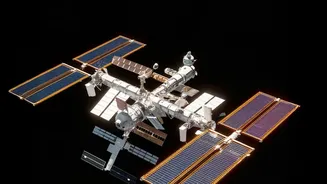
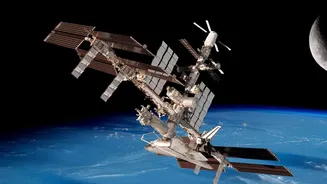
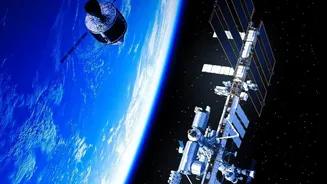
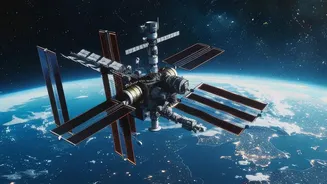
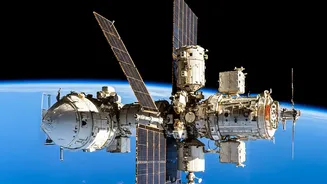
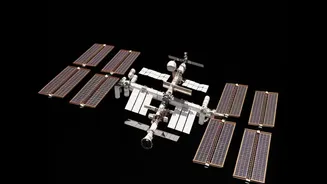
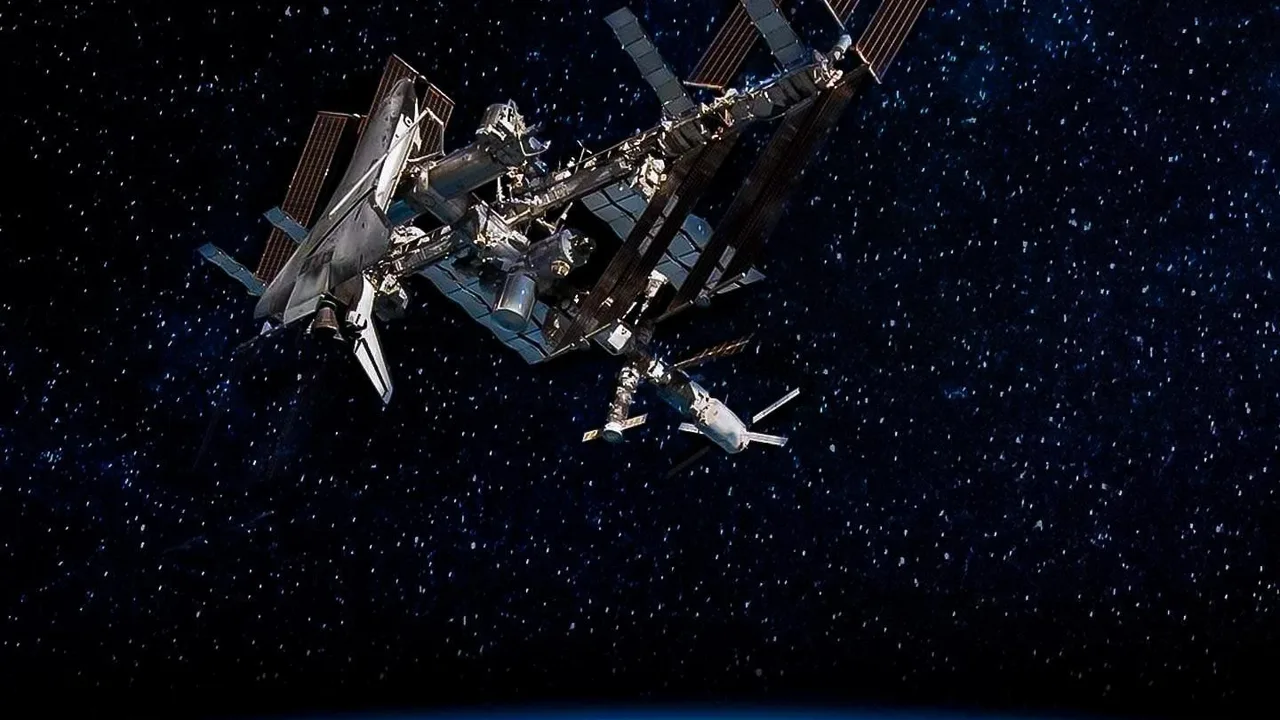
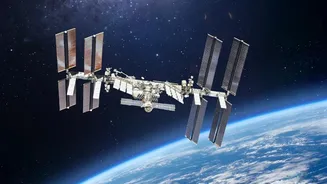
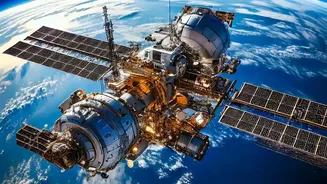
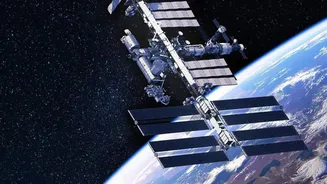
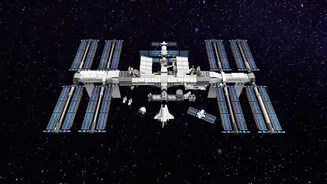
The International Space Station (ISS) is a large spacecraft and science laboratory that orbits the Earth at an altitude of about 420 kilometres. It travels at an incredible speed of nearly 28,000 kilometres per hour, completing about 16 orbits of our planet
every single day. The station itself doesn't produce light. What we see from the ground is sunlight reflecting off its large solar panels and modules. This is why the ISS is visible only during the hours around dawn and dusk. During these times, the sky is dark where you are, but the ISS is high enough to still be bathed in the sun's rays, making it shine brightly against the twilight sky.
Use a Tracker to Know When to Look
You can't see the ISS every night; you need to know when it will be passing over your specific location. Thankfully, there are excellent free tools to help. The best place to start is NASA's own 'Spot The Station' website. You can select your country (India) and the nearest major city, such as Delhi, Mumbai, Bengaluru, or Kolkata, from the list. The website will then provide a schedule of upcoming visible passes, including the exact time, duration, and the direction to look. For those who prefer using their smartphones, apps like 'ISS Detector' and 'Satellite Tracker' are fantastic options. They can send you alerts a few minutes before a pass is about to happen, so you won't miss it.
Understanding the Sighting Information
When you get a sighting schedule, you'll see a few key pieces of information. 'Appears' tells you the compass direction where the station will first become visible (e.g., SW for southwest). 'Max Height' is measured in degrees from the horizon (0 degrees) to directly overhead (90 degrees). A higher number means the ISS will pass more directly above you, making it brighter and easier to see. A pass with a max height of over 40 degrees is generally considered very good. 'Disappears' indicates where the station will fade from view as it enters the Earth's shadow. The 'Duration' tells you how many minutes the pass will last, which is typically between three and seven minutes.
What to Look For in the Sky
Spotting the ISS doesn't require a telescope or binoculars; it's one of the brightest objects in the night sky, often outshining every star and planet. Unlike an airplane, the ISS does not have flashing or blinking lights. It appears as a single, steady, and very bright point of light moving smoothly and quickly across the sky. It won't make any sound. Its movement is much faster than a distant plane but slower and more predictable than a shooting star. Just find a spot with a clear view of the sky, face the direction the tracker tells you, and wait for a bright, silent star to glide into view.
Tips for a Perfect Sighting
To increase your chances of a great viewing, find a spot away from the worst of your city's light pollution, if possible. Even a local park or an open field can make a difference. However, the ISS is so bright that it can often be seen even from light-polluted urban areas. Give your eyes about five to ten minutes to adjust to the darkness before the scheduled pass time. This will make it much easier to spot the station as it appears on the horizon. Finally, check the weather forecast. Clear skies are essential, as clouds will block the view completely. With a little planning, you can experience the thrill of watching a human outpost fly silently overhead.