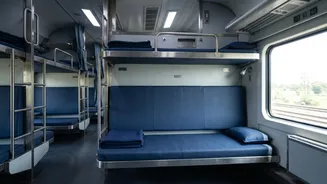







First, Understand the System
Securing a lower berth on an Indian Railways train often feels like a lottery, but it is not entirely random. The IRCTC uses an automated algorithm for berth allocation. This system prioritizes certain passenger categories and then works with the remaining
availability. A number of lower berths in each Sleeper, 3AC, and 2AC coach are reserved under a combined quota for senior citizens, women aged 45 and above, and pregnant women. The system automatically tries to allot these berths to eligible passengers first. For everyone else, it is a mix of first-come-first-served and the preferences you select. Remember, a preference is a request, not a command; the final allotment always depends on availability at the exact moment of booking.
Setting 1: Explicit Berth Preference
The most basic step is to explicitly state your preference. When you enter passenger details on the IRCTC website or app, you will find a dropdown menu for 'Berth Preference'. The options typically include Lower, Middle, Upper, Side Lower, and Side Upper. Always select 'Lower' for the passenger who needs it. While this does not guarantee the berth, failing to select it means you are leaving the decision entirely to the system's default logic. By indicating your preference, you are giving the allocation algorithm a clear instruction to follow if a lower berth is available in the general pool after all priority quotas have been fulfilled. Booking as early as possible, ideally the moment the 120-day advance reservation period opens, dramatically increases the chances that your preference can be met.
Setting 2: Leverage Priority Quotas
This is less of a 'setting' and more a crucial check of your eligibility. Indian Railways has a Lower Berth Quota specifically for male senior citizens (60 years and above) and female passengers (45 years and above). Pregnant women are also eligible for this priority. The system automatically considers passengers for this quota if their age and gender are entered correctly during booking. A common mistake is booking an eligible senior citizen along with several younger family members on the same ticket. This often causes the system to treat the entire booking as a general group, disabling the lower berth priority. For the best chance, book eligible seniors separately—either travelling alone or as a maximum of two eligible passengers on one PNR.
Setting 3: 'Book Only if Lower Berth Is Allotted'
This is a powerful, all-or-nothing option. During the booking process, under the preference section, IRCTC presents a few choices. One of the most useful for those who absolutely need a lower berth is 'Book, only if at least 1 lower berth is allotted'. If you are booking for one or more passengers, selecting this checkbox tells the system to only proceed with the booking if it can assign at least one lower berth to someone on your ticket. If no lower berth is available at that moment, the transaction will not go through, and no money will be deducted. This prevents you from being stuck with an undesirable middle or upper berth. There is also an option for 'Book, only if 2 lower berths are allotted' which is ideal for two senior citizens travelling together.
Setting 4: The 'Book Only if Confirmed' Distinction
It is vital to distinguish between berth preference and booking confirmation. Many travellers mistakenly select the 'Book only if confirm berths are allotted' option, believing it will secure them a lower berth. This setting only ensures that your ticket is booked if you get a confirmed seat, rather than a waitlisted (WL) or Reservation Against Cancellation (RAC) status. It has no connection to your berth preference. A 'confirmed' ticket could still be a middle or upper berth. If your priority is the berth type and not just a confirmed seat, you must use the specific 'Book only if at least 1 lower berth is allotted' option instead. Understanding this distinction is key to using the IRCTC booking options effectively and avoiding disappointment when you see your final ticket.