







A Festival of Unmatched Scale
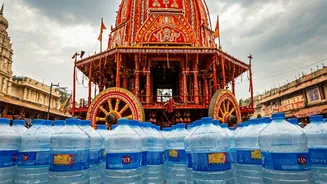
Each year, the coastal town of Puri hosts one of the world's most spectacular religious gatherings. The Rath Yatra, or Chariot Festival, sees the deities Lord Jagannath, Lord Balabhadra, and Devi Subhadra journey from their 12th-century temple home to the Gundicha
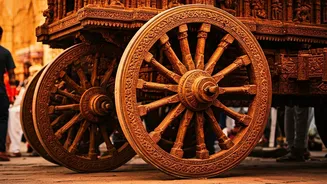
Temple, about three kilometres away. This is no ordinary procession. It’s a tradition where the divine comes out onto the street, accessible to all, pulled in towering wooden chariots that are built new every year. The sheer scale is breathtaking, with authorities expecting over 1.5 million people to converge on the city for the main festival days. Managing this sea of humanity requires a monumental effort, where faith is supported by meticulous planning.
All Eyes on the Sky
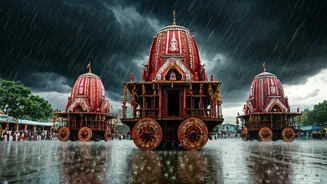
The festival, scheduled for mid-July, falls squarely in a period of tricky weather. Forecasts for Puri in July indicate a challenging mix of monsoon rains and high humidity, with daytime temperatures often feeling much hotter due to the moisture in the air. High temperatures coupled with massive crowds create a significant risk of dehydration and heat-related illnesses. In response, authorities are preparing for dual contingencies. The Puri Municipal Corporation is deploying high-capacity water pumps at locations prone to waterlogging in case of heavy showers. Simultaneously, a massive effort is underway to mitigate the effects of heat and humidity, which remains the primary concern for the well-being of the lakhs of devotees who will stand for hours along the Grand Road.
Hydration as a Critical Lifeline
Recognising the danger posed by the humid conditions, providing clean drinking water is a top priority for the administration. The Transport Department has mandated that all buses travelling to Puri must be stocked with drinking water and ORS packets. These provisions will also be available at major bus terminals and stops. Beyond transport, rest sheds for pilgrims at key entry points like Talabania will offer drinking water, alongside free meals and electricity. Volunteer organisations and civic bodies will operate numerous kiosks along the Grand Road, ensuring that a bottle of water is never out of reach. This extensive hydration network is considered a fundamental part of the festival's safety infrastructure, aimed at preventing heat exhaustion and ensuring devotees can participate in the rituals safely.
A Robust Healthcare Network
The health and safety plan extends far beyond just water. The Odisha government has finalized a comprehensive healthcare strategy, deploying 230 doctors, including 66 specialists, for the festival period. A network of 30 first-aid centres will be established across the town, supplemented by eight temporary medical centres along the Grand Road itself. To handle any emergencies, the Puri district hospital has been upgraded with additional ICU, trauma, and burn unit beds. Furthermore, 46 ambulances will be on standby, with a dedicated 'Green Corridor' created to ensure they can move swiftly through the dense crowds in an emergency. This multi-layered medical grid ensures that from a minor ailment to a serious medical event, help is always close at hand.
A Coordinated Security and Crowd Plan
Ensuring a smooth flow of people is as crucial as providing water and medical care. A massive security apparatus involving nearly 10,000 police personnel from 220 platoons will be deployed. Surveillance will be constant, with 475 high-resolution CCTV cameras monitoring strategic locations. To prevent dangerous overcrowding on the Grand Road, officials have designated 28 specific evacuation points for emergencies. For the convenience of pilgrims, a special 'Yatri Sahayata App' will provide real-time information on parking and traffic, while hundreds of e-rickshaws will offer free shuttle services from parking areas. This coordinated effort between multiple government departments, from police to transport to health, is the backbone of the festival's management.