

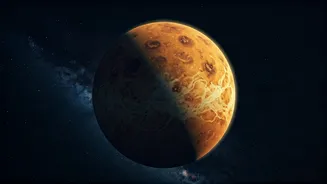



Meet Earth's 'Evil Twin'
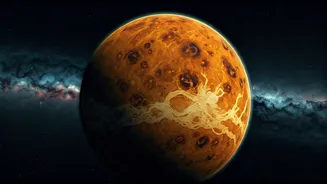
To understand the warning, we must first appreciate the horror. Venus is similar to Earth in size and mass, which is why it earned the nickname of our planetary twin. But the similarities end there. Its atmosphere is over 90 times denser than Earth's
and is composed of 96.5% carbon dioxide, a potent greenhouse gas. This suffocating blanket of CO2, mixed with clouds of sulfuric acid, has created a catastrophic, runaway greenhouse effect. The result is a surface temperature averaging 467°C, hot enough to melt lead, making it the hottest planet in our solar system—even hotter than Mercury, which is closer to the Sun. Any water that may have once existed on Venus has long since boiled away.
The Science of a Runaway Greenhouse
The story of Venus is a story of a positive feedback loop gone terribly wrong. Scientists believe that early in its history, Venus may have been more habitable, possibly with liquid water oceans. However, being closer to the Sun, its water began to evaporate, putting vast quantities of water vapour—another powerful greenhouse gas—into the atmosphere. This trapped more heat, which caused the oceans to evaporate faster. This vicious cycle accelerated until the oceans were gone and the atmosphere was saturated with heat-trapping gases. Carbon dioxide, which on Earth is largely locked away in rocks and oceans, was baked out of the planet's crust and into the Venusian atmosphere, sealing its fate. This is the 'runaway greenhouse effect': a climate tipping point from which there is no return.
A Warning for India's Climate Future
While Earth is not at risk of becoming Venus tomorrow, the basic physics are the same. Venus serves as a large-scale, long-term model of what happens when greenhouse gas concentrations spiral out of control. For India, a nation uniquely vulnerable to climate change, this warning is particularly stark. India is already grappling with climate-sensitive challenges: increasingly erratic and intense monsoons, record-breaking heatwaves that threaten human health and economic productivity, and declining agricultural yields. The extreme weather events that have become more frequent in recent years, from devastating floods to prolonged droughts, are a small-scale echo of the atmospheric instability that defines Venus. The same greenhouse gases that turned Venus into an inferno are driving these dangerous changes here at home.
ISRO's Quest for Answers
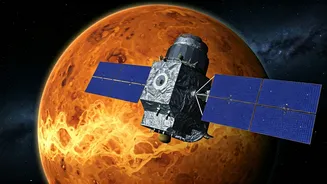
India's scientific community is taking this planetary lesson seriously. The Indian Space Research Organisation (ISRO) is planning its first-ever mission to Venus, named Shukrayaan-1. Tentatively scheduled for launch in the coming years, a primary objective of the mission is to study Venus's dense, toxic atmosphere and the processes that led to its extreme climate. By studying the runaway greenhouse effect on Venus, scientists hope to gain invaluable insights that can help refine climate models for Earth. Understanding why Earth's twin had such a dramatically different fate will provide crucial data for forecasting our own planet's future and assessing the risks we face.