





The 'Why': A Small Step, A Big Impact
Every time you throw away vegetable peels or fruit cores, they likely end up in a landfill. In India, organic material can make up a huge portion of household waste. When this organic waste is buried in landfills, it decomposes without oxygen, a process
that releases methane. Methane is a greenhouse gas significantly more potent than carbon dioxide, making it a major contributor to climate change. By composting at home, you divert this waste from landfills. Instead of producing harmful methane, your kitchen scraps break down with oxygen, a process that avoids these emissions and turns waste into a valuable resource. It's a direct, tangible way to lower your family's carbon footprint.
Getting Started: Your Balcony Compost Setup
Starting a compost system in an apartment might sound daunting, but it’s surprisingly simple. You don't need a large backyard; a small corner of your balcony will do. For beginners, a simple bin composting method is ideal. You can use a terracotta pot (khamba), a repurposed plastic bucket, or a dedicated multi-tiered composter. Whatever you choose, ensure it has a lid and some holes for aeration, which is key to avoiding smells. There are several methods suited for Indian homes, from basic bin composting to vermicomposting (using earthworms) or Bokashi, a Japanese fermentation method that is also low-odour and great for small spaces.
The Perfect Recipe: Balancing 'Greens' and 'Browns'
A healthy compost pile needs a balanced diet of two things: 'greens' and 'browns'. 'Greens' are nitrogen-rich materials. Think wet kitchen waste like fruit and vegetable scraps, coffee grounds, tea leaves, and crushed eggshells. 'Browns' are carbon-rich materials. These are dry items like shredded newspaper, cardboard, dried leaves, sawdust, and coco peat. A good rule of thumb is to add two to three parts 'browns' for every one part 'greens' by volume. This ratio keeps the compost pile from becoming too wet or smelly and provides the right environment for microorganisms to work their magic.
Troubleshooting: No Smell, No Pests
Two major fears often stop people from composting: smells and pests. The good news is that both are preventable. A foul, rotten-egg smell usually means your pile is too wet and lacks oxygen. To fix this, simply add more dry 'brown' materials like sawdust or torn cardboard and turn the mixture to introduce air. An ammonia-like smell indicates too many 'greens' (nitrogen), which can be balanced by adding more 'browns'. To avoid attracting pests like fruit flies or rodents, never add meat, dairy, or oily foods to an open compost bin. Always cover your fresh kitchen scraps with a layer of 'browns' to keep them from being exposed. A well-managed compost bin shouldn't smell bad; it should have a pleasant, earthy scent, like a forest floor after rain.
From Scraps to 'Black Gold' for Your Plants
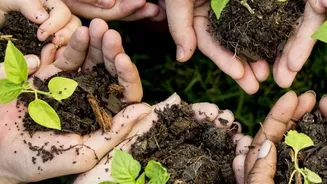
In about four to eight weeks, depending on the conditions, your waste will transform into dark, crumbly, soil-like material known as compost, or 'black gold'. You'll know it's ready when it has a uniform texture and an earthy smell, and you can no longer identify the original food items. This homemade compost is a powerhouse of nutrients for your balcony garden. It improves the soil's structure, helping it retain moisture in pots that tend to dry out quickly. You can use it in several ways: mix it into potting soil for new plants at about a 1:4 ratio, spread a thin layer on top of the soil of existing plants as a 'top dressing', or even steep it in water to create a nutrient-rich 'compost tea' to feed your plants. This closes the loop, turning your kitchen waste into food for the plants that beautify your home.