


The 'Goldilocks' Principle
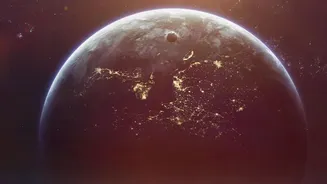
Before we can even think about life, we need to find a place it could survive. Scientists call this the 'habitable zone', or more informally, the 'Goldilocks zone'. This is the region around a star where conditions are not too hot and not too cold for liquid
water to exist on a planet's surface. Since all life as we know it depends on liquid water, this is the most logical place to start looking. A planet too close to its star would be scorching hot, causing its water to boil away. One too far would be a frozen wasteland. Just like Goldilocks' porridge, the temperature has to be just right. This principle dramatically narrows down the billions of exoplanets to a more manageable list of potential candidates for further study.
Hunting for Life's Fingerprints
Once a potentially habitable planet is identified, the real investigation begins. Scientists don't look for aliens; they look for 'biosignatures'. A biosignature is any substance, molecule, or feature that serves as scientific evidence of past or present life. Think of it like a fingerprint left at a crime scene. Life isn't passive; it actively changes its environment. On Earth, for instance, photosynthesis by countless plants and microbes pumped our atmosphere full of oxygen. So, finding certain gases like oxygen or methane in the atmosphere of a distant planet could be a powerful clue that something is living and breathing there.
The Problem with False Positives
Unfortunately, it's not as simple as 'find oxygen, find life'. A major challenge in astrobiology is the problem of 'false positives'—signs that look like they were created by life but could have been produced by non-biological processes. For example, a planet's atmosphere could build up oxygen through geological or chemical reactions that have nothing to do with life. This is why understanding the entire planetary environment is crucial. Scientists must act like cosmic detectives, ruling out all possible non-living explanations. Seeing a combination of gases that shouldn't exist together, like methane and oxygen, is a much stronger indicator, as they would normally cancel each other out unless something—like life—is constantly producing them.
The Tools of the Trade
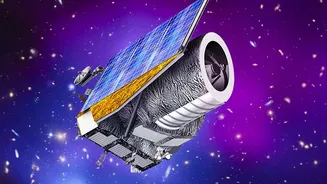
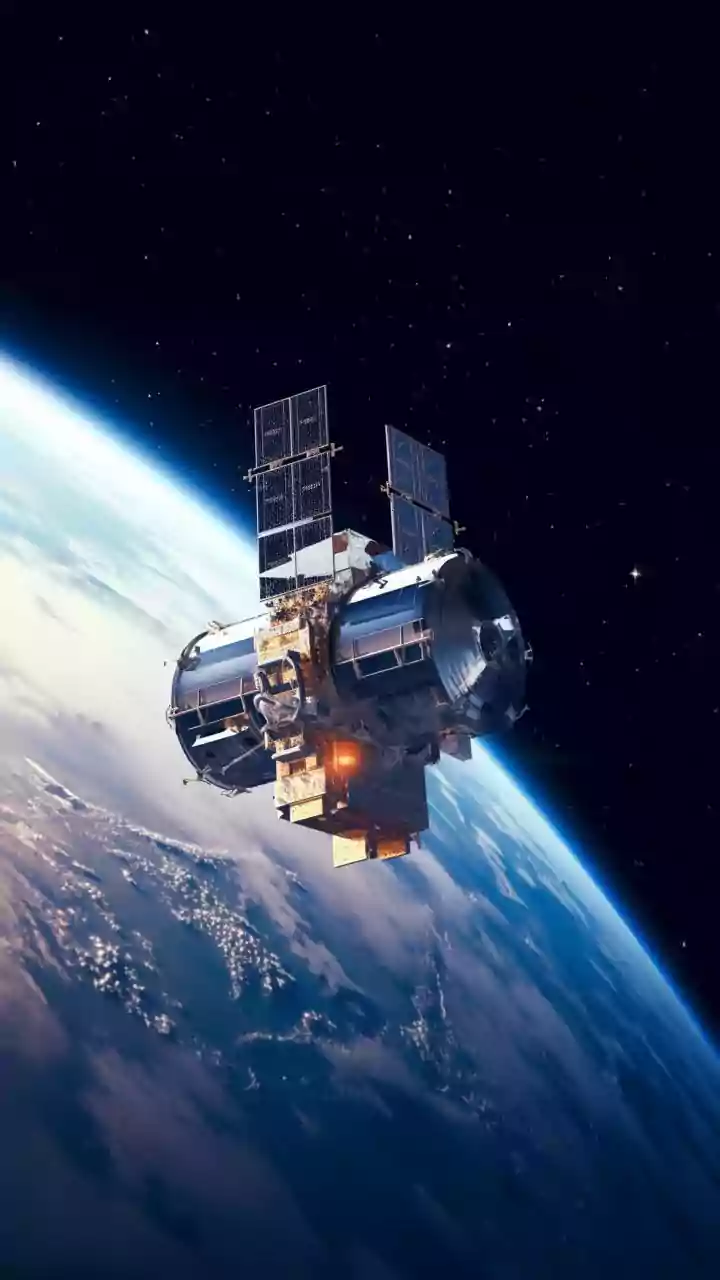
So how do we peek into the atmosphere of a planet hundreds of light-years away? The answer lies in powerful instruments like the James Webb Space Telescope (JWST). One of its key techniques is called transit spectroscopy. When an exoplanet passes in front of its star from our point of view, a tiny amount of starlight filters through the planet's atmosphere. By analysing the spectrum of this light, scientists can identify the chemical fingerprints of the gases present. The JWST is sensitive enough to detect minute amounts of gases like methane and carbon dioxide, giving us our first real glimpse into the atmospheric makeup of these distant worlds.
Beyond Biology: The Search for Technology
While most of the search focuses on biosignatures, some scientists are also looking for 'technosignatures'—evidence of technologically advanced civilizations. This could be anything from industrial pollutants like chlorofluorocarbons in an atmosphere to unusual radio signals or even massive structures built by an alien civilization. The search for technosignatures, often associated with SETI (Search for Extraterrestrial Intelligence), broadens the definition of what we're looking for. A sterile planet showing a clear technosignature could, for example, point to a civilization of machines. It's a long shot, but it reminds us to keep an open mind about what 'life' might look like.
It Starts in Our Own Backyard
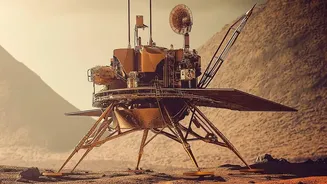
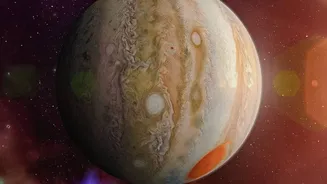
The quest for alien life also involves looking closer to home. Studying the diverse and extreme environments on Earth, from deep-sea vents to subsurface ecosystems, helps scientists understand the absolute limits of life. Investigating our planetary neighbours like Mars and the icy moons of Jupiter and Saturn, such as Europa and Enceladus, serves as a crucial testing ground. These worlds, though likely not home to complex life, may harbour microbial life in subsurface oceans or ancient riverbeds. By understanding how life could potentially survive in these varied local environments, we refine our models and strategies for what to look for on planets orbiting distant stars.