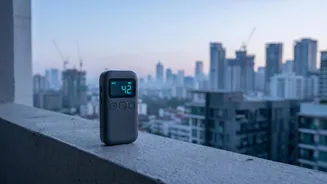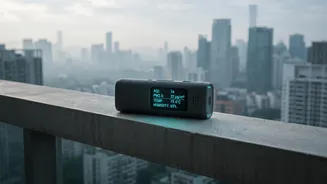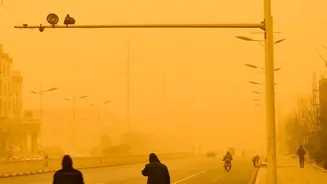






As winter settles in across India, a familiar haze often returns. But poor air quality doesn't have to mean giving up your cherished daily walk. With the right strategy, you can find clear windows for safer and more enjoyable outdoor exercise.
Understanding the Air Quality Index (AQI)
The Air
Quality Index, or AQI, is a tool that simplifies complex air pollution data into a single number, a category, and a colour, making it easy to understand. Launched in India in 2014, the index runs from 0 to 500 and is based on eight key pollutants, including PM2.5 and PM10, which are tiny, harmful particles. The scale is divided into six categories: 'Good' (0–50), 'Satisfactory' (51–100), 'Moderate' (101–200), 'Poor' (201–300), 'Very Poor' (301–400), and 'Severe' (401–500). For a casual walk, aiming for an AQI below 100 ('Good' or 'Satisfactory') is ideal. When the AQI enters the 'Moderate' stage, people with heart or lung conditions should be cautious.
Why Winter Air Quality Suffers
Winter air quality often deteriorates due to a weather phenomenon called temperature inversion. Normally, warmer air near the ground rises, carrying pollutants with it. In winter, however, a layer of cold air gets trapped near the surface by a layer of warmer air above it. This acts like a lid, preventing pollutants from dispersing. Compounded by lower wind speeds and less sunlight, emissions from traffic, industry, and seasonal activities like stubble burning get concentrated at ground level where we breathe. This is why early mornings and late evenings in winter frequently have the highest pollution readings.
Essential Tools for AQI Tracking
Your smartphone is your best ally in planning walks. Several reliable apps provide real-time AQI data for Indian cities. The 'Sameer' app is the official tool from the Central Pollution Control Board (CPCB), offering government-validated data from its monitoring network. 'SAFAR-Air', developed by the Ministry of Earth Sciences, provides forecasts for major metros like Delhi, Mumbai, Pune, and Ahmedabad. Other popular international apps with strong Indian coverage include 'IQAir AirVisual' and 'Plume Labs', which often provide hyperlocal readings and even street-by-street pollution maps. Many built-in weather apps on Android and iPhone now also include local AQI data.
Finding Your 'Green Window' for a Walk
The key to safer winter walks is timing. Since pollution is often trapped by cold air overnight, the worst AQI readings tend to occur in the early morning and after sunset. The best time for a walk is typically from late morning to early afternoon, roughly between 10 a.m. and 3 p.m. During these hours, the sun has had a chance to warm the ground, which helps break up the temperature inversion and allows pollutants to rise and disperse. Use your chosen AQI app to check hourly forecasts. Look for a dip in the numbers during this midday window and plan your walk accordingly.
Smart Strategies for Safer Walks
Beyond just timing, a few other adjustments can significantly reduce your exposure. Choose your route wisely; opt for parks or quiet residential streets instead of walking alongside heavy traffic, as vehicles are a major source of pollution. Even on a 'Moderate' AQI day, consider a shorter or less intense walk. If you have a respiratory condition or the AQI is above 150, wearing a well-fitting N95 mask can help filter out fine particulate matter. Most importantly, listen to your body. If you experience coughing, wheezing, or unusual shortness of breath, it's a sign to cut your walk short and head indoors.
When It's Best to Stay Indoors
While finding a window for a walk is often possible, some days are simply not safe for outdoor exertion. When the AQI climbs into the 'Poor' (201–300) category, even healthy individuals can experience breathing discomfort on prolonged exposure. Once the AQI is 'Very Poor' (301–400) or 'Severe' (401+), the risk of respiratory illness increases significantly for everyone. On these days, it is strongly advised to avoid outdoor exercise altogether and opt for indoor activities instead. This is especially critical for children, the elderly, and anyone with pre‐existing heart or lung conditions.