


Peering into the Cosmic Dawn
Imagine the universe moments after the Big Bang: a hot, dense soup of particles. For hundreds of thousands of years, it was a dark, foggy place, filled with a mist of neutral hydrogen gas. Then, about 100 to 200 million years after its birth, the first
stars began to ignite. This pivotal moment, known as the 'Cosmic Dawn,' marks the end of the cosmic dark ages and the beginning of a dramatic transformation. The intense light from these first stars and galaxies started to burn away the fog in a process called reionization, gradually making the universe transparent. Scientists are fascinated by this era because it holds the secrets to how the structured cosmos we see today, with its trillions of galaxies, first emerged from the primordial chaos.
A Time Machine Called Webb
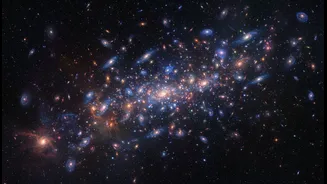
The primary tool for this cosmic archaeology is the James Webb Space Telescope (JWST). Launched to see the universe in infrared light, Webb can detect the faint, stretched-out light from the most distant objects. Because their light has taken billions of years to reach us, we see these galaxies not as they are now, but as they were in their infancy. Recent discoveries from JWST have pushed the frontier back to just 300 million years after the Big Bang, revealing galaxies like JADES-GS-z14-0 that are shockingly bright and large for their age. These observations are providing the first real data on a period that was previously only accessible through theories and simulations, giving us a direct window into galaxy formation in action.
From Tiny Seeds to Giant Structures
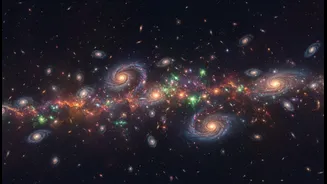
One of the biggest questions in cosmology is how galaxies grew so big, so fast. The traditional model suggested a slow, hierarchical process where small galaxies merged over billions of years. However, recent discoveries are challenging this view. Some studies show that massive elliptical galaxies may have formed through the rapid collapse of entire protoclusters just 1.4 billion years after the Big Bang. Findings from July 2026 revealed a galaxy with a complex, rotating disk of stars at its center, a feature thought to have formed much later in cosmic history. This suggests that some galaxies developed organized internal structures much faster than models predicted, maturing at an accelerated pace.
Puzzling Finds and New Mysteries
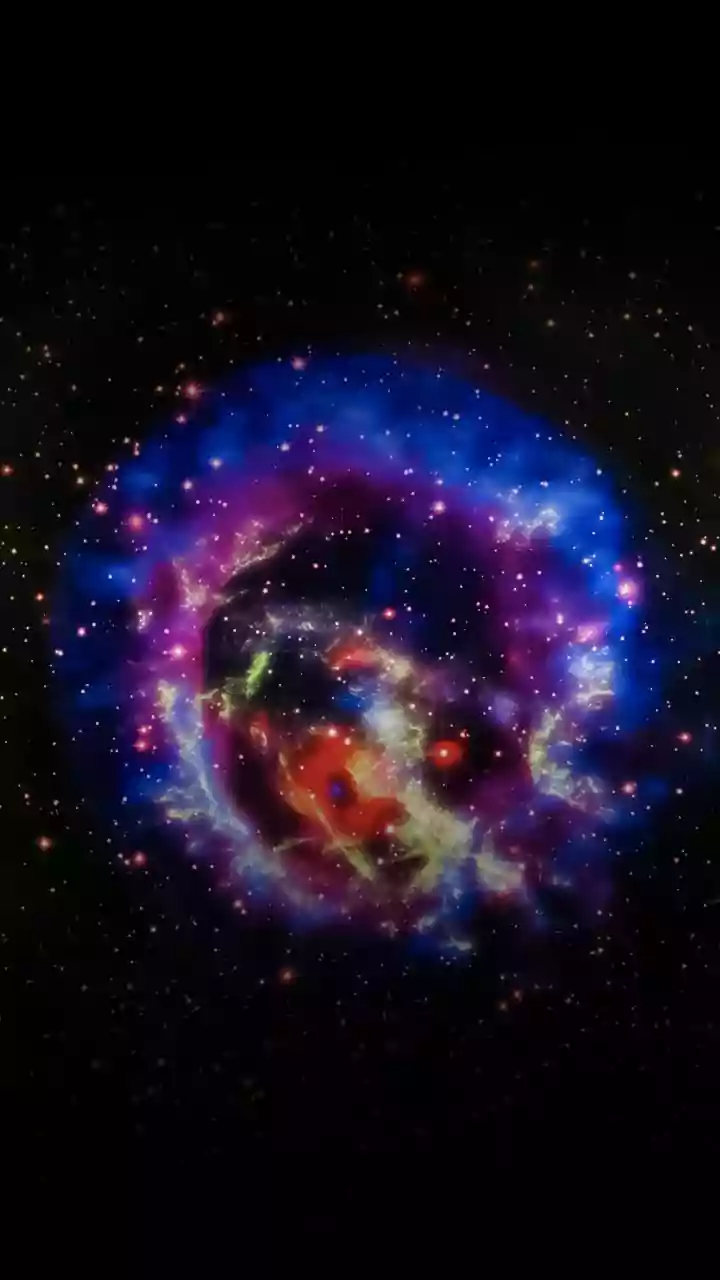
This new flood of data is not just answering questions; it's creating new ones. Astronomers are finding mysterious 'little red dots,' which are compact, ancient galaxies that are difficult to explain. They might be filled with unexpectedly old stars, or they could host supermassive black holes that are far too large for their host galaxies, challenging our understanding of how black holes and galaxies co-evolve. Scientists have also found some of the most chemically primitive galaxies ever seen, with extremely low levels of heavier elements, giving us a direct snapshot of the material forged by the universe's very first stars. These findings are forcing theorists back to the drawing board to refine models of how the first generation of stars and galaxies behaved.
Connecting the Past to Our Present
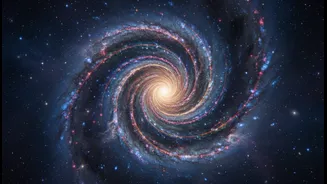
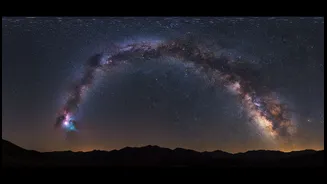
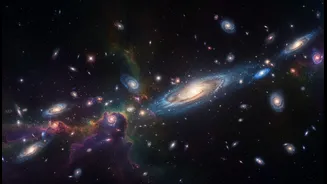
Studying these ancient galaxies is not just an academic exercise in cosmic history; it's about understanding our own origins. The hydrogen and helium forged in the Big Bang were the only ingredients available to the first stars. Every heavier element—the carbon in our bodies, the oxygen we breathe, the silicon in our computers—was forged inside stars and scattered across space when they died. By tracing the chemical evolution and structural growth of the first galaxies, scientists are essentially mapping the ancestry of our own Milky Way. Understanding how these pioneer galaxies gathered gas, ignited stars, and grew into the majestic spirals we see today helps us complete the story of how our own cosmic home came to be.