








The Living Tradition of Harela
Harela is a folk festival deeply rooted in the Kumaon region of Uttarakhand, celebrating the start of the monsoon and the new sowing season. The name itself translates to “Day of Green,” reflecting its core purpose: praying for a bountiful harvest and prosperity.
Traditionally, preparations begin about ten days before the festival, when families sow seeds of five to seven different grains, such as barley and maize, in small baskets. These sprouted shoots, called Harela, are seen as a symbol of fertility. On the festival day, elders place these green shoots on the heads of younger family members as a blessing. The festival is also linked to the worship of Lord Shiva and Goddess Parvati, whose symbolic union represents the harmony and fertility of nature.
From Ritual to Mass Reforestation
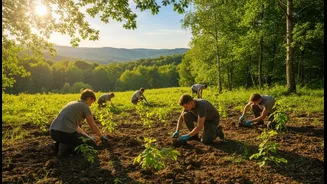
In recent years, Harela has evolved from a household ritual into a large-scale environmental initiative. Recognising its inherent connection to nature, the state government, local communities, schools, and NGOs have transformed the festival into a massive sapling plantation drive. This modern adaptation feels natural because, at its heart, Harela has always been about respecting and celebrating greenery. The drive has become a formal tradition, with an organised effort to plant thousands, if not lakhs, of saplings across the state each year during the festival period. It's a powerful example of how ancient cultural practices can be channelled to address contemporary ecological challenges like deforestation and climate change.
Greening Urban and Rural Landscapes
The Harela sapling drive is a concerted effort that touches both urban and rural areas. In cities and towns, saplings are planted along roadsides, in parks, and on the premises of schools and government buildings, enhancing the urban green cover. In rural areas, the focus is often on reforesting degraded land and community forests, known as Van Panchayats. This widespread plantation helps combat soil erosion, a critical issue on the Himalayan slopes, especially during heavy monsoon rains. The green cover helps to stabilize the land, preventing landslides and protecting agricultural fields below. By involving communities directly, the drive ensures a sense of ownership and better care for the planted saplings, increasing their survival rate and long-term impact.
A Lifeline for Biodiversity
The drive’s significance extends deep into biodiversity conservation. The emphasis is on planting native species that are well-suited to the local ecology. Species like Banj (oak), Deodar, and various fruit-bearing and medicinal trees are prioritised. Oak forests, for instance, are crucial for Himalayan ecosystems as they support a wide range of flora and fauna and are excellent at retaining water. By reintroducing these native varieties, the drive helps restore natural habitats for birds and animals. It also strengthens agrobiodiversity, as the festival's core ritual of sowing multiple types of grains has always been a traditional method of preserving local crop germplasm.
Enhancing Critical Water Security
Perhaps the most critical impact of the Harela greening movement is on water security in the ecologically fragile Himalayan region. Forests act like giant sponges. The roots of trees hold the soil together, allowing rainwater to percolate deep into the ground and recharge aquifers. This process is vital for rejuvenating the natural springs (naulas) and streams that are the primary source of drinking water for many mountain communities. Increased forest cover reduces surface runoff, which not only prevents soil erosion but also mitigates the risk of flash floods downstream. In a state where many rivers that serve the entire northern plains are born, a healthy forest cover, boosted by efforts like the Harela drive, is essential for the water security of millions.