



Why Winter is Prime Time for Tiger Spotting
While tiger reserves have different peak seasons, the winter months from October to March are generally considered the best time for wildlife safaris across India. The oppressive heat of the summer has subsided, making the long hours in an open-air vehicle
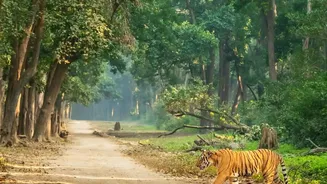
pleasant and comfortable. More importantly, the cooler temperatures mean that tigers and other animals are more active throughout the day, often seen basking in the sun or walking the trails. The morning mist hanging over the grasslands and the golden light of the winter sun also create a stunning photographic backdrop, enhancing the entire experience. Furthermore, with the monsoon having just ended, the forest is lush and rejuvenated, though the vegetation can sometimes be dense early in the season.
Choosing Your Weekend Tiger Hub
For a successful weekend trip, accessibility is key. The goal is to minimise travel time and maximise your time in the jungle. Several of India’s premier tiger reserves are conveniently located a few hours' drive or a short flight from major metropolitan cities. - From Delhi/NCR: Jim Corbett & Ranthambore: Jim Corbett in Uttarakhand is a classic choice, about a 5-6 hour drive from Delhi. Its varied landscape of hills, grasslands, and a large lake makes it a scenic destination. Ranthambore in Rajasthan, accessible via a train to Sawai Madhopur or a drive from Jaipur, is famous for its fort backdrop and high-density tiger population, offering excellent sighting opportunities. - From Mumbai/Pune: Tadoba-Andhari: Located in Maharashtra, Tadoba is a fantastic option for those in the western region. A flight to Nagpur followed by a 3-hour drive gets you to the park, which has gained a stellar reputation for frequent and predictable tiger sightings. - From Bengaluru/Chennai: Bandipur & Nagarhole: Part of the Nilgiri Biosphere Reserve, these two parks in Karnataka are a 4-5 hour drive from Bengaluru. They offer a different landscape, dominated by deciduous forests, and are home to a healthy population of tigers, leopards, and elephants.
The Golden Ticket: Booking Your Safari
This is arguably the most critical step, and it requires advance planning. Safari permits for major national parks are booked online through official state government portals, and they sell out weeks, if not months, in advance, especially for weekends and holidays. Do not rely on last-minute bookings. You will typically have a choice between a 6-seater open Jeep (Gypsy) and a 20-seater open bus (Canter). While a Canter is more budget-friendly, a Jeep offers a more intimate and flexible experience, allowing the guide to navigate narrower trails and wait patiently for sightings. When booking, you will also need to select a specific zone or gate. It's wise to research the current sighting trends in different zones, though luck plays the biggest role.
Where to Stay: From Forest Lodges to Luxury Resorts
The areas surrounding major tiger reserves are well-equipped with a wide range of accommodation options. You can find everything from basic government-run forest rest houses inside the park's buffer zones to mid-range hotels, rustic eco-lodges, and ultra-luxurious resorts with spas and private pools. Your choice will depend on your budget and desired comfort level. Many hotels also offer to book safaris on your behalf, which can be a convenient (though sometimes more expensive) option if you're short on time. Booking your stay well in advance is just as important as booking the safari, especially during the peak winter season.
Packing Essentials for the Winter Safari
Dressing appropriately can make or break your safari experience. Morning safaris, in particular, can be bitingly cold in an open Jeep. The key is to dress in layers. Start with a thermal base layer, add a fleece jacket, and top it off with a windproof outer shell. As the day warms up, you can peel off layers as needed. Also essential are a warm hat or beanie, gloves, and a scarf or buff to protect your face from the wind and dust. Opt for neutral, earthy colours like khaki, beige, and olive green to blend in with the surroundings. Don't forget sunscreen, sunglasses, a good pair of binoculars for spotting distant wildlife, and, of course, your camera with a fully charged battery and an empty memory card.