






Why Breathing Is More Than Just Air
Efficient swimming isn't just about strong arms and a powerful kick; it's about how well you manage your breath. Unlike land-based sports, swimming requires you to time every inhale and exhale with your movements. Many swimmers mistakenly hold their breath underwater,
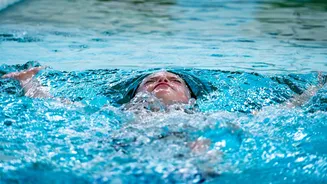
leading to a buildup of carbon dioxide, which triggers a feeling of panic and a desperate need for air. The secret to calm, controlled swimming lies in a simple principle: exhale completely while your face is in the water. This action clears your lungs, so when you turn to breathe, you only need a quick, relaxed inhale. Mastering this rhythm reduces fatigue, keeps your body streamlined, and allows you to swim longer with less effort.
The Science of CO2 Tolerance
That urgent feeling of needing to breathe is often misunderstood. It's not a lack of oxygen but rather your body's response to rising carbon dioxide (CO2) levels. When you hold your breath, CO2 accumulates in your blood, making it more acidic. Your brain interprets this as a signal to breathe immediately, causing shortness of breath. By practicing drills that involve controlled breath-holding, you can train your body to become more tolerant of CO2. As your tolerance improves, the urge to gasp for air diminishes, allowing you to maintain a calmer, more efficient breathing pattern and rhythm. This helps you feel more relaxed and in control, even during intense swims.
Finding Your Rhythm: Bilateral Breathing
One of the most effective techniques for improving your swimming is bilateral breathing—alternating which side you breathe on, typically every three strokes. While it can feel awkward at first, its benefits are immense. Breathing to both sides promotes a balanced and symmetrical stroke. Swimmers who only breathe to one side often develop muscular imbalances, where one side of the body rotates more than the other, which can lead to injury and a less efficient stroke. Bilateral breathing forces you to rotate your body evenly, engaging your core and back muscles on both sides. This balanced rotation not only helps you swim in a straighter line but also gives you a tactical advantage in open water, allowing you to breathe away from waves or keep an eye on competitors.
Pacing Your Breath With Your Stroke
Timing is everything. In freestyle, your breath should be a seamless part of your body's rotation, not an action that disrupts it. A common mistake is lifting the head to breathe instead of rotating it with the torso. This causes the hips to drop, increasing drag and slowing you down. The correct technique involves turning your head just enough for your mouth to clear the surface while keeping your body aligned. Another frequent error is dropping the lead arm—the one extended in front—too early while breathing. This arm provides crucial support and balance; pulling with it too soon breaks your rhythm and shortens your stroke. Focus on keeping that lead arm extended until your other arm is ready to enter the water.
Drills to Improve Your Breath Control
Like any other skill, breath control improves with practice. Incorporate these drills into your warm_ups to build confidence and technique. First, practice 'bobbing' in the shallow end, focusing on exhaling fully underwater and inhaling as you surface. Next, use a kickboard and practice your breathing rotation without worrying about your arms. Kick across the pool, rotating your head to breathe on one side, then switch sides on the next length. To practice bilateral breathing, start with a pull buoy between your legs to isolate your upper body. Swim lengths focusing on a consistent three_stroke breathing pattern. As you get more comfortable, gradually increase the number of strokes between breaths to build lung capacity and CO2 tolerance.