
What Are Sodium-Ion Batteries?
At its core, a sodium-ion battery works much like the lithium-ion batteries that power our phones and current electric vehicles (EVs). It stores and releases energy by moving ions between a positive and negative electrode. The game-changing difference,
however, lies in the name itself. Instead of relying on lithium, this technology uses sodium ions as its charge carriers. Why is this a big deal? Because sodium is one of the most abundant elements on Earth, readily available in everything from rock salt to seawater. In contrast, lithium is relatively scarce, with reserves concentrated in just a few countries. This fundamental difference in availability is the key to unlocking a more affordable and sustainable energy future. By switching the core ingredient from expensive, geopolitically sensitive lithium to cheap, plentiful sodium, the entire cost equation of battery manufacturing changes.
The Cost Advantage Explained
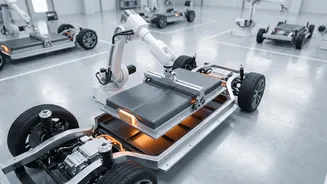
The single biggest component of an EV's price tag is its battery pack. The high cost is largely driven by raw materials like lithium, cobalt, and nickel. Sodium-ion technology sidesteps these expensive inputs. Sodium itself is about a thousand times more abundant than lithium, and the other materials needed for the battery, such as iron and manganese, are also widely available and inexpensive. Some estimates suggest that sodium-ion batteries could be around 30% cheaper to produce than their lithium-ion counterparts. Furthermore, sodium-ion batteries can be manufactured on existing lithium-ion production lines with only minor modifications, which dramatically reduces the capital investment needed for companies to switch. This structural cost advantage, built on cheaper materials and adaptable manufacturing, is what could lead to significant reductions in the showroom price of EVs in India.
Are There Any Performance Trade-Offs?
While sodium-ion batteries excel in cost and safety, they do come with a primary trade-off: lower energy density. In simple terms, a sodium-ion battery of the same weight and size stores less energy than a top-tier lithium-ion battery. This means that for a long-range electric car, the battery pack would need to be heavier and bulkier to deliver the same mileage, which is a significant challenge for vehicle design. However, this limitation is not a deal-breaker for all applications. For a large segment of the Indian market, such as city-centric compact cars, electric two-wheelers, and three-wheelers, an everyday range of 150-250 km is more than sufficient. In these use cases, the cost savings far outweigh the lower energy density. Moreover, Indian companies are making rapid progress. Pune-based KPIT Technologies has developed a sodium-ion cell with impressive fast-charging capabilities, claiming it can be charged to 100% in under 20 minutes while offering a long cycle life of 3,000 to 6,000 cycles.
The 'Made in India' Push
The push for sodium-ion technology aligns perfectly with India's 'Atmanirbhar Bharat' mission. Several Indian companies are at the forefront of this revolution. Reliance Industries has acquired Faradion, a UK-based leader in sodium-ion tech, and is building a giga-factory in Jamnagar to produce these batteries, initially for two-wheelers and energy storage. KPIT Technologies has partnered with Trentar Energy Solutions to commercialise its homegrown sodium-ion technology, with plans for a 3 GWh manufacturing plant. Meanwhile, startups like Indi Energy, an IIT-Roorkee spin-off, are creating innovative solutions by making key battery components from agricultural waste like crop stubble. This domestic push not only promises to reduce EV costs but also aims to build a self-reliant supply chain, shielding India from the price volatility and import dependency associated with lithium.
The Road Ahead for Cheaper EVs
So, when can you expect to see these affordable EVs on Indian roads? The transition is already beginning. According to government officials, some Indian sodium-ion technologies have reached an advanced stage of readiness, suggesting commercial production could be just two to three years away. Industry experts predict that sodium-ion will be a key technology explored for Indian passenger vehicles over the next four to six years. The initial wave of adoption will likely be seen in electric two-wheelers, three-wheelers, and commercial vehicles, where the balance of cost and performance is most favourable. While you may not see a sodium-powered long-range SUV tomorrow, the technology is on a clear path to power the next generation of affordable, mass-market electric vehicles that could truly transform mobility for millions of Indians.