





Our Climate's Toll on Solar Tech
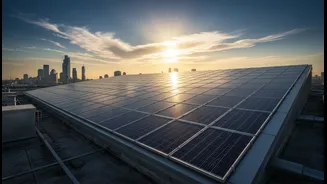
Solar panels are a critical weapon in the fight against climate change, but they are not immune to the climate itself. In India, this is a particularly sharp challenge. Extreme heat, especially in prime solar regions like Rajasthan and Gujarat, can reduce
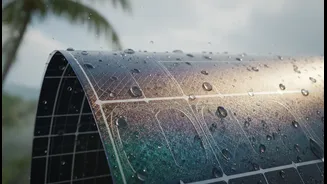
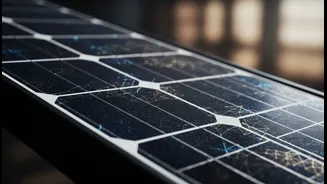
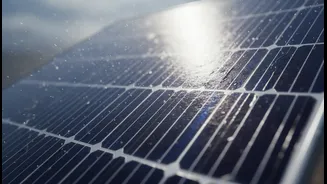
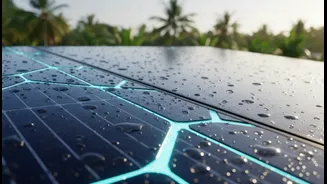
a panel's efficiency as its operating temperature rises. Dust and air pollution coat panel surfaces, blocking sunlight and requiring costly, water-intensive cleaning. Then come the monsoons and cyclones, where high-velocity winds can twist frames and intense hail can cause micro-cracks in the panel glass. These tiny, often invisible fractures can silently degrade a panel's energy output over time, threatening the financial viability and reliability of multi-billion dollar projects.
The Promise of Perovskites
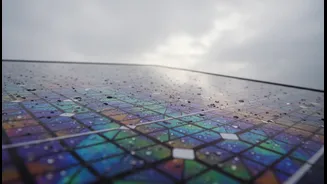
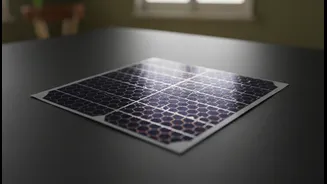
For years, silicon has been the undisputed king of solar materials, but it has its limitations. Enter perovskites, a class of materials with a unique crystal structure that has scientists and the energy industry buzzing. Perovskites are exceptional at converting sunlight into electricity, with lab efficiencies now exceeding 30% in some cases, often at a lower manufacturing cost than silicon. Their biggest historical weakness, however, has been durability. Early perovskite cells degraded quickly when exposed to moisture, heat, and even continuous sunlight. Recent breakthroughs are solving this stability problem. Researchers are engineering the material's crystal structure and developing advanced encapsulation techniques to make perovskite cells dramatically more robust, retaining their high performance even after exposure to extreme temperature swings.
Self-Healing and Super-Strong Coatings
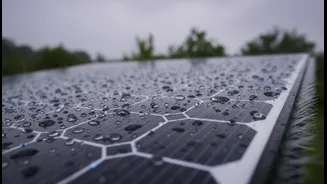
Beyond the core cell material, innovation is booming in the protective layers that shield panels from the elements. One of the most exciting developments is self-healing polymers. Researchers, including teams at Indian Institutes of Technology (IIT), have created coatings that can automatically repair minor scratches and cracks. When damage occurs, microcapsules in the material can rupture and release a healing agent that seals the crack, preventing moisture from getting in and stopping further degradation. Other advancements include new multilayer polymers for encapsulation, advanced glass coatings that repel water and dust, and materials that can reflect excess infrared radiation to keep panels cooler without sacrificing energy absorption.
What This Means for India's Energy Future
This push for resilience is not just an academic exercise; it's crucial for securing India's energy independence. More durable panels mean a longer operational lifespan, reduced maintenance costs, and a more reliable power supply. For an economy investing billions in solar infrastructure, panels that can withstand a hailstorm or perform better during a heatwave translate to a much more secure return on investment. By making solar arrays tougher, this new wave of material science ensures that the clean energy infrastructure built today will continue to power the nation for decades, even as climate patterns shift. Technologies like perovskite-silicon tandem cells, which layer the new material over traditional silicon, promise ultra-high efficiency that can generate more power from the same amount of space, a vital factor for a densely populated country.