







What Are Ultra-Processed Foods?
Before you can swap something, it helps to know what you’re looking for. Ultra-processed foods (UPFs) are industrial formulations made from substances extracted from foods or synthesized in labs. Think long ingredient lists with terms you wouldn't find
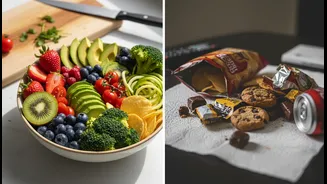
in a home kitchen, like emulsifiers, thickeners, and artificial flavourings. These aren't just foods that have been processed — like canned vegetables or freshly baked bread — but items that have been significantly altered. Common examples include packaged crisps, sugary biscuits and cakes, fizzy drinks, instant noodles, and many ready-to-eat meals. They are designed for a long shelf life and to be intensely palatable, which is why they can be so hard to resist.
Why A Single Swap Matters
The idea of eliminating all UPFs can feel overwhelming, especially when they make up a significant portion of the average diet. However, research shows that even small, consistent changes can have a big impact. A diet high in UPFs is linked to an increased risk of numerous health issues, including heart disease, type 2 diabetes, and obesity. Recent studies even suggest a connection to poorer attention and slower mental processing. By replacing just one UPF snack a day, you start a powerful ripple effect. You reduce your intake of added sugar, unhealthy fats, and sodium while potentially increasing your intake of fibre and micronutrients. This small victory can also lead to more stable energy levels, better mood, and fewer cravings over time, making it easier to build healthier habits.
Swap This: Packaged Crisps and Namkeen
The salty, satisfying crunch of a packet of crisps is a go-to for many. However, they are a classic UPF, often high in sodium, unhealthy fats, and artificial additives. A smarter, equally crunchy alternative is roasted makhana (fox nuts). Makhana is low in calories and can be roasted at home with a pinch of salt and your favourite spices like turmeric or chaat masala. Another excellent choice is a handful of roasted chana (chickpeas), which provides a satisfying crunch along with protein and fibre, helping you feel fuller for longer.
Swap This: Sugary Biscuits and Cookies
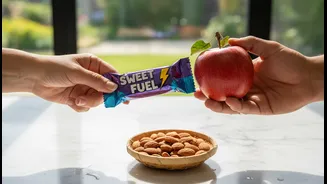
That afternoon biscuit with your chai might seem harmless, but packaged versions are often loaded with refined flour, sugar, and preservatives. For a sweet treat that works for you, not against you, try a couple of dates stuffed with walnuts or almonds. This combination delivers natural sweetness, fibre, and healthy fats. Another great option is an apple or banana with a spoonful of peanut or almond butter. The fruit provides vitamins and fibre, while the nut butter offers protein and healthy fats for sustained energy. Traditional peanut or sesame chikki can also be a good choice, providing energy from jaggery and nutrients from the nuts or seeds.
Swap This: Fizzy Drinks and Packaged Juices
Sweetened beverages are a major source of empty calories and added sugars. The craving is often for fizz and refreshment rather than the sugar itself. An easy and effective swap is sparkling water infused with fresh lemon, mint, or cucumber slices. It provides the bubbly sensation without the sugar crash. Freshly brewed and chilled iced tea (unsweetened) or a simple nimbu pani (fresh lime water) are also fantastic, hydrating alternatives that put you in control of the sweetness.