







The New Age of Pet Travel
Flying with pets in India, and from India to international destinations, has transformed. An increase in pet ownership and a growing desire for pets to be part of family holidays have met a wall of formalized regulations. Airlines and governments have introduced
stricter rules to enhance safety and animal welfare during transit. This means pet parents must now navigate a multi-step process involving detailed documentation, specific airline protocols, and strict timelines. While this may seem daunting, understanding the new landscape is the first step toward a stress-free experience. The shift prioritises your pet's safety, with rules designed to minimise risk and ensure comfort.
The Essential Document Checklist
Think of this as your pet's passport. For any travel, you will need a folder of essential documents. For domestic flights, this typically includes a 'fit-to-fly' health certificate from a registered veterinarian (often required within a few days of travel), an up-to-date vaccination record (especially for rabies), and your own ID proof. For travel within India, an Animal Welfare Board of India (AWBI) No-Objection Certificate (NOC) is also mandatory for carriage on an Indian airline. For international journeys, the list expands significantly. You'll need an ISO-compliant microchip, an export permit from the Directorate General of Foreign Trade (DGFT), and clearance from the Animal Quarantine and Certification Services (AQCS). Each destination country has its own import rules, which can include rabies titre tests and specific health certificates, often requiring months of advance planning.
Navigating Airline Policies
Not all airlines are created equal when it comes to pet travel. In India, Air India and Akasa Air are currently the most accommodating for domestic routes, offering options for small pets to travel in the cabin. However, space is limited—usually only one or two pets are allowed in the cabin per flight—so booking well in advance is critical. Pets can travel in three ways: in the cabin (PETC), as checked baggage (AVIH), or as manifest cargo. Small pets under a certain weight limit (usually 7-10 kg, including the carrier) may qualify for in-cabin travel. Heavier pets travel in a temperature-controlled, pressurised hold, which is safe and regulated by IATA's Live Animal Regulations. Always confirm the airline's specific rules on carrier dimensions, breed restrictions, and booking procedures at least 48 hours before your flight.
The Right Carrier Is Non-Negotiable
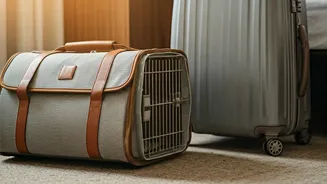
Your pet’s carrier is their home for the journey, and airlines are strict about its specifications. For pets travelling in the cargo hold or as checked baggage, the crate must be IATA (International Air Transport Association) compliant. This means it must be made of rigid material with a secure metal door, have adequate ventilation on at least three sides, and be large enough for your pet to stand, turn around, and lie down comfortably. For in-cabin travel, a soft-sided, leak-proof carrier that fits under the seat in front of you is typically required. Acclimatising your pet to their carrier well before the travel date can significantly reduce their stress during the journey.
When to Call the Professionals
For complex journeys, especially international relocations, the checklist can become overwhelming. This is where professional pet relocation services come in. These agencies specialise in navigating the maze of international regulations, from securing import permits and scheduling quarantine (if required) to booking flights and handling airport clearance. While it comes at a cost, with international relocation prices ranging from ₹1,50,000 to over ₹4,50,000, the expertise and peace of mind can be invaluable. They can handle all the paperwork, ensure your pet's crate is compliant, and coordinate with airlines, saving you from potential pitfalls and last-minute crises. For domestic travel, services can cost between ₹15,000 and ₹45,000 for air travel.