





Food as Living Heritage
Monuments, forts, and museums tell one side of a story—a static tale carved in stone. Food, however, tells a living one. Every recipe is a cultural document, passed down through generations, evolving with migrations, trade routes, and dynastic shifts.
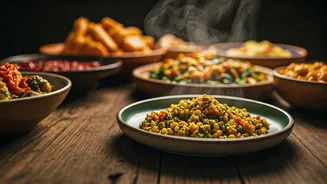
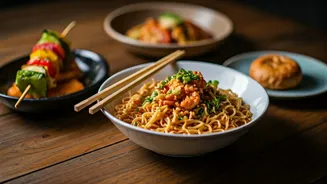
The spices in a curry, the technique for a kebab, the bread baked in a community oven—these are not just ingredients; they are edible artifacts. A food trail doesn't just guide you from one eatery to another; it guides you through the culinary soul of a city, allowing you to experience its heritage in the most immediate and sensory way possible. Instead of just looking at the past, you get to ingest it, making the connection personal, memorable, and deeply satisfying.
Lucknow: A Taste of Royal Awadh
The city of Lucknow is synonymous with the grandeur of the Nawabs of Awadh. While you can visit architectural marvels like the Bara Imambara, the city's true essence is found in its Awadhi cuisine. This is where food becomes a direct portal to a bygone era of opulence and refinement. A food trail here is a journey into the world of 'dum pukht' (slow-oven cooking), a technique perfected in royal kitchens. Seek out the legendary Tunday Kababi for its galouti kebabs, so soft they are said to have been created for a toothless Nawab. Savour a plate of fragrant biryani, where meat and rice are cooked to perfection separately before being layered together. Each bite is a whisper of courtly indulgence and culinary artistry, making the history of the Nawabs feel less like a textbook chapter and more like a feast you were invited to.
Amritsar: Soul Food and Sacred Stories
Amritsar’s heritage is inextricably linked with the Golden Temple and Sikh history. A food trail here is both a culinary and spiritual pilgrimage. Start with the langar at the Golden Temple, where thousands are fed daily in a profound act of selfless service (seva). The simple meal of dal, roti, and sabzi is a powerful experience of community and equality. From there, dive into the city’s bustling streets. Amritsar is the heartland of Punjabi cuisine. The dhabas near the Partition Museum offer a poignant taste of a shared culinary past. Don’t miss the legendary Amritsari kulcha—a crispy, stuffed bread baked in a tandoor—or a tall glass of lassi. The food here is not fancy; it’s hearty, honest, and full of soul, reflecting the resilient and generous spirit of the Punjabi people.
Chettinad: Spices, Mansions, and Merchant Tales
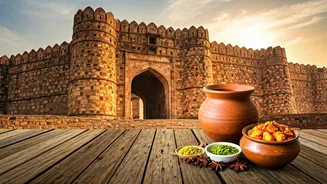
In the heart of Tamil Nadu, the Chettinad region offers a unique glimpse into the lives of the Nattukottai Chettiars, a prosperous banking and merchant community. Their heritage is visible in the palatial mansions that dot the landscape, but it’s most vibrantly alive in their distinctive cuisine. A food trail through Karaikudi and surrounding villages reveals a culinary tradition shaped by global trade. The Chettiars’ travels across Southeast Asia introduced new spices and influences, resulting in complex, aromatic dishes. Must-try dishes include Chicken Chettinad, defined by its fiery blend of freshly ground spices, and delicate string hoppers (idiyappam). Eating this food while surrounded by the fading grandeur of Chettiar mansions connects you directly to their history as globetrotting financiers and traders. It’s a story told through star anise, black stone flower, and tamarind.
Kochi: A Journey Through the Spice Route
For centuries, the port city of Kochi was the epicentre of the global spice trade, drawing traders from across the world. A heritage walk through Fort Kochi and Mattancherry reveals Portuguese churches, Dutch palaces, and the oldest active synagogue in the Commonwealth. A food trail here shows you how these cultures melted together in the kitchen. You can taste the Syrian Christian influence in a rich fish moilee, a coconut milk-based stew, or the Jewish influence in dishes found around Jew Town. The city’s famous seafood is prepared with spices that once launched fleets of ships. Exploring the spice markets and then tasting how those same spices are used in local cafes and homes makes the history of the Spice Route tangible. You're no longer just learning about Vasco da Gama; you're tasting the world he came searching for.