



From Finding Water to Using It
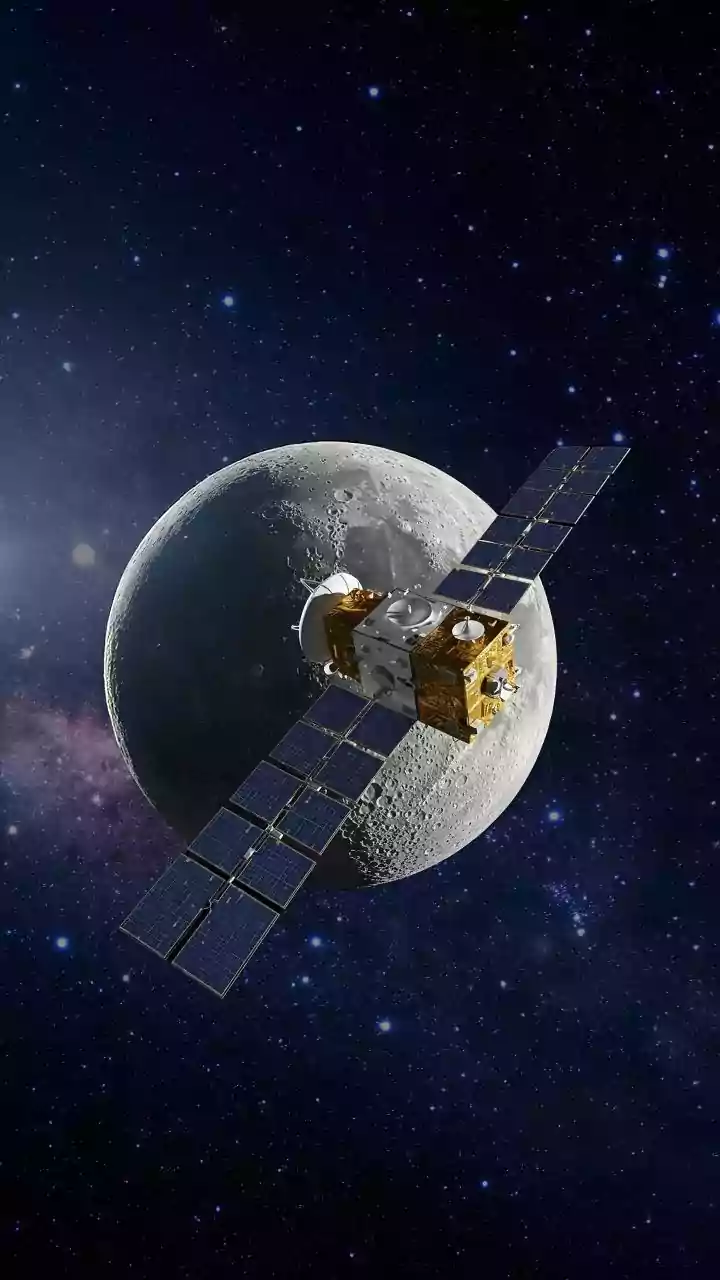
India's journey with lunar water has been a story of steady, remarkable progress. It began with the Chandrayaan-1 mission, whose instruments played a crucial role in confirming the presence of water molecules on the lunar surface. This discovery reshaped
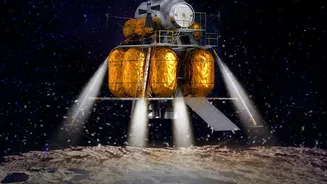
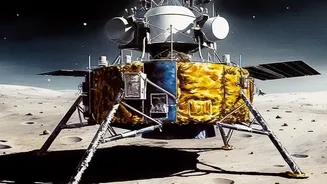
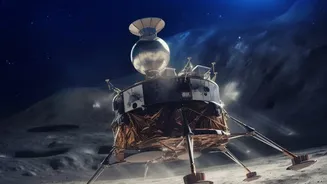
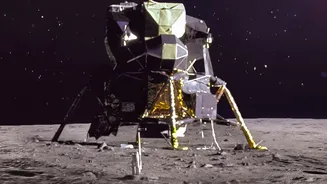
our understanding of the Moon from a bone-dry satellite to a body holding a potentially vital resource. Then came the historic soft landing of Chandrayaan-3 near the lunar south pole, a feat that demonstrated India's capability to reach the very regions where water ice is most abundant. These missions were the foundational chapters. Now, the Indian Space Research Organisation (ISRO) is writing the next one: moving beyond mere detection to extraction. The focus has shifted to in-situ resource utilization (ISRU), a term for living off the land in space. The goal is no longer just to find water, but to develop the technology to harvest it.
The Challenge of the Shadowlands
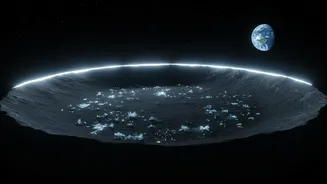
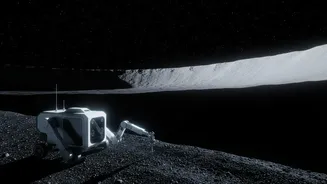
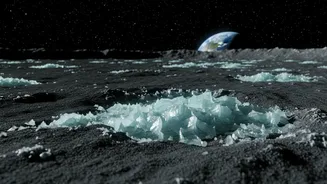
The most promising reserves of lunar water are located in Permanently Shadowed Regions (PSRs) near the poles. These are craters and depressions that have not seen direct sunlight for billions of years, creating extreme cold traps where ice can remain stable. Temperatures in these areas can plummet to levels colder than Pluto. While this preserves the ice, it also presents immense engineering challenges. The water is not a clean, solid block but is mixed with abrasive lunar soil, or regolith. Any robotic mission venturing into these dark craters must be able to operate in pitch-black conditions, withstand extreme cold, and have a power source that doesn't rely on sunlight. Furthermore, it needs the tools to dig into the frozen soil, extract the ice-rich material, and process it, all while operating autonomously or via remote control from Earth.
LUPEX: A Robotic Water Prospector
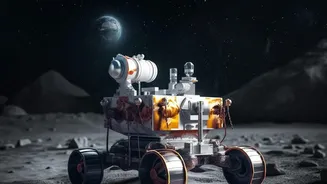
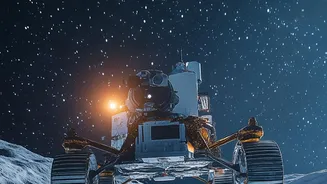
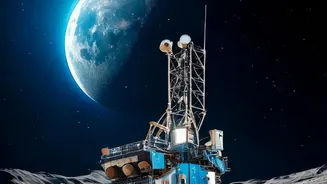
At the forefront of this effort is the Lunar Polar Exploration Mission (LUPEX), a joint endeavour between ISRO and the Japan Aerospace Exploration Agency (JAXA), planned for no earlier than 2028. This ambitious mission will see an ISRO-built lander deliver a JAXA-built rover to the lunar south pole. The rover, weighing around 350 kg, is a sophisticated mobile laboratory designed specifically to prospect for water. It will be equipped with a drill capable of extracting samples from up to 1.5 meters below the surface. Key instruments provided by ISRO will include a Ground Penetrating Radar (GPR) to map subsurface ice deposits and a thermal probe to help quantify the ice within soil samples. NASA and ESA are also contributing instruments, making it a truly international collaboration to understand the nature, quantity, and accessibility of lunar water.
How to Mine the Moon for Water
The process of extracting water on the Moon is a multi-step engineering puzzle. The LUPEX rover will first identify promising locations using its array of spectrometers and radar. Once a site is chosen, the drill will excavate the icy regolith. This material will then be heated inside a specialized instrument. The heat causes the ice to sublimate—turn directly from a solid into a gas—leaving the abrasive soil behind. This water vapour is then captured and condensed back into liquid water. The goal is to produce pure H2O. While LUPEX is primarily a science and technology demonstration mission, the techniques it validates will be crucial for future, larger-scale ISRU plants. Prior to LUPEX, ISRO's Chandrayaan-4 mission, planned for around 2028, aims to perform India's first lunar sample return, which will also provide vital ground truth about the composition of polar materials.
The Ultimate Prize: A Refueling Station in Space
The reason space agencies globally are so focused on lunar water extends far beyond providing drinking water for astronauts. Water's true value lies in its constituent elements: hydrogen and oxygen. Using solar power, water can be split into these two components through electrolysis. When stored as cryogenic liquids, they form a potent rocket propellant. This capability would transform the Moon from a destination into a launchpad. Rockets leaving Earth for Mars or the outer solar system could launch with less fuel, stop at a lunar base to refuel, and then continue their journey. This drastically reduces the cost and complexity of deep-space exploration. By developing the payloads to extract this water, ISRO is not just planning another Moon mission; it is building the key to an affordable and sustainable human future in space.