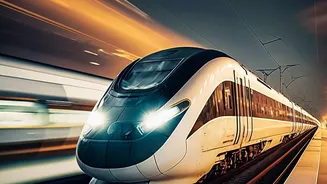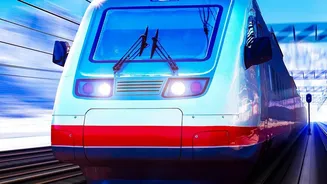






A catastrophic high-speed train collision in Spain has cast a dark shadow over one of the world's most advanced rail networks. The incident, which left dozens dead, has triggered urgent questions about the systems designed to prevent such a tragedy.
A Disaster on the Madrid-Seville Line
On
October 28, 2026, a Renfe-operated high-speed train travelling from Madrid to Seville crashed into a stationary Iryo train near the town of Urda in Toledo province. The collision resulted in the deaths of 69 people, including 15 foreign nationals, and injured over 200 others. The stationary Iryo train had been halted on the tracks following a technical failure in the line's automatic signalling system. The subsequent crash, described by survivors as sudden and violent, has become one of Europe's deadliest rail accidents in recent years and the second fatal incident on Spain's high-speed network in 2026.
Human Error Meets System Failure
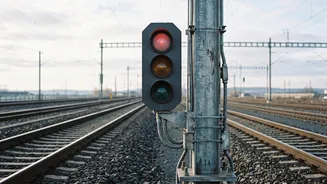
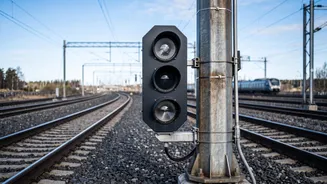
The investigation's initial focus is on a critical sequence of events where technology failed and human judgment came into play. An automatic safety system, known as LZB, which controls train operations, experienced a communications failure, bringing several trains on a 63-kilometre stretch of track to a halt as a precaution. However, the traffic control centre then reportedly gave the Renfe train authorisation to resume its journey at normal speed, despite the Iryo train remaining stationary on the track ahead. Transport Minister Óscar Puente, who has since resigned, described the decision as 'inexplicable'. This has placed intense scrutiny on the protocols that are followed when automated systems fail and control is handed back to humans.
A Crown Jewel Under Scrutiny
Until this year, Spain's high-speed rail network, the second-largest in the world after China's, boasted an impeccable safety record with no fatal crashes in its three decades of operation. This reputation was shattered by two major accidents in 2026. In January, a derailment in Adamuz, also on the Madrid-Seville line, killed 46 people. These back-to-back tragedies have shaken public confidence and sparked a national debate about whether investment in maintenance and safety has kept pace with the network's rapid expansion and a surge in passenger numbers. Critics and unions suggest that the liberalisation of Spain's rail network has prioritised growth over the upkeep of existing infrastructure.
What Are the Safeguards in Question?
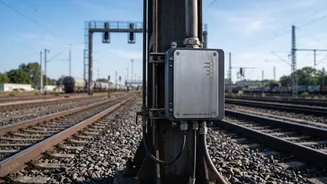
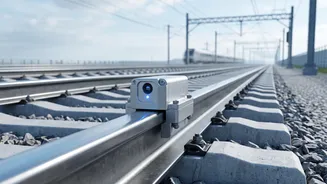
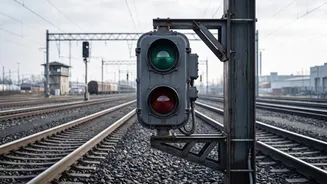
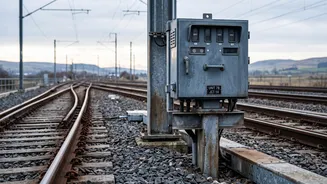
At the heart of the investigation are Spain's multi-layered safety systems. The Madrid_Seville line uses the LZB system, which continuously monitors train speed and location and can automatically apply brakes. When it fails, a backup system called BSL is used, which relies more on track_side signals and driver observation. Spain is also in the process of upgrading its network to the European Rail Traffic Management System (ERTMS), a modern standard designed to harmonise signalling across Europe and provide continuous supervision. The recent crash has highlighted the potential risks in the patchwork of systems and the critical moments when responsibility transitions from automated control to manual oversight.
Calls for Accountability and Reform
In the wake of the disaster, the political fallout was immediate. Transport Minister Óscar Puente announced his resignation, stating a minister could not remain in office after two such serious accidents in one year. The government has promised a full investigation and has already approved new safety measures. These include new control_centre software with automatic alerts, the use of AI to monitor the network, and a requirement for a second controller to validate decisions when automated systems are down. Meanwhile, opposition leaders and train drivers'_unions are demanding a complete and independent review of the entire rail network, citing concerns over worsening work conditions and the use of 'degraded systems'.