





Powering the Ports
At the heart of Gujarat's railway expansion is a strategic push to bolster its port connectivity. The state, home to some of India's busiest ports like Mundra, Kandla, and Pipavav, is the nerve centre for a significant portion of the nation's maritime
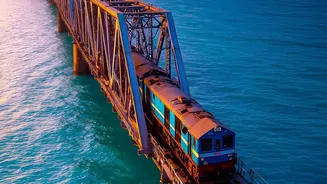
trade. The recent completion of the Western Dedicated Freight Corridor (WDFC) is a game-changer. With the inauguration of its final sections in September 2026, including the crucial link to the Jawaharlal Nehru Port Authority (JNPA) in Mumbai, the WDFC creates a high-speed, high-capacity artery for goods. This dedicated channel for freight trains allows cargo to move from industrial hubs like Sanand to the ports without competing with passenger traffic, drastically cutting logistics costs and transit times. Complementing this is the recently completed quadrupling of the Samakhiali-Bhachau rail section, a critical corridor that serves the Kandla and Mundra ports. This expansion from two to four tracks significantly increases the route's capacity, allowing for faster and more efficient movement of key commodities like salt, coal, and containers. Special purpose vehicles like the Gujarat Rail Infrastructure Development Corporation (G-RIDE) are also focused on developing these vital last-mile connections, ensuring that cargo can move seamlessly from factory floor to ship.
Connecting the Cities
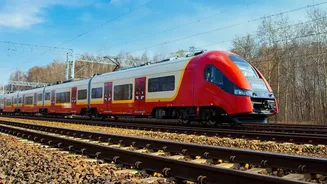
The benefits of this rail revolution extend well beyond freight. A major focus is on easing congestion and improving connectivity between Gujarat's bustling cities and industrial zones. The foundation has been laid for adding third and fourth lines to the Vadodara-Ratlam section, a key route on the busy Delhi-Mumbai corridor. This expansion will allow for the operation of more passenger trains, improving punctuality and reducing travel time between Gujarat and Madhya Pradesh. Further boosting urban and industrial connectivity is the planned Sarkhej-Dholera new broad-gauge line. This project is designed to serve the futuristic Dholera Smart City, one of India's most ambitious urban development projects. The line will not only connect the emerging industrial hub to Ahmedabad but also provide crucial links to the upcoming Dholera International Airport. By creating a robust public transport spine, the project aims to support the city's future population and industries while reducing dependence on road transport. Other key works, such as the doubling of the Vishwamitri-Dabhoi line and gauge conversion projects, will further decongest the network around Vadodara and enhance regional mobility.
A Boost for Tourism
Gujarat's rich cultural heritage and unique natural landscapes are also set to become more accessible. The new rail projects include specific lines aimed directly at boosting tourism. A significant project approved in 2025 aims to build a new line into the heart of Kutch, connecting previously hard-to-reach destinations. This will provide direct rail access to the white desert of the Rann of Kutch, the UNESCO World Heritage site of Dholavira, and important pilgrimage sites like Koteshwar temple and Narayan Sarovar. Elsewhere, the doubling of the Vishwamitri-Dabhoi line is expected to improve rail access for tourists heading to the Statue of Unity, one of the state's premier attractions. The proposed Sarkhej-Dholera railway line also includes a spur to the National Maritime Heritage Complex being developed at Lothal, the site of an ancient Indus Valley Civilization port city, promising to create a seamless heritage and tourism circuit. Another new line connecting the tribal areas of Alirajpur to the national network via the Chhota Udepur-Dhar project is also set to open up new regions for visitors.
The Road Ahead
This wave of infrastructure development represents a coordinated effort between the Ministry of Railways and the state government, often executed through joint ventures like G-RIDE, which has a 51% stake from the Gujarat government and 49% from Indian Railways. This collaborative model aims to fast-track projects and ensure they align with the state's specific economic and social goals. While the completion of the WDFC is a monumental achievement, many other projects are just beginning, with timelines stretching over the next several years. Challenges such as land acquisition and project financing remain, but the strategic intent is clear. By weaving together its ports, industrial corridors, cities, and tourist destinations with a modern and efficient rail network, Gujarat is laying the tracks for its next chapter of growth, aiming to solidify its position as one of India's leading economic powerhouses.