

A New Window on the Universe
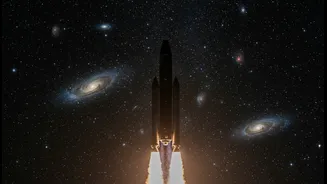
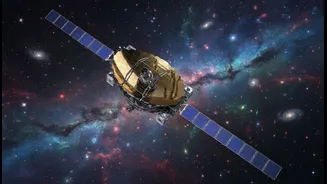
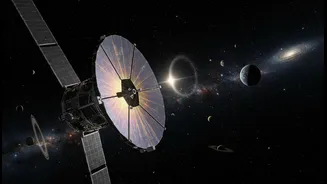
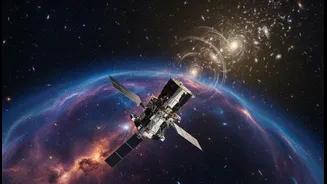
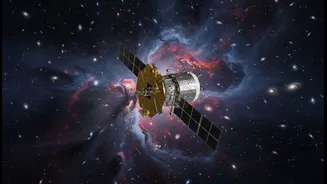
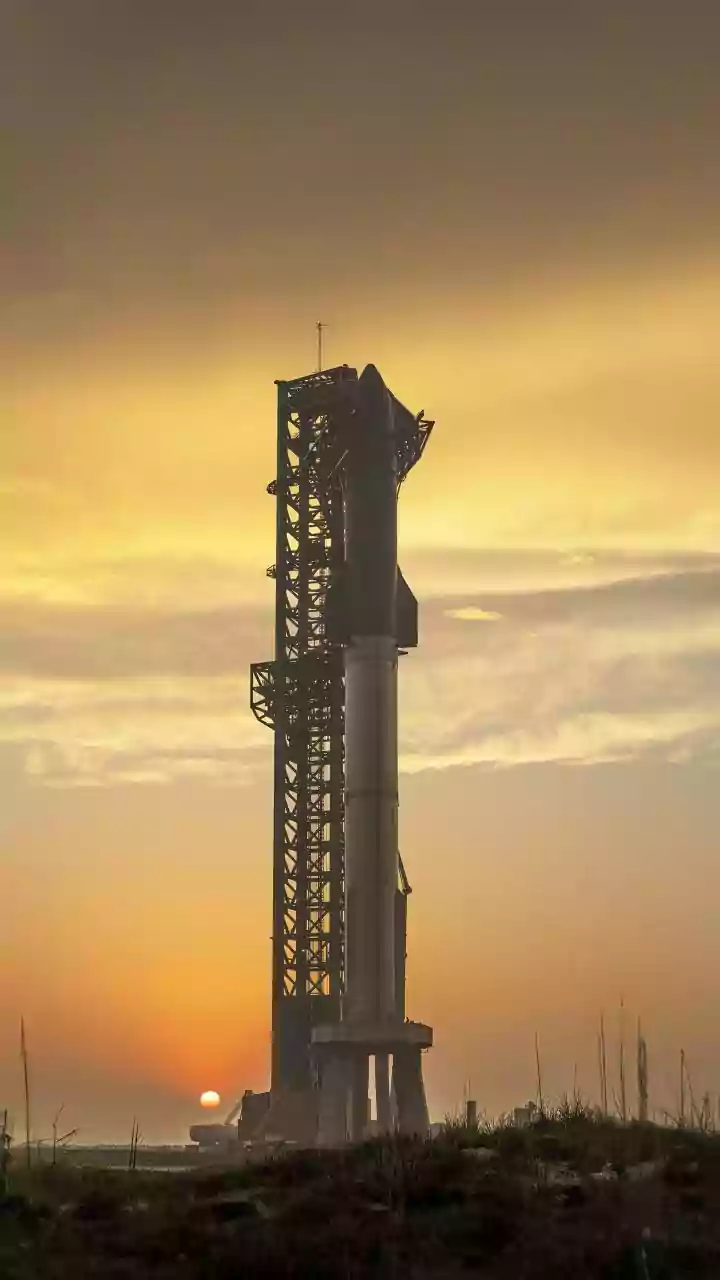
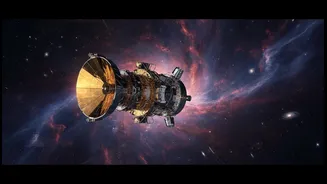
Set to lift off on a SpaceX Falcon Heavy rocket, the Roman Space Telescope represents a new era in astrophysics. Named after Nancy Grace Roman, NASA’s first chief of astronomy and the “mother of the Hubble Space Telescope,” this mission aims to build
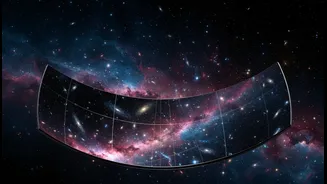
on the legacies of both Hubble and the James Webb Space Telescope. But while Hubble provides deep, narrow views of the cosmos and Webb peers into the earliest moments of the universe, Roman is designed for panoramic scale. Its primary mirror is the same size as Hubble's, but its Wide Field Instrument gives it a field of view 100 times larger. This incredible breadth will allow it to map the sky with unprecedented speed, capturing vast mosaics of the universe with Hubble-like sharpness. In just a couple of months, Roman can image an area of the sky that would take Hubble decades to cover.
Hunting for Dark Energy
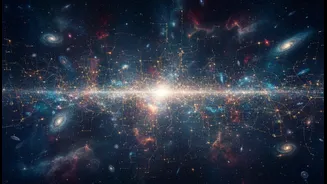
One of Roman’s primary objectives is to investigate one of the most profound puzzles in physics: dark energy. This mysterious force is believed to be responsible for the accelerating expansion of the universe, but scientists still don't know what it is. Roman will tackle this question by conducting massive surveys of the cosmos. It will observe hundreds of millions of galaxies to see how they are distributed and how that distribution has changed over billions of years. Additionally, the telescope will hunt for thousands of Type Ia supernovae, a specific kind of stellar explosion that serves as a “standard candle” for measuring cosmic distances. By precisely measuring the distances to these supernovae and how fast they are receding, astronomers can chart the history of cosmic expansion with ten times more precision than current methods, hopefully revealing the nature of the dark energy driving it.
A Galactic Planet Census
Beyond cosmology, Roman is set to revolutionize the search for planets outside our solar system, known as exoplanets. While missions like Kepler found thousands of planets using the transit method (watching for the dip in a star's light as a planet passes in front of it), Roman will primarily use a different technique called gravitational microlensing. This effect, predicted by Einstein, occurs when a star and its planet pass in front of a more distant star, with their gravity acting like a lens to briefly magnify the background star's light. Microlensing is especially good at finding planets in wider orbits, similar to those in our own solar system, and can even detect rogue planets that drift through space without a host star. Scientists expect Roman to discover thousands of new worlds this way, providing a crucial census of planets in parts of the galaxy we've never explored before.
The Big Picture Telescope
Roman is not a replacement for Hubble or Webb, but a powerful complement. Think of it this way: if Webb and Hubble are like microscopes, providing incredibly detailed close-ups of specific targets, Roman is the wide-angle camera that provides the context. Its massive surveys will identify countless new objects and phenomena—from distant galaxies to exploding stars—that other telescopes can then study in greater detail. For example, Roman might discover a particularly interesting exoplanet, and Webb could follow up to study its atmosphere. This synergy is key to its design. Roman will create a huge, high-resolution map of the universe, and within that map will be countless new targets for a generation of astronomers to explore.