





Scattered throughout our galaxy are mysterious objects neither big enough to be stars nor small enough to be planets. These 'failed stars', or brown dwarfs, are now giving up their secrets thanks to NASA's new eye in the sky, SPHEREx.
Meet the 'Failed Stars'
Imagine a star that
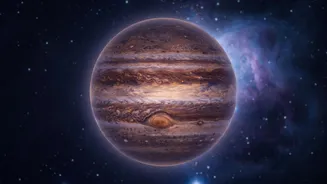
never quite made it. That's a brown dwarf in a nutshell. They form just like stars, from the gravitational collapse of massive clouds of gas and dust. However, they never accumulate enough mass to kick-start the nuclear fusion of hydrogen in their cores, the very process that makes stars like our Sun shine for billions of years. Instead of being defined by their light, they are defined by what they lack. Too small to be a star but generally more massive than a planet like Jupiter, they occupy a fascinating middle ground. They don't have a host star to warm them, so they are heated entirely from within, glowing dimly in the infrared spectrum as they slowly cool over their lifetimes. This unique status makes them incredibly valuable targets for scientists trying to understand the dividing line between star and planet formation.
A New Eye on the Cosmos
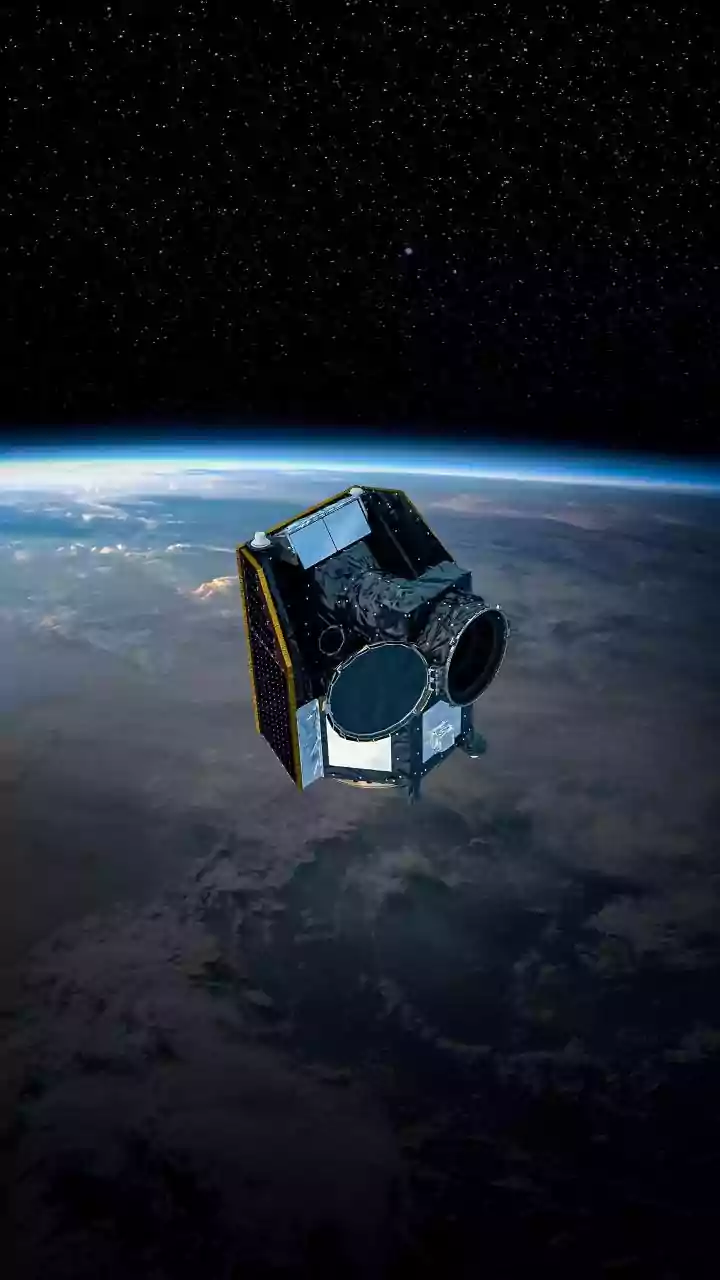
Enter SPHEREx, NASA’s Spectro-Photometer for the History of the Universe, Epoch of Reionization, and Ices Explorer. Launched in March 2025, this space telescope is on a two-year mission to map the entire sky in 102 different colours of light, mostly in the near-infrared spectrum invisible to the human eye. Its primary goal is to tackle enormous cosmic questions about the origins of the universe and galaxies. But as it scans the heavens, taking thousands of images a day, it also captures invaluable data on objects closer to home, including millions of stars within our Milky Way and these enigmatic brown dwarfs. For brown dwarfs, the SPHEREx mission is a game-changer. It is systematically observing thousands of them, a massive increase from the few dozen that had been studied in detail by previous space telescopes. This allows scientists to move from individual case studies to a broad survey of the brown dwarf population.
A Chemical Fingerprint in the Clouds
The latest study, published in The Astrophysical Journal, analysed data from 37 nearby brown dwarfs. By looking at their light across SPHEREx's many colour bands, scientists can identify the chemical fingerprints of molecules in their atmospheres. The results confirmed the presence of chemically rich atmospheres containing water, methane, carbon monoxide, and carbon dioxide. These findings show that brown dwarfs have complex, planet-like atmospheres. As they age and cool, their atmospheric chemistry undergoes significant changes. For instance, at certain temperatures, their clouds of mineral grains thin out, allowing methane to become a dominant feature. This process has turned astronomers into what one study co-author called 'accidental meteorologists', charting the atmospheric conditions of these strange worlds.
Why This Discovery Matters
Finding water and methane is significant, but what makes the SPHEREx data so powerful is its scale. The study revealed that even at the same temperature, no two brown dwarfs are exactly alike; their atmospheric spectra can be quite distinct. This diversity challenges existing models of how their atmospheres should behave, particularly during the cloudy transition phase. The precision of the new data is outstripping the predictive power of current theories, signalling a need for a major update in our understanding. By studying the atmospheres of these isolated objects, which resemble gas giants like Jupiter, scientists can learn about atmospheric physics in a setting free from the complicating influence of a nearby star. This provides a cleaner laboratory for understanding the chemistry that shapes both giant planets and the objects that straddle the stellar line.