

A Cuisine Born From Scarcity
The defining feature of Rajasthan's climate is its lack of water. With minimal rainfall and searing temperatures, the land doesn't naturally support a wide variety of fresh vegetables year-round. This environmental challenge is the single most important
factor that has shaped its culinary identity. The need for food that could last for days without reheating, survive long journeys, and be cooked with minimal water forced the inhabitants to be creative. This led to a preference for ingredients that are hardy, have a long shelf life, and require little water to grow or cook. The result is a cuisine that is robust, flavorful, and a testament to the resilience of its people.
The Desert Pantry: Grains, Lentils, and Flour
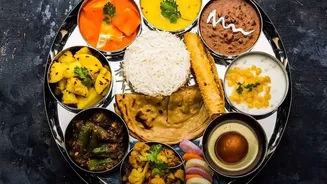
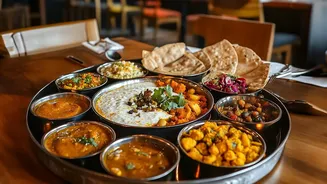
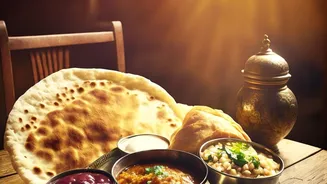
With fresh vegetables being a rarity, the traditional Rajasthani pantry relies on ingredients that can be stored for long periods. Coarse grains like bajra (pearl millet) and corn, which thrive in arid conditions, form the basis of many breads. However, the true star of the vegetarian kitchen is gram flour, or 'besan'. Versatile and nutritious, besan is used to create one of the state's most iconic dishes: 'Gatte ki Sabzi'. These steamed or fried gram flour dumplings are simmered in a tangy yogurt-based gravy, providing a hearty curry without relying on seasonal vegetables. Similarly, lentils and dried beans are staples, used in famous preparations like the 'Dal' served with 'Baati'.
Cooking Without Water and The Magic of Ghee
How do you create rich gravies and flavourful dishes when water is a precious resource? The answer in Rajasthan lies in dairy. Milk, buttermilk, and yogurt are frequently used as a base for curries, lending a creamy texture and tangy flavour that water simply cannot provide. Ghee (clarified butter) is another cornerstone of the cuisine, used generously not just for flavour, but also for its preservative qualities. The high-fat content helped provide energy in the demanding climate and kept food from spoiling quickly. This liberal use of ghee and spices is a distinctive feature of Rajasthani cooking, ensuring that dishes are both delicious and long-lasting.
Preservation for the Lean Months
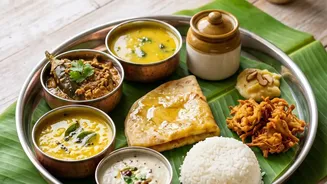
To ensure a supply of 'vegetables' during the driest months, Rajasthanis mastered the art of sun-drying and preservation. 'Ker', a wild berry, and 'Sangri', the bean of the native Khejri tree, are two such ingredients. Often collected and dried, they can be rehydrated and cooked into the famous 'Ker Sangri ki Sabzi', a dish that is said to have originated during a famine. Another ingenious creation is 'mangodi' (sun-dried lentil nuggets) and 'rabodi' (sun-dried papads made of buttermilk and corn flour), which are stored and used in curries when fresh options are unavailable. Pickling, or making 'achaar', is another common practice, transforming local produce into tangy accompaniments that last for months.
Snacks Built to Last
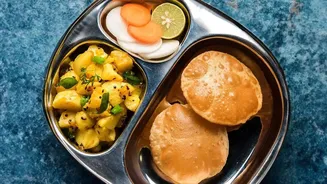
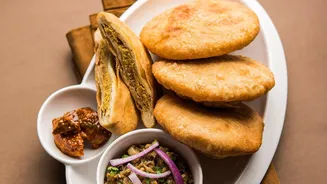
The local snacks also reflect the climatic constraints. The world-famous 'Bikaneri Bhujia', a crunchy snack made from moth bean and gram flour, has a very low moisture content, giving it a remarkably long shelf life. Deep-frying, a common cooking method, also helps in preservation by removing moisture. This is evident in popular snacks like 'Pyaaz Kachori' (onion-filled fried pastry) and 'Mirchi Bada' (chilli fritters). These snacks were ideal for a region with a history of trade and travel, providing a durable and energy-dense food source that could be carried over long distances.