


A New Perspective On Our Home Planet
In the grand search for life beyond our solar system, scientists face a monumental challenge: how do you recognize an inhabited planet when you see one? The answer, it turns out, may lie in looking back at the one world we know is teeming with life—our
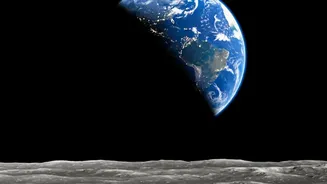
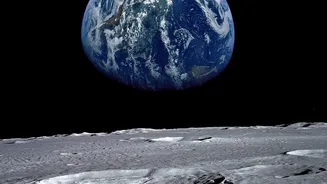
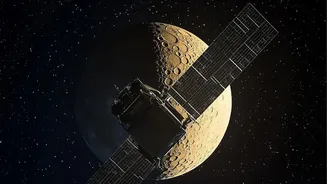
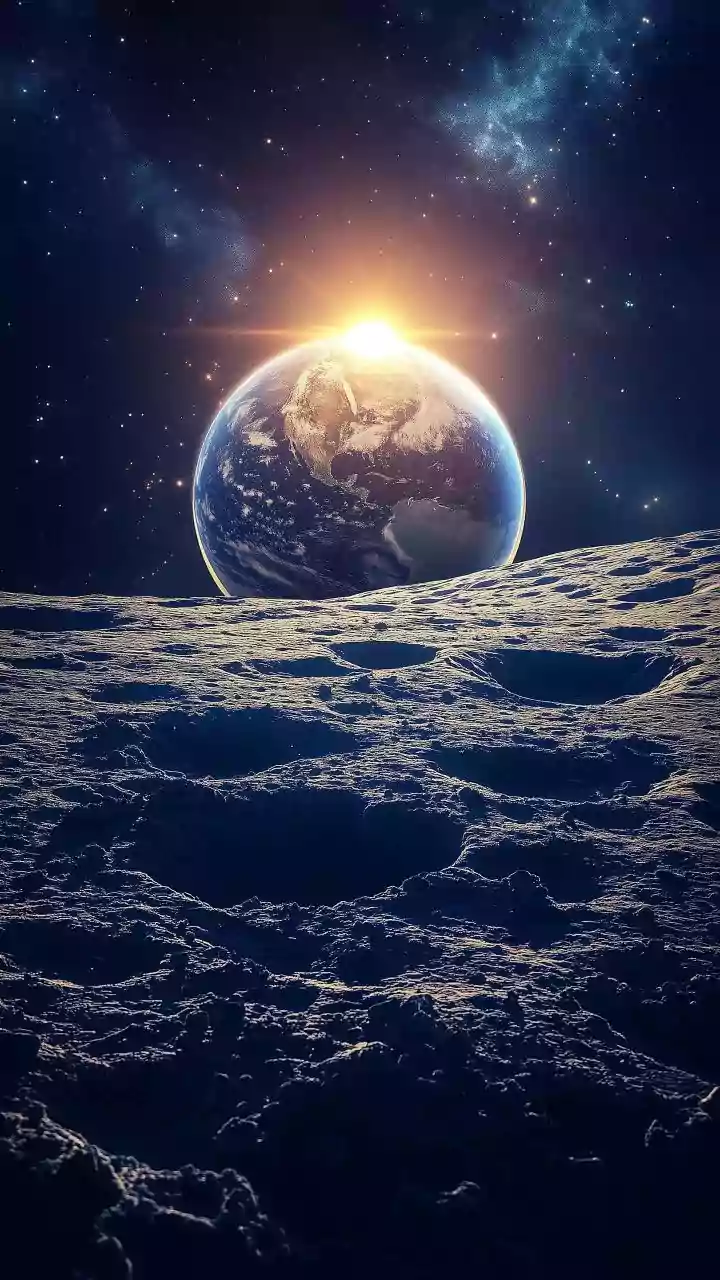
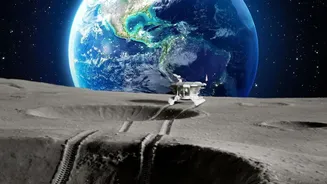
own. This is the core idea behind ambitious projects that observe Earth as if it were a distant exoplanet. By studying the light reflected from our home planet from a great distance, like the Moon, researchers can create a template for what a habitable, or even inhabited, world looks like. This approach allows them to test and refine the very methods they will use to scan the skies for other Earths. Previous experiments have used deep space probes to catch a glimpse of Earth, but these were often limited. A dedicated instrument, such as the proposed Lunar Observatory for Unresolved Polarimetry of the Earth (LOUPE), would provide a constant stream of data from a stable platform on or around the Moon.
Earth Through The Eyes of an Alien Telescope
When we observe a distant exoplanet, it's just a single point of light. All the information about its atmosphere, surface, and potential for life is bundled into that tiny speck. The goal is to decode that light. By observing Earth from the Moon, scientists can see what our planet's 'point of light' looks like and how it changes. This includes studying the spectrum of light reflected by Earth. For example, the presence of water, oxygen, and methane in our atmosphere leaves a distinct fingerprint on this light. Observing these 'biosignatures' in the light from a distant exoplanet would be a monumental discovery. The lunar vantage point is ideal because it allows for continuous observation as Earth rotates, revealing how the signal changes as different features—like oceans, continents, and cloud cover—pass in and out of view. It also allows observation through a full range of phases, similar to the phases of the Moon.
Searching for Signs of Civilization
Beyond the basic signs of habitability and life, could we detect an active, technological civilization? This is where the concept of 'technosignatures' comes in. These could be anything from the chemical signature of industrial pollutants in the atmosphere to the specific reflection of artificial lighting on the night side of the planet. Studying Earth from the Moon provides a perfect test case. Instruments can analyze how human activity alters Earth's reflected light. While the headline refers to SHAPE, current research points to a proposed instrument called LOUPE (Lunar Observatory for Unresolved Polarimetry of the Earth) and other NASA initiatives that aim to achieve this goal. For instance, the polarization of light—the orientation of its waves—can reveal information about aerosols in the atmosphere, some of which could be man-made. By understanding our own technosignatures, we'll be better equipped to spot them on another world.
A Blueprint for Future Missions
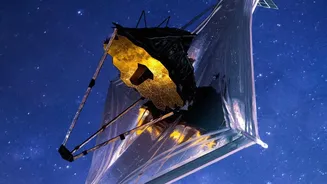
The data gathered by observing Earth from a lunar perspective is not just theoretical; it's a practical guide for building and operating the next generation of powerful telescopes. Missions like the James Webb Space Telescope are already beginning to characterize the atmospheres of exoplanets, but future observatories will be even more advanced. By having a detailed 'answer key' of what a living planet's light signature looks like, scientists can design these future telescopes to be exquisitely sensitive to the right signals. This approach helps them develop the complex algorithms needed to untangle the faint light of an exoplanet from the overwhelming glare of its host star. Essentially, every observation of Earth from the Moon is a dress rehearsal for one of the most exciting scientific quests in human history: the search for another habitable world.