


Meet the Hybrid
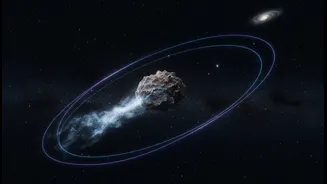
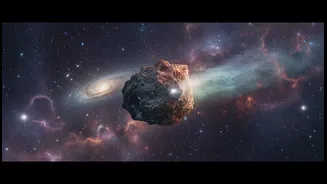
Deep in the main asteroid belt, a region of space between Mars and Jupiter, orbits an object known as (248370) 2005 QN173. For years after its discovery in 2005, it was considered just another asteroid—one of millions of rocky bodies in a stable, nearly
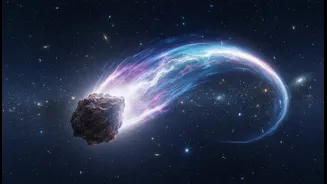
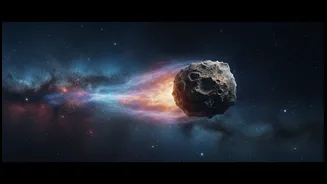
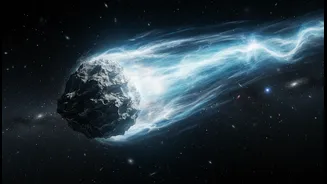
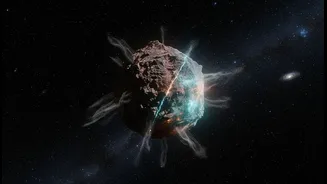
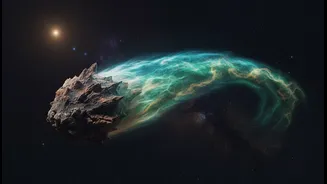
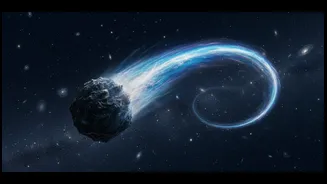
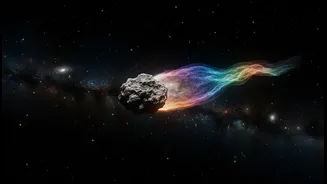
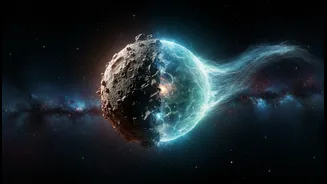
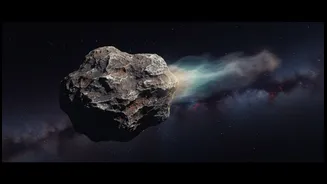
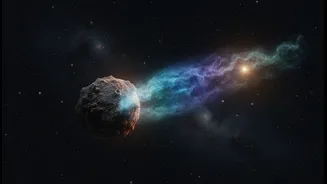
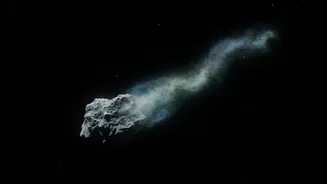
circular path around the sun. But in July 2021, astronomers were stunned to see it sporting a magnificent, comet-like tail stretching over 720,000 kilometers long. This object, which behaves like an asteroid in its orbital path, was suddenly looking and acting exactly like a comet. It wasn't just a one-time fluke. When scientists combed through archival images, they found evidence that it had also been active during its previous closest approach to the sun in 2016. This recurring activity strongly suggests that the tail is not from a random impact but from the sublimation of ice, a hallmark of comets.
Challenging a Classic Definition
For decades, the distinction between asteroids and comets has been a fundamental concept in astronomy. Asteroids are typically made of rock and metal, having formed in the warmer, inner part of the solar system where ice couldn't survive. Comets, often called 'dirty snowballs,' are made of ice, dust, and rock, originating in the frigid outer reaches like the Kuiper Belt and Oort Cloud. Their orbits reflect these origins: asteroids usually have stable, circular orbits, while comets follow highly elliptical paths, swinging in close to the sun before heading back out to the cold depths of space. An object like 2005 QN173, with the orbit of an asteroid but the activity of a comet, throws a wrench in these neat categories. It belongs to a growing class of objects now called 'active asteroids' or 'main-belt comets'. They are forcing a major rethink of how we define these small worlds.
A Spectrum of Possibilities
Instead of a rigid dividing line, scientists now believe there may be a continuum between asteroids and comets. It's possible that many objects classified as asteroids in the outer part of the main belt are actually rich in ice that lies buried beneath a rocky surface. This ice could remain dormant for millennia until a small impact excavates it or a close pass to the sun provides enough heat to trigger sublimation, the process where ice turns directly into gas. This 'flexible view' suggests that the solar system is a more dynamic and blended place than previously assumed. The discovery isn't just a matter of re-labeling objects; it changes the business of astronomy by altering our models of how the solar system formed and evolved. It suggests water ice might be far more widespread in the inner solar system than our earlier theories accounted for.
Why These 'Rock Comets' Matter
The implications of these hybrid objects are profound. One of the biggest unsolved mysteries is where Earth got its water. While scientists once looked to traditional comets as the source, the chemical signature of their water doesn't perfectly match our oceans. However, the water from these main-belt objects might be a closer fit, providing a compelling new clue in the search for our planet's origins. Furthermore, understanding these active asteroids is crucial for future space exploration. Knowing where water ice is located is vital for planning long-term missions, as it could potentially be harvested for drinking water, oxygen, and rocket fuel. The study of these bodies is rapidly expanding, with citizen science projects like 'Active Asteroids' helping professionals sift through data to find more of these fascinating chimeras. As for 2005 QN173, its next close approach to the sun is in September 2026, and astronomers will be watching closely to see it 'wake up' once more.