


A Planet for All Seasons
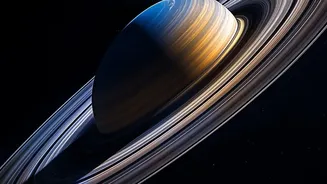
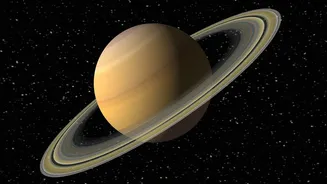
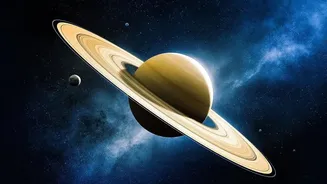
When we picture Saturn, we see its magnificent rings. But the planet itself is far from a simple, placid ball of gas. It's a dynamic world with weather, winds, and seasons. Much like Earth, Saturn’s axis is tilted—by about 27 degrees, very close to our
own 23.5-degree tilt. This tilt means that as Saturn makes its slow, 29.5-year journey around the sun, its hemispheres take turns bathing in sunlight. Each season on Saturn lasts for more than seven Earth years, leading to extreme and prolonged changes in temperature and light. For nearly 15 years, one pole will be plunged into the darkness of winter, while the other experiences continuous summer sun. These long seasons drive powerful atmospheric shifts, which astronomers have long sought to understand.
Hubble's Long Watch
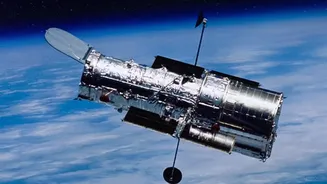
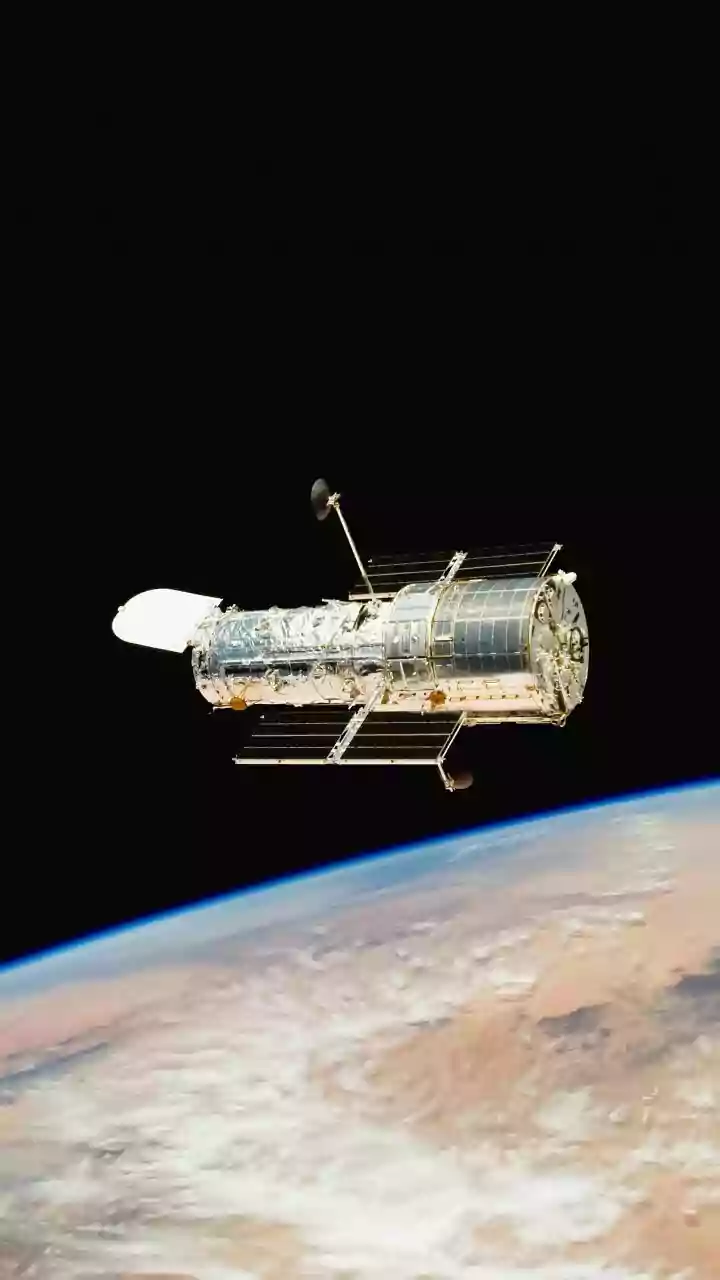
Understanding a seven-year season requires patience. This is where the Hubble Space Telescope, and specifically its Outer Planet Atmospheres Legacy (OPAL) program, comes in. Since 2018, after the Cassini mission ended, OPAL has been conducting yearly check-ups on the outer planets, including Saturn. This consistent, long-term monitoring with the same instruments provides a unique baseline to track atmospheric dynamics over time. While visible light shows us the planet's familiar cloudy bands, Hubble's infrared capabilities allow scientists to peer through the haze and detect heat and chemical signatures. This lets them effectively slice through the atmospheric layers to see how temperature, clouds, and aerosol composition change from one season to the next.
A Tale of Two Hemispheres
The latest observations are painting a vivid picture of seasonal transition. As Saturn's northern hemisphere has moved from its summer solstice toward autumn, scientists have observed rapid changes. Cloud bands have shifted in color, and even the famous hexagonal jet stream at the north pole has shown variations. As one hemisphere emerges from the long winter darkness and the shadow of the rings, its stratosphere warms up significantly. Past observations by Cassini noted temperature rises of up to 14 degrees Fahrenheit as spring arrived. Hubble's new data continues this work, showing subtle year-to-year changes in color and cloud height, possibly influenced by winds and the amount of haze produced by sunlight interacting with methane in the atmosphere.
The Shadow of the Rings
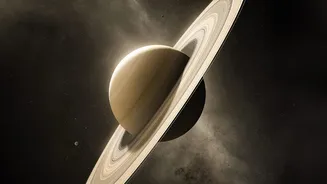
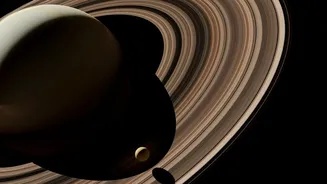
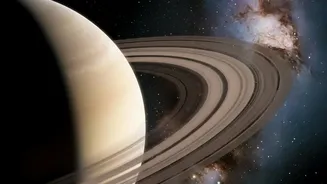
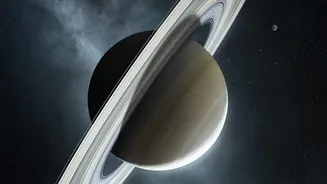
Adding another layer of complexity to Saturn's seasons are its iconic rings. They aren't just for show; they actively shape the planet's climate by casting a colossal shadow. Depending on the season, this shadow can cool vast regions of the atmosphere, creating significant temperature differences that drive atmospheric dynamics and weather. When a hemisphere is already tilted away from the sun in winter, the ring shadow can intensify the cooling, leading to an even more extreme season. As the planet moves in its orbit, this shadow sweeps across different latitudes, and the atmosphere must rapidly adjust. Scientists have observed the atmosphere warming quickly in regions newly emerging from the ring shadow in springtime.
Why Saturn's Weather Matters
Studying the weather on a planet over a billion kilometers away might seem abstract, but it provides a crucial natural laboratory for understanding planetary atmospheres in general. Saturn's massive, churning system is governed by the same principles of fluid dynamics that shape weather on Earth, but under extreme conditions. By tracking how its atmosphere responds to decades-long seasonal cycles, scientists can refine their models of climate and weather. These observations of gas giants also serve as a vital reference point for understanding the thousands of exoplanets discovered orbiting other stars. The long-term data from programs like OPAL helps us grasp the full story of a planet's evolution, turning static portraits into a dynamic, unfolding narrative.