





Understanding the Five-Fold Leap
The projection of a $40 to $45 billion space economy represents a massive five-fold increase from its estimated value of about $8.4 billion in 2023. This target is championed by the Indian government and supported by analysis from global investment firms
like Jefferies. The goal is to capture a larger share of the global space market, moving from the current 2-3% to a more significant 8-10% within the next decade. This growth is not a far-off dream but a structured plan, outlined in documents like the IN-SPACe Decadal Vision, which aims to leverage space technology for widespread socio-economic benefits. The surge is driven by a fundamental transition from a government-centric program to a dynamic ecosystem where private companies play a leading role.
The Rise of the Private Sector
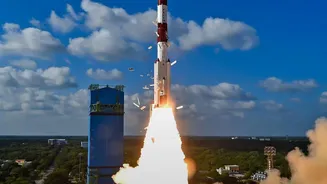
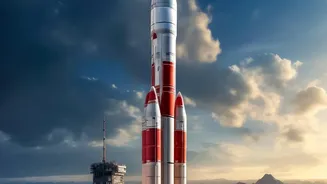
For decades, the Indian space program was synonymous with the Indian Space Research Organisation (ISRO). However, landmark policy reforms in 2020 opened the floodgates for private participation. The establishment of IN-SPACe (Indian National Space Promotion and Authorisation Centre) as a regulatory and promotional body has been pivotal, acting as an interface between ISRO and private firms. As a result, the number of space startups has skyrocketed from just a handful in the last decade to over 400 in 2026. Companies like Skyroot Aerospace, Agnikul Cosmos, Pixxel, and Digantara are no longer just developing prototypes; they are moving into commercial operations. Skyroot's successful orbital launch of the Vikram-1 rocket in July 2026 was a watershed moment, proving the commercial viability of the private sector.
ISRO's Evolving Role
With the private sector stepping up to handle more routine operations, ISRO's role is evolving. The agency is transitioning away from manufacturing operational launch vehicles and is instead focusing on research and development, deep space exploration, and national security missions. This strategic shift allows ISRO to dedicate its world-class talent and resources to pioneering new technologies and undertaking complex projects like human spaceflight. Furthermore, ISRO is acting as a mentor and enabler, transferring technologies to the industry and providing its facilities for testing. This collaborative model is designed to accelerate innovation and build a robust, self-reliant industrial ecosystem.
More Than Just Rockets and Satellites
The economic impact of the space sector extends far beyond launch services. A significant portion of the projected growth will come from 'downstream' applications that use space-based assets to provide services on Earth. Satellite communications, powered by companies like OneWeb (Airtel) and Jio, are set to improve broadband access across the country. High-resolution Earth observation data from startups like Pixxel, which specializes in hyperspectral imaging, can revolutionize industries like agriculture, urban planning, and disaster management. From providing precise navigation services to monitoring climate change and securing borders, the applications of space technology are becoming increasingly integrated into the national economy.
Challenges on the Final Frontier
The path to a $45 billion space economy is not without its obstacles. A primary challenge for deep-tech space startups is securing patient capital. These ventures require significant upfront investment and have long gestation periods before they can generate revenue, which can make some investors hesitant. While private investment has grown significantly, access to seed-stage funding remains a critical hurdle. Furthermore, there is a need for more sophisticated testing facilities and infrastructure to support rapid prototyping. Regulatory clarity is another area of concern; while the Indian Space Policy 2023 was a major step, a comprehensive national space law is still needed to govern all commercial space activities and provide long-term certainty for businesses.