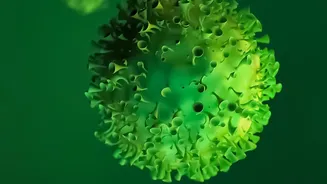




They are microscopic, live in moss in your garden, and can survive the vacuum of space. Meet the tardigrade, one of Earth’s most resilient animals, whose ability to enter a state of suspended animation is redefining our understanding of survival.
Meet the 'Water Bear'
Tardigrades,
affectionately known as water bears or moss piglets, are eight-legged micro-animals that are virtually indestructible. First discovered in 1773, these tiny creatures, typically about half a millimetre long, are found all over the world, from the highest mountains to the deep sea, and quite possibly in a patch of damp moss near you. They may be small, but their ability to endure conditions that would be fatal to almost any other life form makes them a giant in the world of biology. They feed on the fluids of plant cells and bacteria and are part of an ancient lineage dating back hundreds of millions of years. Their true superpower, however, is their ability to cheat death when faced with a hostile environment.
The Secret to Survival: Cryptobiosis
When conditions become inhospitable, tardigrades can enter a remarkable state of suspended animation called cryptobiosis. This is a reversible, death-like state where their metabolism slows to less than 0.01% of its normal rate, and all measurable biological processes come to a standstill. There are several types of cryptobiosis, triggered by different environmental stresses. Anhydrobiosis is a response to a lack of water, cryobiosis to freezing temperatures, anoxybiosis to a lack of oxygen, and osmobiosis to high salt concentrations. The most studied form is anhydrobiosis, where the tardigrade expels nearly all the water from its body—sometimes down to just 1% of its normal content—and curls up into a dehydrated, shrunken ball called a 'tun'. In this state, it can wait, sometimes for decades, for conditions to improve.
A Catalogue of Extremes
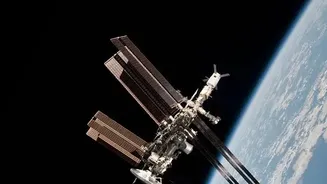
The list of what a tardigrade can survive while in its tun state sounds like science fiction. They can withstand temperatures from just above absolute zero to well over 140 degrees Celsius. They can endure crushing pressures six times greater than those found in the deepest ocean trenches. Perhaps most astoundingly, they are the first known animal to have survived direct exposure to the vacuum and lethal radiation of outer space. In a 2007 European space mission, dehydrated tardigrades were exposed to the harsh environment of low Earth orbit for 10 days. Upon their return, many were successfully rehydrated and even went on to produce healthy offspring. They can also tolerate doses of radiation hundreds of times higher than the lethal dose for humans.
The Science of Invincibility
So, how do they do it? The answer lies in a unique biological toolkit. For a long time, scientists believed a sugar called trehalose was the key, as it can form a glass-like substance to protect cells from drying out. However, research shows that many tardigrades don't produce enough trehalose. Instead, they rely on a suite of unique, tardigrade-specific proteins. These are known as 'intrinsically disordered proteins' (IDPs), which form a protective, gel-like matrix inside their cells as they dry out, preventing cellular collapse. Another protein, aptly named 'damage suppressor' or Dsup, physically shields their DNA from harm, particularly from radiation, by binding directly to it. This complex defense system allows their cellular machinery to remain intact, ready to be rebooted when conditions are right.
Why We Study These Survivors
The tardigrade's incredible resilience is more than just a scientific curiosity; it holds immense potential for human applications. Scientists are studying how Dsup proteins could be used to protect human cells from radiation damage, which could be revolutionary for cancer patients undergoing radiation therapy or for protecting astronauts on long-duration space missions. Furthermore, understanding how tardigrade proteins stabilise biological material during dehydration could transform how we transport life-saving vaccines, medicines, and enzymes, potentially eliminating the need for expensive and fragile cold-chain storage. By studying these tiny survivors, we could unlock new strategies to enhance DNA repair, slow the aging process, and develop therapies for a range of human diseases.