


The Search for True Darkness
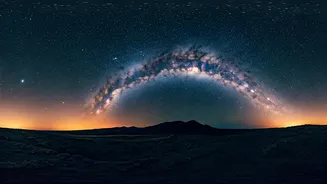
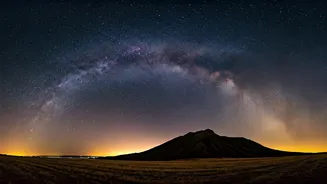
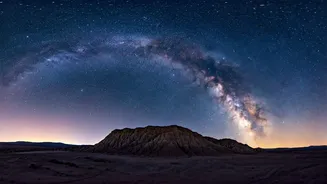
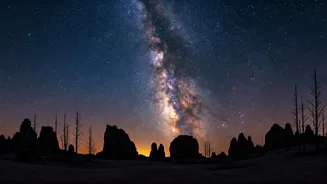
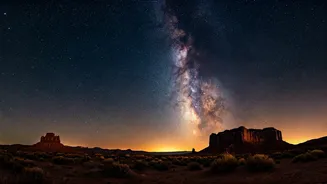
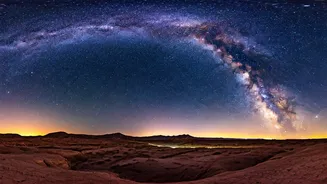
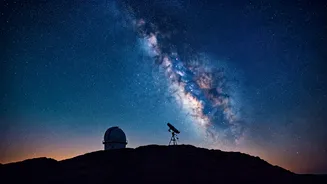
First, what exactly is a dark-sky getaway? It’s not just a holiday in the countryside. It is a deliberate journey to a place with minimal light pollution, where the night sky is unveiled in its full, breathtaking glory. These are often remote locations,
officially recognised by organisations like the International Dark-Sky Association (IDA), which certifies Dark Sky Parks, Reserves, and Sanctuaries. The goal is simple yet profound: to see the universe as our ancestors did, unobscured by the artificial glare of modern civilisation. It’s an escape from the constant, low-level hum of urban life and a chance to experience a truly natural environment.
Escaping the Glow of a Polluted Sky
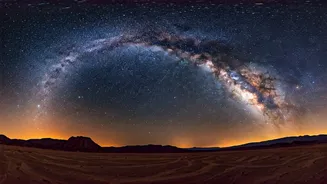
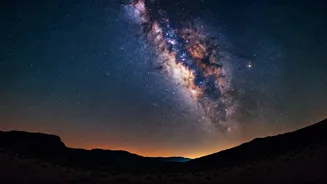
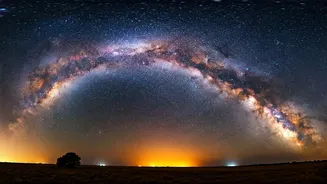
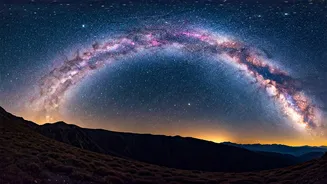
The desire for dark skies is a direct reaction to a growing environmental issue: light pollution. According to recent studies, more than 80% of the world's population lives under light-polluted skies. For a third of humanity, including most people in Europe and the United States, the Milky Way is completely invisible. In India, the rapid urbanisation has created vast domes of light over cities, effectively erasing the stars from our daily lives. This isn't just a loss for astronomers; it's a cultural and psychological loss. For millennia, the night sky has been a source of wonder, navigation, and storytelling. Astrotourism is, in part, a quest to reclaim this lost heritage.
The Science of Awe and Wellness
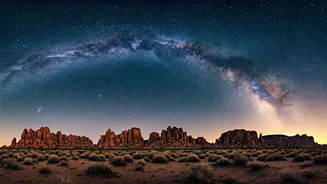
This trend goes deeper than just pretty views. It taps directly into the modern pursuit of wellness and mental clarity. Psychologists have extensively studied the emotion of 'awe' – the feeling we get when confronted with something vast and powerful that challenges our understanding of the world. Staring up at a canopy of billions of stars is a guaranteed awe-inducer. Studies show that experiencing awe can decrease stress, reduce feelings of entitlement, increase generosity, and make us feel more connected to humanity. In an age of digital burnout and anxiety, a dark-sky getaway serves as a powerful digital detox, forcing us to disconnect from our devices and reconnect with something much larger than ourselves.
India’s Emerging Stargazing Hubs
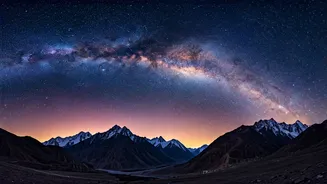
This global trend is finding firm footing in India. The country's diverse geography offers incredible opportunities for stargazing. The undisputed champion is Ladakh, home to the Hanle Dark Sky Reserve, India's first-ever dedicated sanctuary for astronomy. Its high altitude and clear, dry air make it one of the best stargazing spots on the planet. But it's not the only one. The remote valleys of Spiti in Himachal Pradesh, the salt flats of the Rann of Kutch in Gujarat, and even serene spots in the Western Ghats are becoming popular destinations for amateur astronomers and curious travellers. These locations offer not just dark skies but a complete travel experience, combining adventure, culture, and cosmic wonder.
More Than Just a Trend
What makes astrotourism so compelling is that it blends several travel desires into one. It’s adventurous, requiring a journey off the beaten path. It’s educational, offering a tangible connection to science and the cosmos. It’s sustainable, as it inherently encourages the preservation of natural night environments. And it’s deeply personal, providing a quiet space for reflection and wonder. It’s a reminder that sometimes, the greatest luxury isn't adding something new to our lives, but taking something away—in this case, the artificial light that stands between us and the universe.