


The Golden Gem of the Night
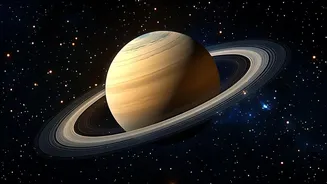
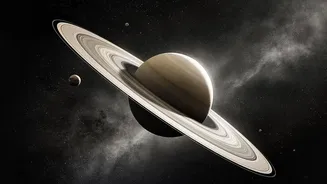
Throughout August 2026, Saturn will be a prominent fixture in our night sky. The planet rises in the east during the evening and will be visible all night long, appearing as a bright, steady, golden-hued point of light. Unlike stars that twinkle, planets
shine with a constant glow, making Saturn relatively easy to single out. On the nights of August 30th and 31st, the waning gibbous Moon will pass close to Saturn, creating a beautiful pairing and making the planet even easier to locate for novice observers. This month is a fantastic prelude to its main event later in the year.
Building Up to Opposition
While this August provides excellent viewing, it's also the build-up to Saturn's best appearance of the year. The planet is currently getting brighter and appearing larger in our sky as it heads towards its opposition on October 4, 2026. Opposition is the point when Earth passes directly between Saturn and the Sun. From our perspective, this means the planet is fully illuminated by the sun's light and at its closest point to Earth for the year. Think of it like a 'full Saturn'. During opposition, a planet rises at sunset, climbs highest in the sky around midnight, and sets at sunrise, making it visible all night. So while the views are great now, they are only going to get better.
How to Find Saturn
Finding Saturn this month is straightforward. Look towards the eastern horizon in the mid-evening and watch for a bright, yellowish 'star' that doesn't twinkle. The planet will be travelling through the constellation of Pisces. For those in India, Saturn will be visible for over seven hours, from the late night until sunrise. To be certain, you can use a stargazing app on your smartphone, which can provide a real-time map of the sky from your specific location. These apps make it simple to identify planets, stars, and constellations with just a point of your phone.
What You Can See
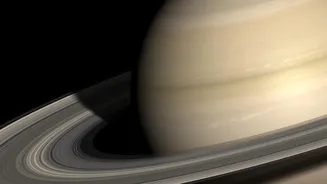
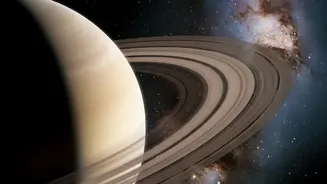
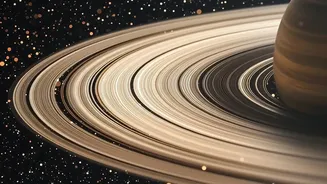
The viewing experience of Saturn changes dramatically with the equipment you use. With the naked eye, Saturn is a bright and beautiful star-like object. A good pair of binoculars, held steady, will reveal that the planet is not a mere point of light but has a distinct oval shape, a hint of its famous rings. You might even catch a glimpse of its largest moon, Titan, as a tiny dot nearby. But the true magic happens with a telescope. Even a small, basic telescope with about 25x to 30x magnification can reveal the iconic rings, separating them from the planet itself. A larger telescope will show even more detail, like the Cassini Division—a dark gap between the main rings. Seeing the rings with your own eyes for the first time is a memorable experience for any stargazer.
A Month of Celestial Wonders
Saturn isn't the only celestial event to watch for this August. The month is packed with astronomical highlights. Around August 12th, a six-planet alignment will be visible in the pre-dawn sky, featuring Saturn, Mars, Mercury, Jupiter, Uranus and Neptune. This is also the peak of the Perseid meteor shower, which is expected to be particularly good this year due to the new moon creating dark skies. While a total solar eclipse also occurs on August 12th, it will not be visible from India. Nonetheless, the combination of Saturn's excellent visibility, a major meteor shower, and a planetary parade makes this August a truly special time for looking up.