







The All-Powerful Algorithm
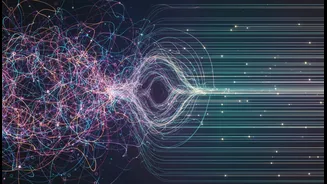
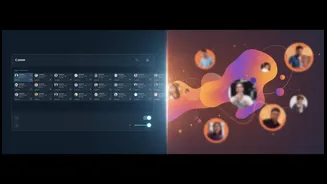
In the beginning, social media was simple. Your feed was a straightforward, chronological list of posts from accounts you followed. But as platforms like Facebook, Instagram, and X (formerly Twitter) grew, they introduced algorithmic feeds. These systems
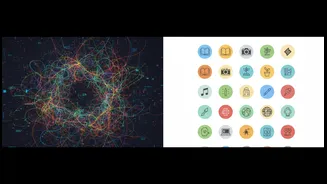
don't show you posts in the order they happen; instead, they use complex calculations to predict what you want to see. They analyze your past likes, comments, and viewing habits to curate a personalized experience designed to keep you engaged for as long as possible. The goal isn't to show you what's new, but what's relevant to you, turning your attention into a valuable commodity.
The Promise of an Algorithm-Free Feed
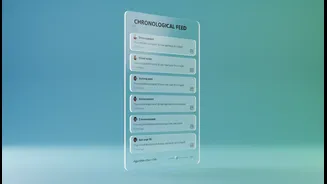
In response to years of criticism about filter bubbles, misinformation, and the feeling of being manipulated, many platforms have reintroduced chronological or 'following-only' feeds. The appeal is obvious: control. An algorithm-free feed puts you back in the driver's seat. You see posts from the people you chose to follow, in the order they shared them. This promises a more authentic, less-manicured view of your social circle and interests. It’s a move away from passive consumption, where an algorithm decides what you see, towards active curation, where you make the choices. This intentional approach can make social media feel less like a source of stress and more like a tool for genuine connection and discovery.
The Hidden Cost of Control
The problem is that control requires effort. Managing a chronological feed, especially if you follow hundreds of accounts, can be overwhelming. You might miss important posts from close friends buried under a flood of content from more prolific posters. This is where the trade-off becomes clear. The algorithm, for all its faults, is incredibly convenient. It filters out the noise, surfaces highlights you might have missed, and requires almost no cognitive load from the user. Studies have shown that when users are switched from an algorithmic to a chronological feed, their engagement often drops, and they spend less time on the app, suggesting that the effortless experience is a powerful draw.
Our Brain's Preference for Convenience
The pull towards convenience is deeply rooted in human psychology. Principles of user experience (UX) design show that people naturally gravitate towards the path of least resistance. Hick's Law, for example, states that the time it takes to make a decision increases with the number of options. An algorithmic feed makes the decision for you, presenting a pre-selected menu. A chronological feed, on the other hand, presents you with everything, forcing your brain to do the work of sorting and prioritizing. This constant decision-making can lead to cognitive fatigue. While we might say we want control, our behaviour often shows we prefer systems that reduce our mental workload, even if it means sacrificing some agency.
The Future: A Hybrid Approach?
The debate isn't necessarily about choosing one system over the other. Most major platforms now offer both, allowing users to toggle between an algorithmic 'For You' page and a chronological 'Following' tab. This hybrid model acknowledges that user needs aren't static. Sometimes you want to see what the algorithm thinks is important, and other times you want to catch up with a specific set of accounts. The challenge for platforms is to make these controls intuitive and accessible. For users, the challenge is to be mindful of this choice. Taking the time to actively curate lists, mute accounts, and switch between feed types is the 'effort' required for real control, but it’s a powerful way to make our digital spaces serve us, not the other way around.