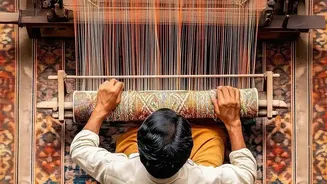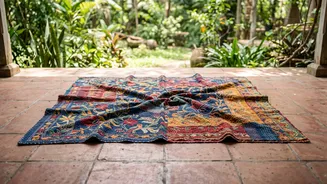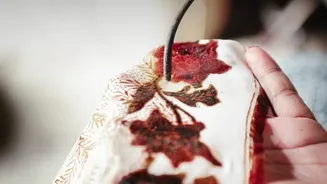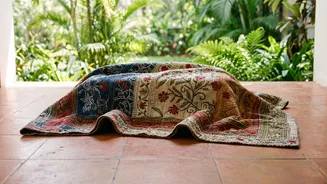






In the fabric of India's cultural heritage, some stories are literally stitched into existence. Born from resourcefulness, Bengal's Kantha and Bihar's Sujani are two such traditions, transforming old cloth into narrative art.
The Shared Thread of Ingenuity
At first glance, the traditions
of Kantha and Sujani share a beautiful, sustainable philosophy: nothing goes to waste. Both art forms originated from the domestic practice of layering old, worn-out saris and dhotis to create something new and useful. In rural households, women would stitch these layers together, with the simple running stitch serving as the foundational technique for both crafts. This act of upcycling was not merely practical; it was an act of love, creating soft quilts for newborns, warm blankets for the family, or special cloths for ceremonial purposes. The threads themselves were often pulled from the colourful borders of old saris, ensuring that every part of the original textile was given a second life.
Bengal's Kantha: A Painterly Narrative
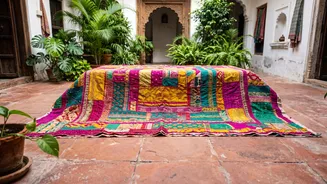
Kantha, which originates from Bengal, is essentially a form of 'painted' embroidery. The word itself is believed to derive from the Sanskrit 'kontha', meaning rags. Artisans use the running stitch, known as 'kantha phor', to create a rippling, textured effect across the surface of the layered fabric. What distinguishes Kantha is its free-form, pictorial storytelling. Motifs are drawn from daily life, nature, mythology, and folklore. You might see fish symbolizing fertility, a lotus for purity, or elaborate scenes from epic tales. The stitching follows the outlines of these motifs, filling them with colour and texture in a style that is more illustrative than geometric. This craft has been protected with a Geographical Indication (GI) tag for West Bengal, recognising its unique cultural identity.
Bihar's Sujani: A Quilted Story of Society
Sujani embroidery from Bihar, particularly from the Muzaffarpur region, tells a different kind of story. The name itself is a combination of 'su' (easy) and 'jani' (birth), reflecting its origin in creating soft, quilted blankets for newborn babies. Unlike the purely painterly style of Kantha, Sujani is a true quilting technique where a top and bottom layer of fabric encase scraps of older cloth, which are then stitched together. The main motifs are first outlined with a chain stitch, and the background is then filled with straight, parallel lines of running stitches. While early Sujani works featured motifs from nature and mythology, the craft underwent a powerful evolution. In the late 20th century, artisans began using Sujani to depict potent social and political messages, commenting on issues like dowry, women's empowerment, and daily struggles, turning each piece into a powerful narrative canvas. Sujani also holds a GI tag for Bihar.
Distinctive by Design
Though they both use layered cloth and running stitches, the visual and technical differences are clear. Kantha's running stitches are often circular or spiral, creating a wrinkled, textured surface around free-flowing motifs. Sujani, in contrast, uses running stitches in straight lines to fill the background, giving it a flatter, more graphic quality. The outlining in Sujani is done with a bold chain stitch, while Kantha outlines are typically formed with the same running stitch used throughout. Kantha is a narrative painted with thread, full of folklore and natural imagery. Sujani is a story told through quilted panels, often carrying the weight of contemporary social commentary.
A Stitch in Time: Modern Empowerment
Today, both Kantha and Sujani have moved beyond the confines of the home to become vital sources of economic independence for thousands of rural women. What was once a domestic pastime has transformed into a powerful tool for financial empowerment, allowing female artisans to contribute to their family's income and gain social standing. Artisan cooperatives and NGOs have played a crucial role in reviving and popularising these crafts, connecting the women to national and international markets. The GI tags for both Bengal's Kantha and Bihar's Sujani help protect the authenticity of these crafts from machine-made imitations, ensuring that the legacy and livelihood of the artisans are preserved for generations to come.