








The Rush to Eat and Its Consequences
In our fast-paced lives, meals are often squeezed into tight windows, leading many of us to eat quickly without much thought. While it might save a few minutes, this habit could have long-term consequences for our weight and metabolic health. A growing
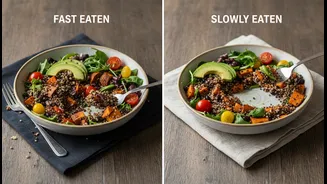
body of research shows a strong link between fast eating and a higher risk of being overweight or obese. For example, one review of 23 studies found that fast eaters were about twice as likely to be obese compared to those who ate slowly. Studies also suggest a correlation between a slower eating speed and a lower Body Mass Index (BMI) and smaller waist circumference. This connection appears to start early, with one study in children finding that fast eaters were three times more likely to be overweight. The evidence points to a simple but powerful idea: slowing down at the dinner table could be as important as the food on your plate.
The Science of Satiety: Your Brain Needs Time
So, why does eating speed matter so much? The answer lies in the communication between your gut and your brain. It takes approximately 20 minutes for your stomach to send signals to your brain that you are full and satisfied. This process involves the release of hormones like leptin that tell your brain to reduce appetite. When you eat too quickly, you can easily consume more calories than your body needs before your brain gets the message that you're full. This can lead to overeating and, over time, weight gain. Fast eating can also cause larger fluctuations in blood glucose levels, which may contribute to insulin resistance, a precursor to type 2 diabetes and metabolic syndrome. Conversely, eating slowly gives your brain the time it needs to register fullness, helping you regulate portion sizes naturally and feel more satisfied with your meal.
Beyond Body Weight: Other Health Perks
The benefits of adopting a slower pace extend beyond just managing your weight. Thoroughly chewing your food is the first step in digestion, mixing it with saliva and enzymes that begin to break it down. When you rush, you often take larger bites and chew less, forcing your digestive system to work harder, which can lead to issues like indigestion, bloating, and discomfort. Slowing down also improves the overall dining experience, allowing you to better savor the flavors and textures of your food, which can increase meal satisfaction. Research has linked fast eating to an increased risk of metabolic syndrome—a cluster of conditions including high blood pressure, high blood sugar, and abnormal cholesterol levels that raise your risk of heart disease and diabetes. By taking your time, you're not just eating; you're supporting your digestive health and reducing your risk for chronic conditions.
Simple Strategies to Slow Your Roll
The good news is that slowing down your eating is a skill you can learn with a few simple, mindful techniques. One of the most effective strategies is to put down your fork or spoon between bites. This simple pause breaks the cycle of continuous eating and gives you a moment to breathe and check in with your body. Try to chew each bite more thoroughly than you normally would; some experts suggest 15 to 30 chews per bite. Eliminating distractions is also key. Turn off the TV, put away your phone, and focus on your meal. Sipping water throughout your meal can also help you pace yourself and aids in feeling full. If you're a notoriously fast eater, try setting a timer for 20-30 minutes and challenge yourself to make the meal last that long. These small adjustments can transform your relationship with food and foster healthier habits.