



The Legend of the Vulture King
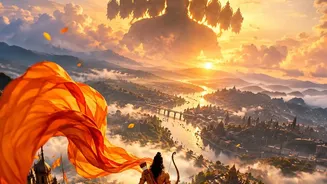
In the epic Ramayana, Jatayu was a noble demigod in the form of a vulture and an old friend of King Dasharatha, Rama's father. As the demon king Ravana abducted Sita and carried her away to Lanka in his flying chariot, it was Jatayu who heard her cries
for help. Despite his old age, he bravely intercepted Ravana, fighting with all his might to rescue her. In the fierce battle, Ravana clipped the bird's wings, and the mortally wounded Jatayu fell to the earth. He lived just long enough to inform Rama and Lakshmana of what had transpired, providing the crucial information that sent them south towards Lanka. This act of supreme courage has been immortalized not just in text, but in the very landscape of India, with several locations claiming a deep connection to his final moments.
Kerala's Monumental Tribute
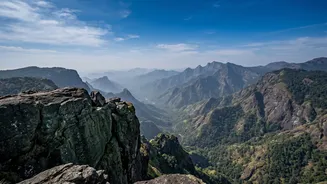
Perhaps the most dramatic and widely recognized site is the Jatayu Earth's Center in Chadayamangalam, Kerala. Perched atop a rocky hill, known as Jatayupara, is the world's largest bird sculpture — a colossal concrete figure of Jatayu lying on his back, wings broken. The statue is immense, measuring 200 feet long and 70 feet high, a stunning tribute to his sacrifice. According to local tradition, this is the very rock where the noble bird fell. The site is a marvel of art and engineering, designed by filmmaker and sculptor Rajiv Anchal, and has become a major tourism hub. Visitors can take a cable car to the top to see the sculpture up close, which also houses a museum and theatre. The location also features a small Rama temple and a footprint on the rock believed to be that of Lord Rama, who is said to have granted moksha to the dying bird here.
The Lepakshi Connection
Another powerful claimant to Jatayu's story is the historic town of Lepakshi in Andhra Pradesh. Local legend here holds a different, yet equally poignant, part of the tale. It is said that when Rama found the dying bird, he uttered the words 'Le Pakshi' — meaning 'Rise, bird' in Telugu — giving the village its name. This is where Rama is believed to have performed the final rites for his devoted friend. While the modern Jatayu statue in Kerala depicts his fall, Lepakshi's connection is ancient, woven into the fabric of the famous 16th-century Veerabhadra temple. This temple complex is an architectural wonder, famous for its hanging pillar and monolithic Nandi statue, but its oral tradition connecting it to Jatayu's final moments makes it a vital stop for cultural pilgrims.
A Trail of Echoes
The story of Jatayu resonates in multiple places, highlighting the Ramayana's deep cultural footprint across India. In Tamil Nadu, two temples are associated with the legend. The Vijayaraghava Perumal temple in Thiruputkuli is believed to be the site where Rama performed Jatayu's cremation, with its sacred water tank named 'Jatayu Theertham'. Similarly, the temple at Thirupullabhoothangudi is revered as a 'Jatayu Moksha Sthalam', a place of salvation for the bird. Farther north, in Maharashtra near Nashik, the area of Janasthana in the Dandaka forest is where Rama, Sita, and Lakshmana spent their exile, and some traditions believe this is where Jatayu lived and fell, being close enough to intercept Ravana's chariot immediately. While historians note that these claims are based on faith and local lore rather than archaeological proof, they create a rich tapestry of living heritage.