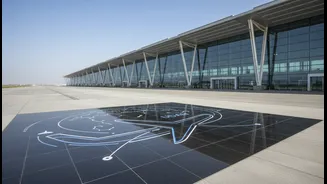









A Royal Welcome: Jodhpur's New Terminal
On July 4, 2026, Jodhpur inaugurated a state-of-the-art terminal building, a significant leap forward for one of Rajasthan's key tourism gateways. Developed by the Airports Authority of India at a cost of ₹480 crore, the new facility is designed to handle
the growing passenger traffic with ease. Spread across more than 23,000 square metres, it can accommodate up to 2 million passengers annually and manage 1,500 travellers during peak hours. For passengers, this translates into a much smoother and more comfortable experience. The terminal features 20 check-in counters, advanced security systems, modern baggage handling, and six aerobridges, allowing direct boarding from the building to the aircraft. Drawing inspiration from Marwar's royal architectural heritage, the design incorporates traditional elements like jharokhas and arches, offering visitors a grand welcome that reflects the region's rich culture while providing modern amenities.
Demystifying the UDAN Scheme
The new terminal doesn't exist in a vacuum; it's a critical piece of a larger national strategy called UDAN, which stands for Ude Desh ka Aam Naagrik ('Let the common citizen of the country fly'). Launched in 2016, the scheme's primary goal is to make air travel affordable and to connect India's smaller, underserved towns and cities to the national aviation map. It operates on a market-driven but financially supported model. The government provides Viability Gap Funding (VGF) to airlines as a subsidy to encourage them to operate flights on routes that might not otherwise be commercially viable. This support helps keep fares on these specific routes capped, fulfilling the vision of making flying accessible to more Indians. Since its inception, the UDAN scheme has successfully operationalised hundreds of routes, connecting dozens of airports, heliports, and even water aerodromes across the country.
What's New in the Modified 'Viksit UDAN'?
Coinciding with the Jodhpur terminal inauguration, the government launched the next phase of the scheme, often referred to as 'Viksit UDAN'. This modified version has a substantial outlay of nearly ₹29,000 crore, to be implemented over the next ten years, from 2026 to 2036. The plan is ambitious, aiming to accelerate aviation-led development across the nation. Key components include developing 100 new aerodromes from existing unserved airstrips with an investment of over ₹12,000 crore. It also proposes the development of 200 modern helipads to improve connectivity in remote and hilly terrains and provides continued funding to support airline operations on regional routes. For the first time, the scheme also includes provisions for procuring indigenous aircraft, such as HAL Dhruv helicopters and Dornier planes, to bolster services in underserved areas.
How Jodhpur Becomes a Key Hub
The synergy between Jodhpur's new terminal and the modified UDAN scheme is clear: infrastructure and policy are working together. The new terminal provides the necessary capacity to handle more flights and passengers, while the UDAN scheme creates the incentives for airlines to launch new routes connecting Jodhpur with smaller cities. This positions Jodhpur not just as a destination but as a crucial hub for western Rajasthan, expected to boost tourism, trade, and economic activity throughout the region. The airport's new apron can now accommodate 11 larger aircraft like the A321, showcasing its readiness for increased traffic. The combination of a world-class terminal and a robust regional connectivity policy means Jodhpur is poised for significant growth in its aviation network, making it easier for people to travel to and from the region without always having to route through major metros.
What This Means for Your Travel Plans
For travellers, these developments bring immediate and long-term benefits. In the short term, flying in or out of Jodhpur will be a more pleasant experience thanks to the modern facilities. In the longer term, the UDAN scheme's focus on regional connectivity will likely lead to more direct flight options from Jodhpur to other Tier-2 and Tier-3 cities in India. This could mean more convenient travel for business, leisure, and family visits, potentially at subsidised fares on specific UDAN-approved routes. It strengthens Jodhpur’s place in Rajasthan’s popular tourism corridor alongside Jaipur and Udaipur. As airlines take advantage of the new policies, travellers should keep an eye out for new flight announcements that could open up new, affordable travel itineraries across the country, starting from the Blue City.