

1. Cat-Cow Stretch (Marjaryasana-Bitilasana)
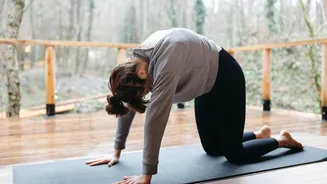
This gentle, flowing sequence is the perfect way to start. It warms up the spine, improves flexibility in your back and neck, and helps connect your movement to your breath. Begin on your hands and knees in a 'tabletop' position, with wrists under shoulders
and knees under hips. As you inhale, drop your belly towards the mat, lifting your chest and tailbone to arch your back into Cow pose. As you exhale, round your spine toward the ceiling, tucking your chin to your chest, for Cat pose. Flow between these two poses for about a minute, letting your breath guide the movement. This simple action relieves tension in the back and shoulders, making it especially beneficial after long hours of sitting.
2. Downward-Facing Dog (Adho Mukha Svanasana)
Perhaps the most iconic yoga pose, Downward-Facing Dog is a full-body reset. It lengthens the entire back of your body, from your heels to your hands, opening the shoulders, stretching the hamstrings, and strengthening your arms and core. From your hands and knees, tuck your toes, lift your hips up and back, forming an inverted 'V' shape with your body. Don't worry if your heels don't touch the ground; you can 'pedal' your feet by bending one knee and then the other to gently stretch your calves. Keep your head relaxed between your upper arms and focus on creating a long, straight line from your hands to your hips.
3. Cobra Pose (Bhujangasana)
To counteract the effects of slouching over a desk or phone, Cobra Pose is essential. This gentle backbend opens up the chest and shoulders while increasing the flexibility of the spine. Lie on your stomach with your legs extended behind you. Place your palms on the floor under your shoulders. On an inhalation, gently lift your head and chest off the floor, keeping your lower body pressed into the mat. Keep your shoulders relaxed and away from your ears. You only need to lift to a height that is comfortable, without any pain. This pose strengthens the back muscles and can help improve posture.
4. Seated Forward Bend (Paschimottanasana)
Tight hamstrings are a common complaint that can contribute to lower back pain. The Seated Forward Bend is a deep stretch for the entire back side of the body, especially the hamstrings and lower back. Sit on the floor with your legs extended straight in front of you. If you're a beginner, it's perfectly fine to keep a slight bend in your knees. Inhale to lengthen your spine, and as you exhale, hinge forward from your hips, not your waist. Rest your hands wherever they comfortably land—on your shins, ankles, or feet. With each breath, try to lengthen your torso rather than forcing yourself deeper.
5. Bridge Pose (Setu Bandhasana)
Bridge Pose is a rejuvenating backbend that strengthens your glutes and back muscles while gently stretching your chest, neck, and spine. It’s an excellent way to relieve lower back discomfort. Lie on your back with your knees bent and feet flat on the floor, hip-width apart. Your arms should be alongside your body with palms down. As you inhale, press through your feet and lift your hips off the floor. Clasp your hands together underneath your back for a deeper shoulder stretch if it feels accessible. This pose is fantastic for improving posture and countering the effects of prolonged sitting.
6. Child's Pose (Balasana)
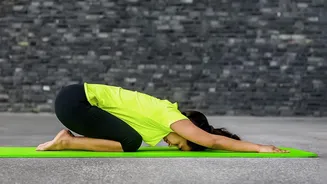
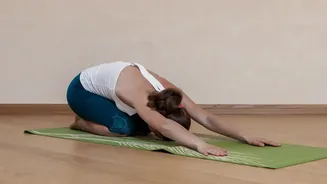
Think of Child's Pose as your gentle resting and recovery posture. It's a mild stretch for the hips, thighs, and lower back while also calming the mind. From your hands and knees, bring your big toes to touch, sit back on your heels, and fold your torso forward, resting your forehead on the mat. You can keep your arms extended forward or rest them alongside your body. It's a wonderful pose to end your routine with, allowing your body to integrate the stretches and your mind to find a moment of peace.